Place Balmat
The familiar statue in Chamonix's Place Balmat, often believed to honor Mont Blanc's initial conquerors, holds a slightly different narrative.
Full story unlocks in the tour
 Ximonic, Simo Räsänen / CC BY-SA 3.0, via Wikimedia Commons
“Where the Alps meet the heavens, and discovery finds its clearest expression.”
Not the postcards. The stories even locals don't know — whispered in your ear, right where they happened.
The familiar statue in Chamonix's Place Balmat, often believed to honor Mont Blanc's initial conquerors, holds a slightly different narrative.
This immense glacier, whose name means 'Sea of Ice,' once stretched considerably beyond its present boundaries, causing apprehension among Chamonix's early inhabitants.
Before evolving into a globally celebrated locale for mountaineering and winter sports, the Chamonix valley lay beneath a vast expanse of ice.
Discover every secret of Chamonix
Every address, every reveal in full — in your ear, right where it happened.
You pick your stops. You walk. The voice reveals what the others miss.
No tours available yet. Check back soon — we're preparing them.
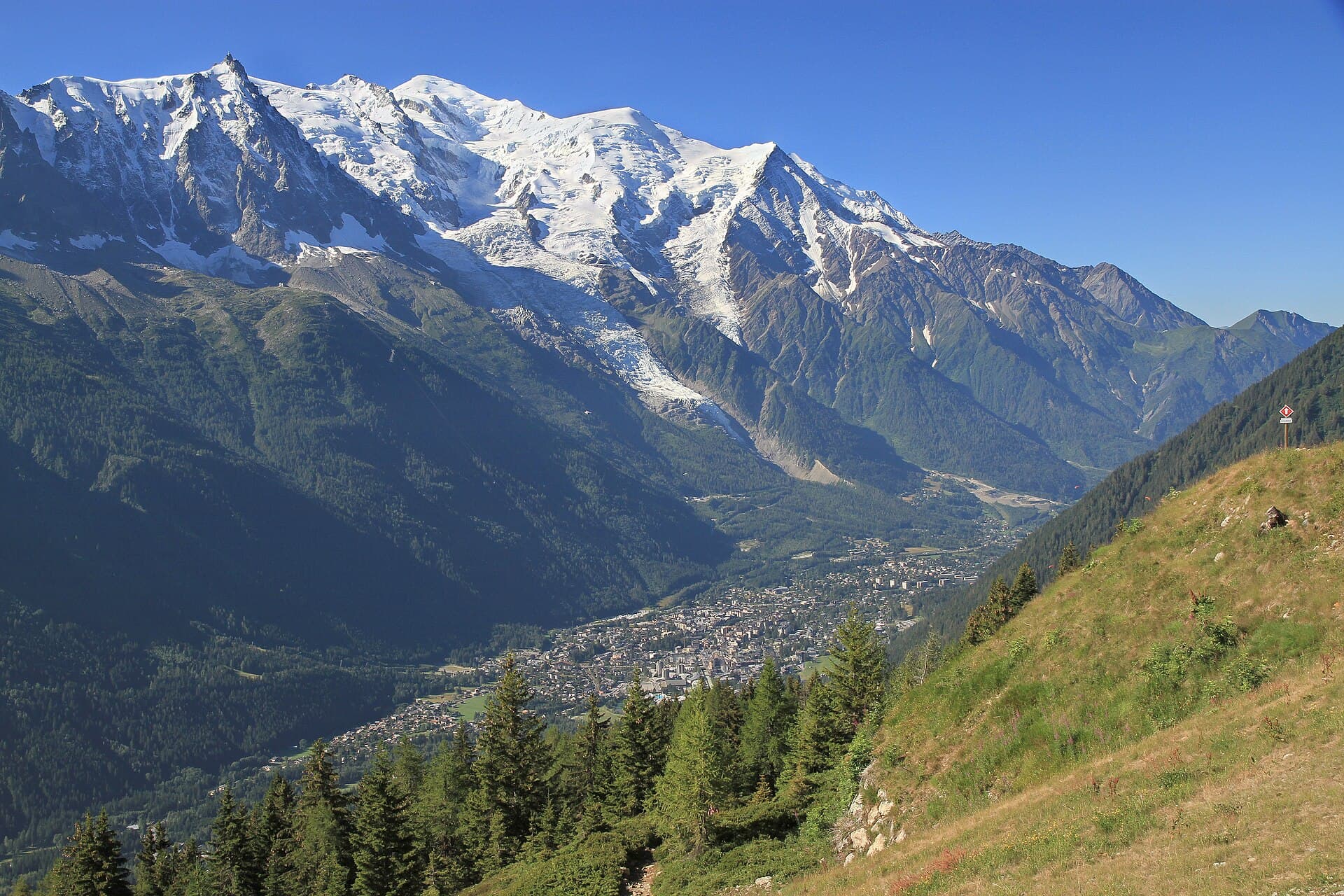
Chamonix-Mont-Blanc, often simply called Chamonix, is a mountain town in southeastern France, at the foot of Mont Blanc, the highest peak in the Alps. This valley, carved by ancient glaciers, offers a landscape of stark granite, evergreen forests, and meadows that bloom with wildflowers in warmer months. The air here carries the crisp scent of pine and the distant murmur of glacial meltwater.
The town itself is a lively hub, a gathering place for climbers, skiers, and those who simply seek the invigorating embrace of the high mountains. Its architecture reflects its alpine setting, with chalets of wood and stone that stand resilient against the elements. Life in Chamonix moves to the rhythm of the mountains, dictated by the changing seasons and the whims of the weather, inviting a deep connection with the natural world.
## Early Explorations and Discovery For centuries, the Chamonix valley was a remote agricultural region, its towering peaks viewed with a mixture of awe and apprehension. Local inhabitants lived off the land, largely unaware of the mountaineering potential that would one day draw people from across the globe. The first documented visitors to the valley for exploratory purposes were two Englishmen, William Windham and Richard Pococke, in 1741. Their accounts of the glaciers and mountains, particularly the Mer de Glace, ignited European curiosity.
## The Dawn of Mountaineering The true turning point for Chamonix arrived in 1786 with the first successful ascent of Mont Blanc by Jacques Balmat and Dr. Michel-Gabriel Paccard. This monumental achievement, driven by Horace-Bénédict de Saussure's offer of a reward for anyone who could find a route to the summit, marked the birth of modern mountaineering. Suddenly, the formidable peaks were no longer just barriers but challenges to be overcome, inspiring a new era of exploration and adventure.
## Growth and Development Throughout the 19th century, Chamonix gradually transformed from an isolated farming community into a destination for alpinists and early tourists. Guides formed associations, hotels began to appear, and infrastructure slowly developed to accommodate the growing influx of visitors. The construction of the Montenvers railway in 1908, providing access to the Mer de Glace, and the Aiguille du Midi cable car in the mid-20th century, opening up high-alpine terrain, solidified Chamonix's status as a premier mountain resort. The town hosted the first Winter Olympics in 1924, cementing its international reputation for winter sports. This evolution continues today, balancing the desire for progress with the preservation of its extraordinary natural setting.
Walk through the town center, where the Arve River flows, offering views of the surrounding peaks. Consider a ride on the Aiguille du Midi cable car, which ascends to nearly 3,842 meters, providing a panorama that stretches across the French, Swiss, and Italian Alps. From the top, a glass skywalk offers a unique perspective. Another memorable journey is the Montenvers Mer de Glace train, a cog railway that leads to the Mer de Glace glacier. Explore the ice cave carved into the glacier itself. For those who prefer a gentler pace, the numerous walking trails along the valley floor provide opportunities to absorb the alpine scenery and the quiet murmur of mountain streams.
Summer, from June to September, offers ideal conditions for hiking, climbing, and exploring the high-altitude trails. The meadows burst with wildflowers, and the weather is generally mild. Winter, from December to April, transforms Chamonix into a snowy playground for skiing, snowboarding, and ice climbing. The shoulder seasons, spring and autumn, bring fewer crowds and a different kind of beauty, with changing foliage and crisp, clear air.
Chamonix is accessible by car, train, and bus. The nearest major airport is Geneva (GVA), with regular shuttle services connecting to the valley. Within Chamonix, a free bus service operates, making it easy to navigate between the different ski areas and trailheads. Many accommodations offer guest cards that include free public transport. Always check weather forecasts before embarking on any mountain activity, as conditions can change rapidly. Proper gear, including sturdy footwear and layers of clothing, is essential for comfort and safety in the alpine environment.