Cēsis Castle
The castle holds a dark secret from the Livonian War, a desperate act of defiance against an invading army.
Full story unlocks in the tour
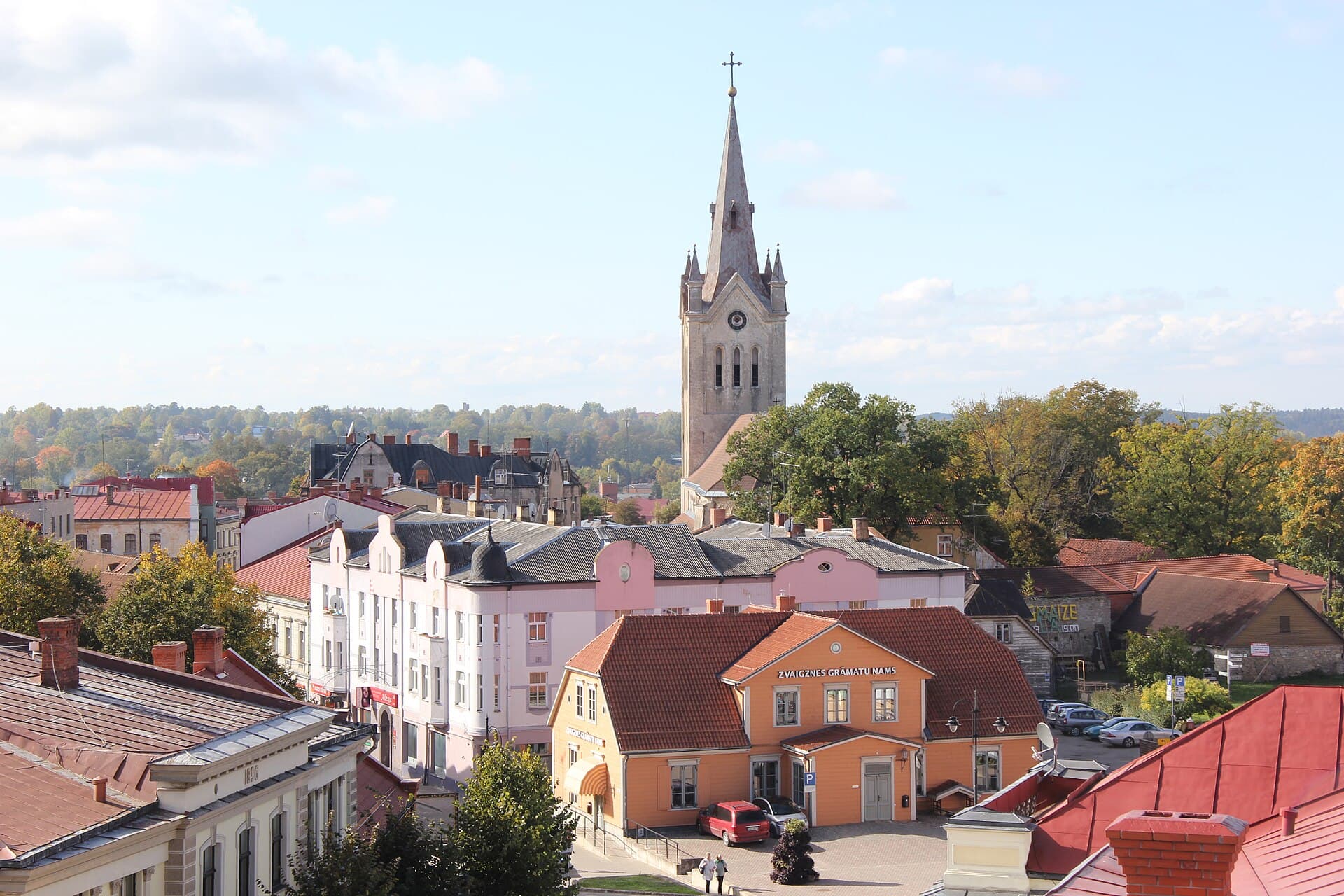 Guntars Mednis / CC BY-SA 3.0, via Wikimedia Commons
“Where medieval echoes meet forest murmurs.”
Not the postcards. The stories even locals don't know — whispered in your ear, right where they happened.
The castle holds a dark secret from the Livonian War, a desperate act of defiance against an invading army.
This seemingly modern brewery has roots far deeper than its industrial facade suggests.
The Latvian flag, a powerful national symbol, has an unexpected connection to this 18th-century manor.
Discover every secret of Cēsis
Every address, every reveal in full — in your ear, right where it happened.
You pick your stops. You walk. The voice reveals what the others miss.
No tours available yet. Check back soon — we're preparing them.
Cēsis, one of Latvia's most captivating and ancient towns, offers a journey through centuries of layered history, situated amidst the expansive natural grandeur of Gauja National Park. First noted in historical documents in 1206, Cēsis possesses a profound heritage, from its medieval fortress to its appealing Old Town, with its well-preserved buildings.
More than a historical site, Cēsis serves as a cultural center where the past informs present-day creativity. It is a place where one can wander through ancient ruins, explore contemporary art exhibitions, and then, within moments, find themselves immersed in verdant forests and picturesque river valleys. This fusion of historical depth, artistic expression, and natural splendor makes Cēsis a compelling destination for those seeking an authentic Latvian experience.
Often described as one of Latvia's most beautiful towns, Cēsis provides a relaxed and intimate atmosphere, inviting visitors to explore at their own pace without the hurried tempo of larger cities. Whether drawn by the echoes of medieval knights, the allure of the Hanseatic League, or the tranquility of the Gauja River, Cēsis promises a memorable and enriching visit.
The origins of Cēsis can be traced back to Riekstu hill, where a wooden castle built by the ancient Vendian tribe stood between the 11th and 13th centuries. The town's recorded history began in 1206, and by 1209, the Livonian Brothers of the Sword began constructing a stone castle, which would become the heart of Cēsis. This formidable fortress, known then as Wenden, quickly grew in importance, serving as the residence for the Masters of the Livonian Order and a crucial administrative and economic center in Livonia.
During the 14th century, Cēsis joined the Hanseatic League, a powerful medieval trading confederation. Its strategic location near the Gauja River made it a significant stop for traders traveling between Riga, Tartu, and Tallinn, further solidifying its role as a prosperous trade town. The town's layout, with narrow, winding streets clustered around the castle and St. John's Church, reflects its medieval planning, a structure that has largely been retained despite the loss of many original buildings to wars and fires.
Cēsis faced numerous challenges throughout its history, including sieges and conflicts. The Livonian War in the 16th century saw the castle partially destroyed by Ivan the Terrible's army in 1577. The Great Northern War in the early 18th century led to the castle's abandonment. However, the 19th century brought a renewed interest in the castle as a historical monument, and the construction of the Riga-Pskov highway and railway line spurred the town's development. Cēsis also played a significant role in the Latvian War of Independence, with the Battle of Cēsis in 1919 marking a decisive victory for Estonian and Latvian forces.
Today, Cēsis is recognized for its commitment to preserving its cultural and historical heritage, while also embracing a lively contemporary art and cultural scene. The town's historical center is protected by government decree, ensuring that its unique character endures.
Begin your exploration at the Cēsis Castle Complex, a captivating ensemble of medieval ruins and an 18th-century manor. The medieval castle, one of Latvia's best-preserved, invites you to climb its towers and explore its ancient passages, often with the aid of a candlelit lantern for an authentic experience.
Adjacent to the ruins is the New Cēsis Castle, an elegant manor house that now hosts the Cēsis History and Art Museum. From its tower, you can enjoy expansive views of the Old Town. The surrounding Cēsis Castle Park, created in 1812, offers a romantic landscape with a lake, fountains, and sculptures, perfect for a leisurely stroll.
Wander through the Cēsis Old Town, where streets retain their medieval layout, revealing a blend of architectural styles, including brightly painted wooden houses. Discover architectural treasures like St. John's Church, a grand 13th-century basilica, and the Old Man of Time sculpture near the church square.
Beyond the town center, Cēsis is a gateway to Gauja National Park, Latvia's largest and oldest national park. Explore its diverse landscapes through hiking and cycling trails, discovering sandstone cliffs, river valleys, and verdant forests. The Cīrulīši Nature Trails offer accessible hikes close to Cēsis, showcasing the park's natural beauty.
Cēsis offers distinct charms throughout the year, but the most agreeable time to visit for pleasant weather and outdoor activities is from late spring (May) through early autumn (September). Summer (July to August) is the busiest season, with warm temperatures and long daylight hours ideal for hiking, cycling, and enjoying outdoor cafes, though it can be more populated. Spring (April to June) brings blossoming nature and moderate temperatures, while autumn (September to November) transforms the landscape with vivid fall foliage, particularly beautiful in Gauja National Park. For fewer crowds and a tranquil, often snow-covered experience, consider visiting in winter (November to March).
Cēsis is easily accessible from Riga by frequent buses or trains, with a journey time of approximately 1.5 to 2 hours. Once in Cēsis, the Old Town and its main attractions are quite walkable, making it easy to explore on foot. For venturing further into Gauja National Park, local buses run every two hours, or you can opt for a taxi or bike rental. Expect uneven streets in the Old Town, so comfortable footwear is advisable.
Accommodation options range from budget-friendly hostels and guesthouses in the town center to charming manor houses and unique treehouses in the surrounding nature. English is widely spoken, especially by younger people and at tourist sites. The Cēsis Tourism Information Centre, located in the New Castle, provides maps and helpful advice for visitors.