As you wander the slender, winding passages of Castelo de Vide's Jewish Quarter, you might notice small, rectangular indentations on certain doorframes. What quiet meaning do these subtle marks carry?
Concierge.2C / CC BY-SA 3.0, via Wikimedia CommonsCastelo de Vide
“Where ancient stones recount perseverance and vital springs flow.”
Castelo de Vide, as no one tells it.
Not the postcards. The stories even locals don't know — whispered in your ear, right where they happened.
Castelo de Vide is known for its many springs, but one particular fountain, the Fonte da Vila, possesses a distinctive design and an unexpected link to the town's reputation for health-giving waters.
The commanding 13th-century castle of Castelo de Vide offers sweeping views, but its construction involved a royal sibling rivalry.
Discover every secret of Castelo de Vide
Every address, every reveal in full — in your ear, right where it happened.
You pick your stops. You walk. The voice reveals what the others miss.
How long do you have in Castelo de Vide?
No tours available yet. Check back soon — we're preparing them.
The story of Castelo de Vide
Castelo de Vide, often likened to the 'Sintra of the Alentejo' for its romantic character, verdant gardens, and temperate climate, is a captivating hilltop town in Portugal's Alentejo region. With a population just under 3,000, it offers an intimate community feel, ideal for those seeking a more deliberate pace of life. The town is recognized for its well-preserved medieval quarter, its restorative spring waters, and expansive views of the surrounding countryside. Its closeness to the Spanish border, a mere 20 kilometers away, enhances its appeal, providing effortless access to another culture.
The town's long story is etched into its architecture, from the slender, paved passages of the old Jewish Quarter to the medieval castle. Castelo de Vide is a place where moments seem to unfold slowly, inviting visitors to savor simple pleasures like a relaxed coffee in the town square or a quiet walk through historic streets. It is a destination that offers a blend of enduring narratives, natural splendor, and a peaceful atmosphere.
From Neolithic Settlements to Medieval Stronghold
The human story of Castelo de Vide stretches back to the Neolithic era, with archaeological evidence of several megalithic sites in the area, such as the Anta do Sobral. The strategic contours of the land likely guided these early decisions for habitation. The establishment of a fortification was instrumental in solidifying a population in the territory and served as a crucial border stronghold.
Castelo de Vide became its own municipality in 1276, having previously been part of Marvão. The castle, a significant example of medieval architecture, was constructed during Portugal's reconquest from Moorish rule in the 13th century. While D. Afonso Sanches began its construction in 1279, his brother, King Dinis, continued the work, with the fortifications completed during the reign of King Afonso IV in the 14th century. Initially, in 1299, Rui de Pina described Castelo de Vide as a vulnerable stronghold, calling it 'more place than strong.' However, subsequent improvements, including moving a well inside the walls and adding a new line of defenses, strengthened its protective capabilities.
A Flourishing Jewish Community and the Inquisition
Jewish life in Castelo de Vide dates to at least the 13th century, with the Jewish Quarter, or Judiaria, developing at the base of the castle hill. Unlike other Iberian towns, Jews in Castelo de Vide were not confined to ghettos but lived alongside Christians, though concentrated in specific streets for community cohesion. By the 14th and 15th centuries, the Jewish population prospered, contributing significantly to the town's well-being as merchants, artisans, physicians, and scholars. The community expanded further after 1492, when the Edict of Expulsion compelled Spanish Jews to seek refuge in Portugal, with many passing through or settling temporarily in Castelo de Vide. The town's medieval synagogue, dating to the 14th century, stands as one of the few surviving medieval synagogues in Portugal.
However, the decree of King Manuel I in 1497 forced all Jews in Portugal to convert to Christianity. Many became 'New Christians' or conversos, outwardly living as Catholics while secretly maintaining elements of Jewish practice. During the Inquisition, Castelo de Vide became a place of scrutiny, with records indicating investigations into local families for 'Judaizing.' Despite persecution, traces of Jewish life endured through oral traditions, family customs, and community memory.
From Spa Town to Modern Charm
Castelo de Vide has long been recognized for its abundant natural resources, particularly its hot springs with their reputed healing properties. This led to its reputation as a spa town. The town's strategic location near the Spanish border meant it endured numerous assaults throughout its history, necessitating frequent repairs to its defensive walls. In more recent history, Salgueiro Maia (1944-1992), a hero of the 1974 Carnation Revolution, was born in Castelo de Vide, and his tomb is located here. Today, Castelo de Vide balances its enduring historical appeal with modern conveniences, offering an authentic Portuguese lifestyle amidst rolling hills, olive groves, and cork oak forests.
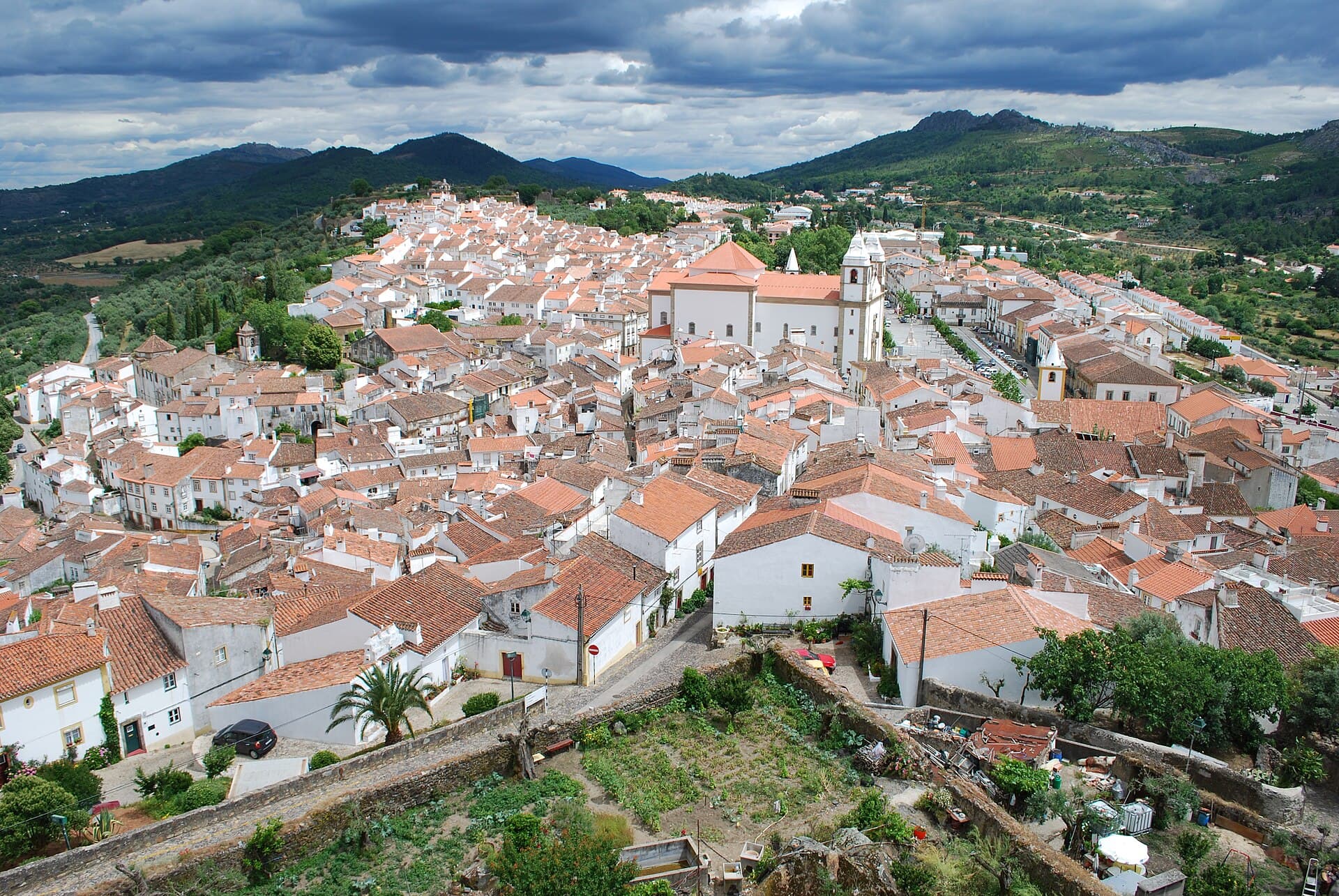
Begin your exploration at the Castelo de Castelo de Vide, a 13th-century fortress offering expansive views of the town and the Serra de São Mamede Natural Park. You can walk along its well-preserved walls and ascend the tower. From the castle, descend into the Judiaria, the historic Jewish Quarter. This labyrinth of slender, paved passages and whitewashed houses reveals centuries of stories. Seek out the subtle mezuzah grooves carved into stone doorposts, silent witnesses to the Jewish community that once flourished here. At the core of the Judiaria is the Medieval Synagogue, now a museum, which houses the original heikhal (ark) and a small exhibition on Jewish life in the town.
Explore the Praça D. Pedro V, the main square, where you will find the impressive Igreja Santa Maria da Devesa and the town's pelourinho (whipping post). Do not miss the Fonte da Vila, a distinctive 16th-century fountain with marble columns, known for its mineral water. Beyond the town center, consider a visit to the Capela do Salvador do Mundo, one of the oldest chapels in the region, adorned with blue-and-white azulejos. For those interested in ancient history, the surrounding area features several megalithic sites, such as the Anta do Sobral.
The most favorable time to visit Castelo de Vide for general outdoor activities is from late May to early October, with a peak in late June, when the skies are clear and temperatures feel between 18°C and 27°C (65°F and 80°F). For activities in warmer weather, early July to late August is ideal. Summers are warm and dry, with temperatures typically ranging from 20°C to 35°C (68°F to 95°F). Winters are mild but can be cool, with temperatures between 5°C and 15°C (41°F and 59°F). Spring and autumn offer agreeable conditions, suitable for outdoor exploration.
Castelo de Vide is approximately 220 kilometers (137 miles) northeast of Lisbon. While bus services connect the town to nearby areas, schedules can be infrequent, so having a car is advisable for greater flexibility, especially for exploring the wider region. Taxis are available, but ride-sharing services like Uber are not present. The nearest major airport is in Lisbon.
Accommodation options range from historic townhouses to guesthouses. The cost of living is lower than in Portugal's larger cities. A basic understanding of Portuguese will enhance your experience, particularly when interacting with locals. The town is generally safe, though it is always wise to be aware in busy areas. Castelo de Vide is a walkable town, with the medieval center easily traversed on foot.
- What is Castelo de Vide recognized for?
- Castelo de Vide is recognized for its well-preserved medieval quarter, its historic Jewish Quarter with one of Portugal's oldest synagogues, therapeutic spring waters, and a commanding 13th-century castle.
- Is Castelo de Vide easy to explore on foot?
- Yes, Castelo de Vide is very walkable. The compact medieval center can be crossed in about ten minutes, and exploring the slender, paved passages of the Old Town and Jewish Quarter is best done on foot.
- What is the significance of the Jewish Quarter in Castelo de Vide?
- The Jewish Quarter, or Judiaria, is one of the most important examples of Jewish presence in Portugal, dating to the 13th century. It features a medieval synagogue, mezuzah markings on doorframes, and a history of a thriving Jewish community that also offered refuge to Spanish Jews in 1492.
- Are there any natural attractions near Castelo de Vide?
- Yes, Castelo de Vide is located at the northern edge of the Serra de São Mamede Natural Park, offering hiking trails, scenic drives, and diverse flora and fauna. The town is also known for its many mineral springs, including the celebrated Fonte da Vila.
- What kind of food can I expect in Castelo de Vide?
- The local cuisine reflects the culinary traditions of the Alentejo region, featuring hearty dishes such as *Ensopado de Borrego* (lamb stew), *Migas* (a breadcrumb dish), and *Sopa da Pedra* ('Stone Soup'). You will also find local cheeses, olive oils, and cured meats.
- Is Castelo de Vide a good base for day trips?
- Yes, Castelo de Vide serves as a good base for exploring nearby attractions. The impressive fortress town of Marvão is a short distance away, and the Roman ruins in Ammaia are also within reach.