Calanque de Port-Miou
The stone cut from this narrow fjord built the arteries of global trade — yet the most celebrated claim about what it constructed turns out to be a myth.
Full story unlocks in the tour
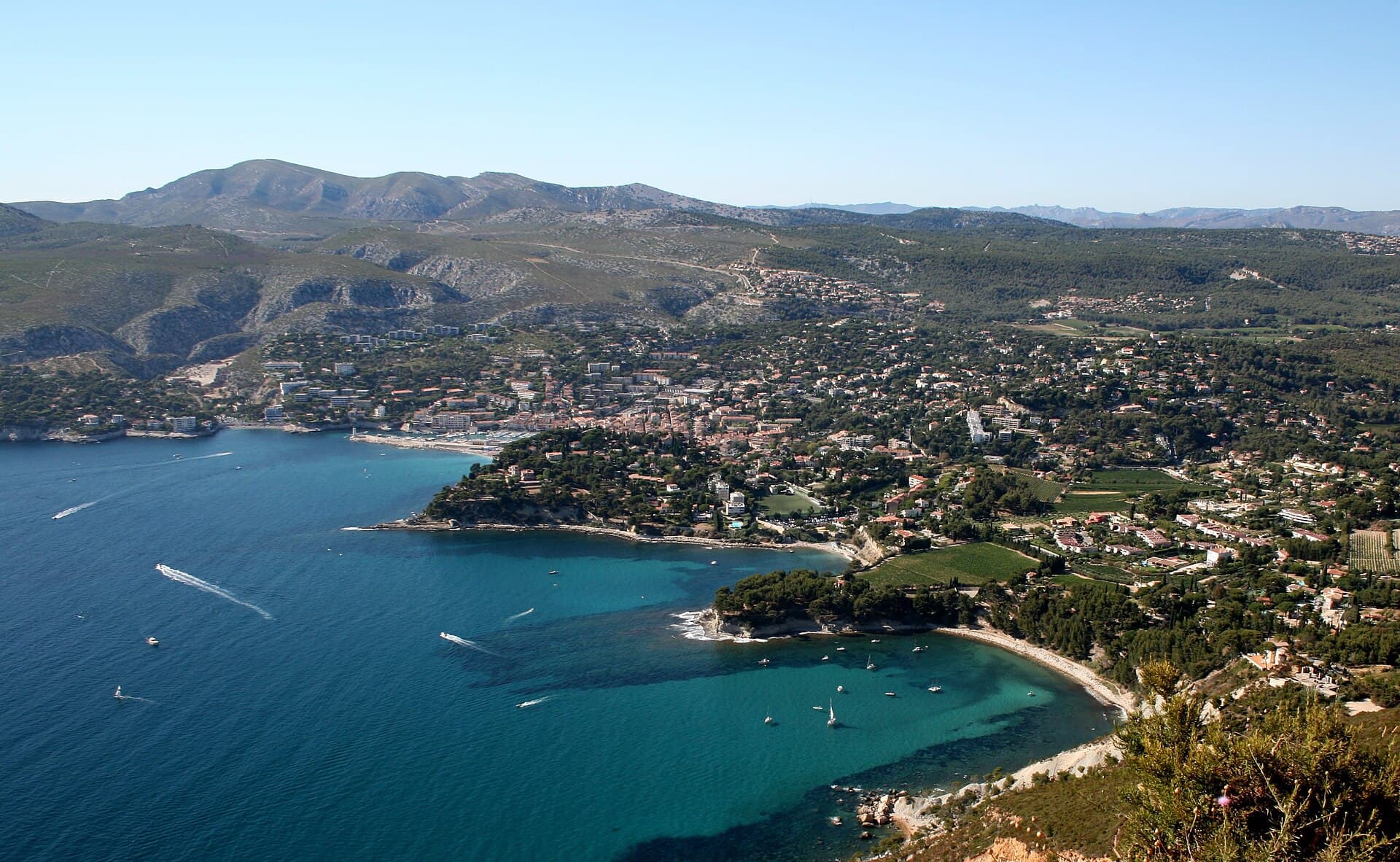 Marion Schneider & Christoph Aistleitner --- Contact: Mediocrity / Public domain, via Wikimedia Commons
“A port ringed by the highest sea cliffs in France, where the vines grow inside a national park and the cave art is underwater.”
Not the postcards. The stories even locals don't know — whispered in your ear, right where they happened.
The stone cut from this narrow fjord built the arteries of global trade — yet the most celebrated claim about what it constructed turns out to be a myth.
Thirty-seven metres below the surface of the Mediterranean, just outside Cassis, there is a door that leads to a gallery of 27,000-year-old paintings — and the sea is slowly swallowing them.
This is the only wine appellation in France where every single vine grows inside a national park — and it produces the opposite of what Provence is famous for.
Discover every secret of Cassis
Every address, every reveal in full — in your ear, right where it happened.
You pick your stops. You walk. The voice reveals what the others miss.

No tours available yet. Check back soon — we're preparing them.
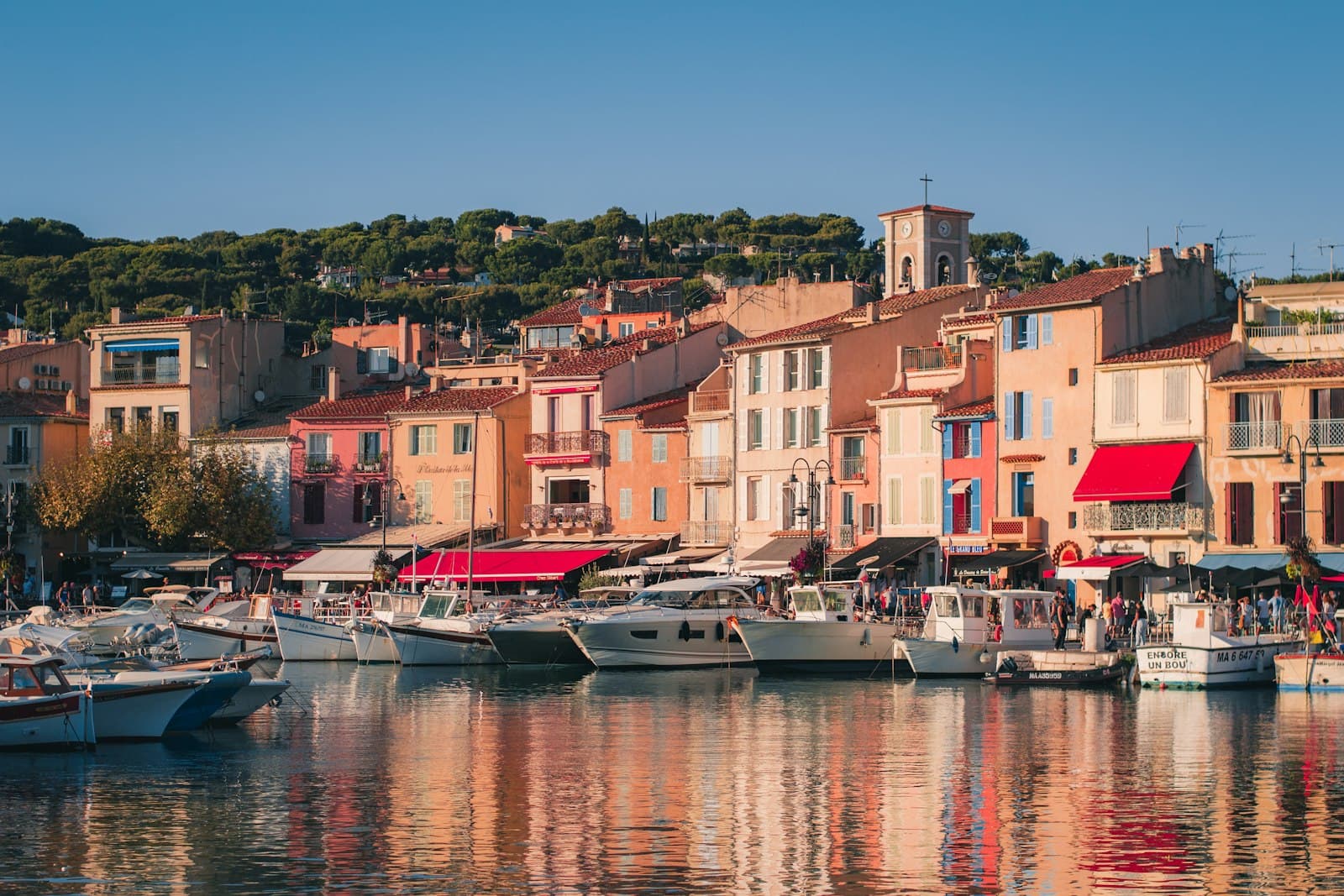
Cassis sits 20 kilometres east of Marseille at the point where the limestone massif of the Calanques drops into the Mediterranean. The port is small — about 6,600 people — and the harbour faces west, which means the light at the end of the day is something painters have been chasing here for more than a century. The town is encircled: to the east, Cap Canaille rises 394 metres straight out of the sea; to the west, the Calanques begin immediately. There is no sprawl. You arrive, and you are already there.
The Ligures occupied the site from around 600 BC, building fortified dwellings at Baou Redon. The Romans called it Carcisis Portus and integrated it into Mediterranean trade routes. By the 15th century Cassis had passed through the hands of the lords of Les Baux-de-Provence, then to René of Anjou, who gave it to the Bishops of Marseille — who governed it until the Revolution of 1789.
For most of its history the town had two industries: fishing and stone. The white limestone quarried at Port-Miou was exported across the Mediterranean from the 18th century onwards, supplying quays in Alexandria, Algiers, Piraeus, and the channel walls of the Suez Canal. The quarry closed in 1982 and is now flooded, the first calanque you reach by boat from the port.
Wine arrived with the ancient Greeks; a formal AOC was granted on 15 May 1936, making Cassis one of the first six appellations in France. In 2012, the entire vineyard was absorbed into the newly created Calanques National Park, the 10th national park in France — and the only one that is simultaneously terrestrial, marine, and periurban.
In the 1920s the town became a quiet outpost of the British Bloomsbury Group: Vanessa Bell and Duncan Grant leased a cottage on the Fontcreuze Estate, Winston Churchill painted the port at dawn, and Virginia Woolf wrote that she had 'known perfect happiness' here.
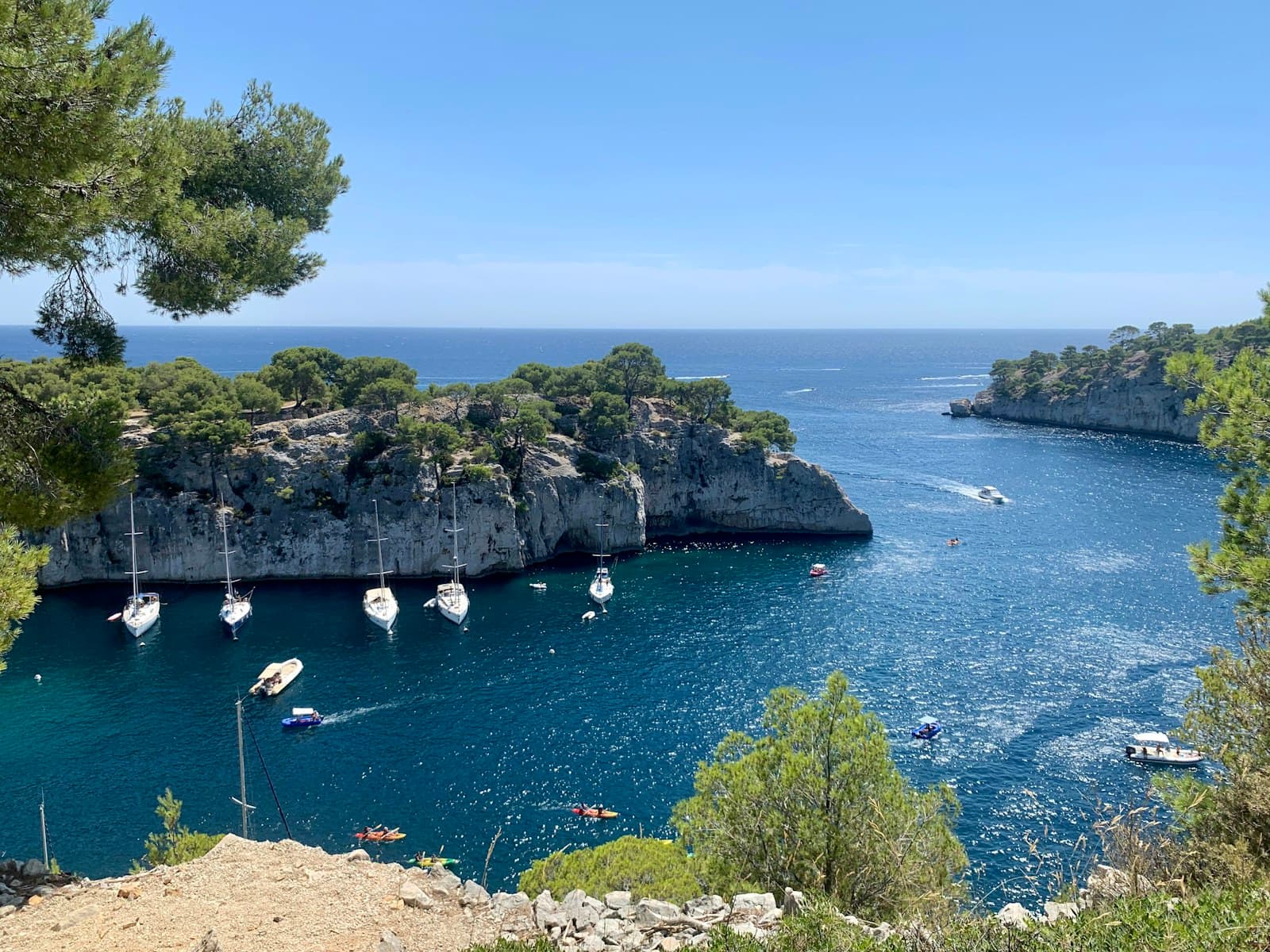
### The Calanques The three calanques immediately accessible from Cassis are Port-Miou (the flooded quarry, a long green inlet lined with moored yachts), Port-Pin (a wooded beach surrounded by Aleppo pines), and En-Vau (the most dramatic — sheer 170-metre cliffs, turquoise water, and a pebble beach that falls into shade from mid-afternoon). Boat tours leave from the port every morning (roughly €21–33 depending on how many inlets are included). En-Vau is also reachable on foot via the GR51/98 trail from Port-Miou, around 1h30–2h each way; take water and sturdy shoes.
### Cap Canaille The road — Corniche des Crêtes — runs along the very top of France's highest sea cliff at 394 metres. The view takes in the bay of Cassis, the islands offshore, and on clear days the mountains of the Var. The cliff face is ochre and red sandstone, colours that change through the day. There is a small parking area at the summit and the walk along the ridge is relatively straightforward.
### The Port and Village The port is working: fishing boats (pointus, the narrow wooden vessels built for these waters for 2,000 years) sit alongside the pleasure craft. The Wednesday and Friday morning markets cover the central squares. The Musée Municipal is free and houses local history and art. The Château de Cassis, built in 1381 by the lords of Les Baux, dominates the harbour from above — it is privately owned and not open to visitors, but visible from anywhere in the port.
### Wine 12 producers make wine within the AOC. Several estates offer tastings and are within walking distance or a short drive from the centre. The white wines — predominantly Marsanne and Clairette — carry a saline, iodine-edged minerality that comes directly from the sea air. Almost all production stays in France; what leaves is consumed mostly in Marseille and Paris.
Spring (April–May) and early autumn (September–October) are the best windows. The Calanques are open without fire-risk closures, the port is not jammed, and the light is at its most useful — low angle, warm, with the limestone cliffs catching colour for hours.
Summer (June–September): the Calanques massif is regulated by prefectoral order from 1 June to 30 September due to wildfire risk. Access can be suspended entirely on high-risk days (check the official Calanques National Park website or the Mes Calanques app, updated each evening at 6pm for the following day). The town itself is very busy from July onwards.
Winter is quiet and often sunny, though some boat tours operate reduced schedules. The light is extraordinary in January and February.
Getting there: Train from Marseille Saint-Charles takes about 25 minutes, with departures roughly every 30 minutes. Bus L78 from Marseille takes around 44 minutes. By car from Marseille: 30 minutes on the A50. Parking inside Cassis is extremely limited in summer; the free Gorguettes car park (220 spaces, northwest of town) has a shuttle bus to Port-Miou for €1.60 return. Illegal parking is systematically enforced — dozens of cars are towed each season.
Getting to the Calanques: Boat tours from the port depart from morning through early afternoon. The GR51/98 trail starts at Port-Miou. The Corniche des Crêtes road to Cap Canaille is open to cars and can be driven in under 20 minutes from the village centre.
Calanques access in summer: Check fire-risk status the evening before at calanques-parcnational.fr. Access to the massif may be completely suspended. Boats are not affected by the terrestrial closure.
Wine tastings: Most domaines require a short appointment. Ask at the tourist office (Quai des Moulins, open daily) for current schedules.
Markets: Wednesday and Friday mornings in the village centre.
Cosquer Cave replica: The replica (Grotte Cosquer Méditerranée) opened in 2022 at the Villa Méditerranée in Marseille, 20 minutes by train. Pre-booking recommended.