The Roman Bridge (Puente Romano)
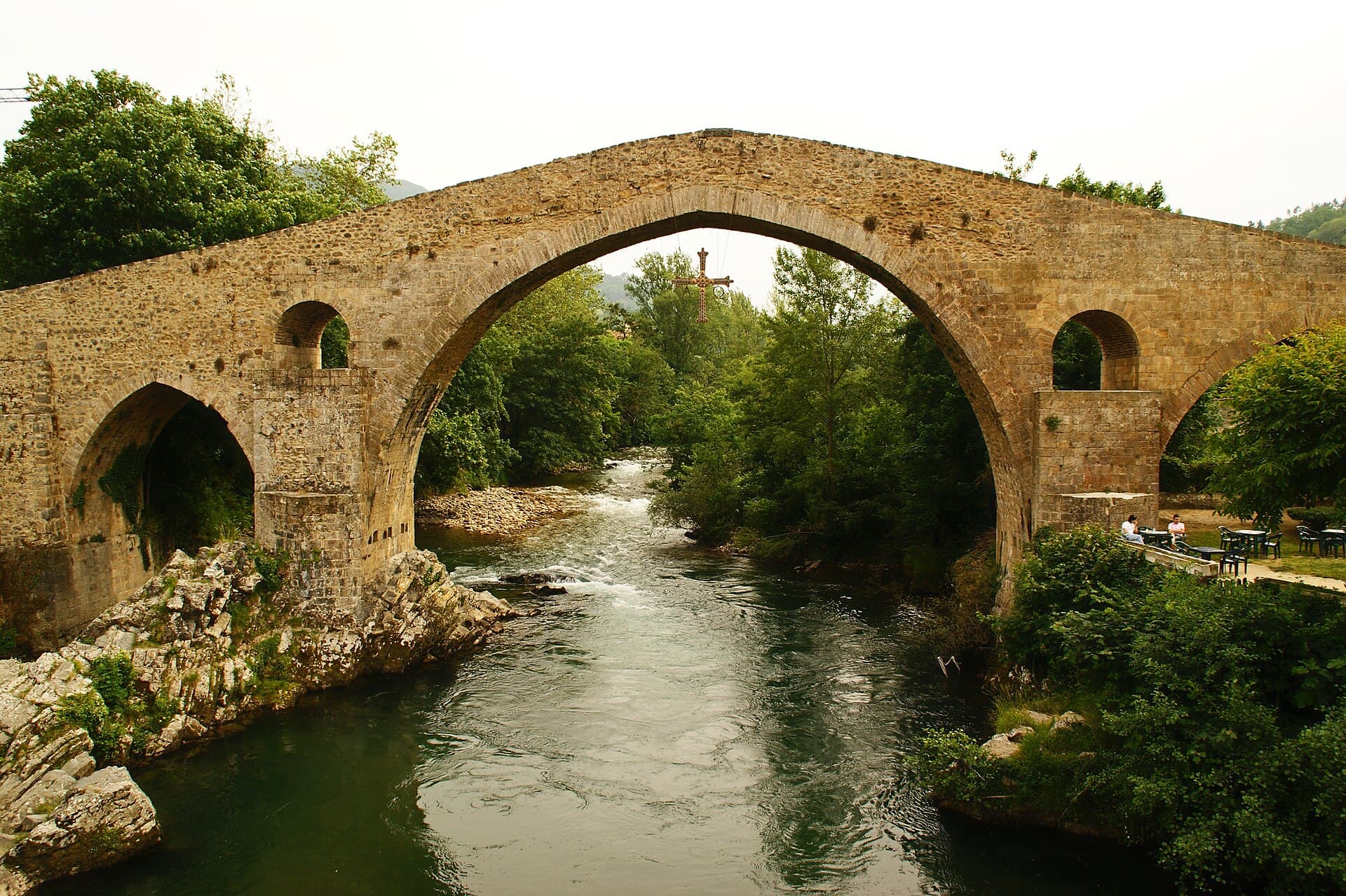
This iconic bridge, a symbol of Asturias, carries a name that hints at a much older past than its stones reveal.
Full story unlocks in the tour
 Herbythyme / CC BY-SA 4.0, via Wikimedia Commons
“Where ancient history meets mountain adventure.”
Not the postcards. The stories even locals don't know — whispered in your ear, right where they happened.
This iconic bridge, a symbol of Asturias, carries a name that hints at a much older past than its stones reveal.
A seemingly modest church in the town holds a secret beneath its foundations that predates Christianity by millennia.
This lively weekly market has a tradition so deep that a famous 18th-century intellectual documented its bustling scene.
Discover every secret of Cangas de Onís
Every address, every reveal in full — in your ear, right where it happened.
You pick your stops. You walk. The voice reveals what the others miss.
No tours available yet. Check back soon — we're preparing them.
Cangas de Onís, a town in the eastern reaches of Asturias, Spain, opens a significant passage into the Picos de Europa National Park. It rests at the convergence of the Sella and Güeña rivers, offering both natural splendor and deep historical resonance. The town's stone-paved paths and traditional architecture invite exploration, unveiling a past intricately woven with the early narrative of Spain. Travelers frequently establish Cangas de Onís as a base for outdoor pursuits and to immerse themselves in Asturian culture.
This town serves as a focal point for active tourism, presenting opportunities for hiking, canoeing, and traversing the surrounding mountainous landscapes. Its position grants convenient access to beloved sites such as the Lakes of Covadonga and the Covadonga Sanctuary. Beyond its natural allure, Cangas de Onís extends a taste of authentic Asturian gastronomy, including local cheeses and time-honored dishes.
Cangas de Onís occupies a pivotal position in Spanish history as the initial capital of the Kingdom of Asturias. This era commenced in the 8th century, following the Battle of Covadonga around 722 AD. This battle, a Christian triumph led by Don Pelayo against the Muslim invasion, is widely regarded as the inception of the Reconquista—the centuries-long endeavor to reclaim the Iberian Peninsula. Pelayo established his court here, making Cangas de Onís the first seat of the nascent Asturian kingdom.
Evidence of human presence in the Cangas de Onís area stretches back to the Paleolithic era, with archaeological discoveries in caves like Buxu and Los Azules. The Neolithic period witnessed the emergence of megalithic monuments, including the Dolmen de Santa Cruz, which lies beneath the Church of Santa Cruz. The Romans also left their imprint, with roads that linked important settlements, and the location of the present-day Roman Bridge likely hosted an earlier Roman crossing.
While the town's most recognizable landmark, the Roman Bridge, carries an ancient designation, the current stone edifice dates to the 14th or 15th century. This medieval bridge, with its distinctive elevated central arch, became a crucial connection for communication across the Sella River between Asturias and Cantabria. Cangas de Onís continued to grow, earning representation in the General Junta of the Principality of Asturias by 1504. The town also played a part in the Spanish Civil War, enduring bombings and subsequently undergoing reconstruction. Notably, in a more recent historical turn, Cangas de Onís served as the main seat for the regional government from 1978 to 1981, during the preparation of the Statute of Autonomy for Asturias.
The Roman Bridge, locally known as 'Puentón,' stands as an enduring symbol of Cangas de Onís and Asturias. This medieval bridge, with its prominent central arch and a replica of the Victory Cross suspended beneath, offers views of the Sella River.
Another significant site is the Church of Santa Cruz, which rises over an ancient dolmen, blending millennia of history. The town's historic core, particularly around San Pelayo Street, invites unhurried strolls through its lanes, past traditional buildings, and into local craft establishments.
Cangas de Onís also serves as the primary entry point to the Picos de Europa National Park. From this location, visitors can readily access the Lakes of Covadonga (Enol and Ercina), celebrated for their glacial beauty and mountain scenery. The Sanctuary of Covadonga, with its basilica and the Holy Cave, is another essential journey, deeply rooted in the history of the Reconquista.
For those seeking outdoor pursuits, the Sella River is well-regarded for salmon fishing and canoeing. Hiking trails, such as the Ruta del Cares, provide dramatic canyon vistas within the Picos de Europa.
The most agreeable time to visit Cangas de Onís for outdoor activities spans from late June to early September. During these months, temperatures remain mild and comfortable, typically ranging from 18°C to 24°C (64°F to 75°F). Late spring to early autumn also presents mild weather suitable for hiking and exploration. While rainfall is common in spring and autumn, July is generally the driest month.
Cangas de Onís is accessible by car from major Asturian cities like Oviedo and Gijón, and also from Santander. Regular bus services connect Cangas de Onís to Oviedo and Gijón. Within the town, parking is available, though arriving earlier on market days is advisable for easier access.
For exploring the Picos de Europa, a shuttle bus service operates from Cangas de Onís to Covadonga and the Lakes of Covadonga, particularly helpful during peak seasons when private vehicle access might be restricted. The town itself is walkable, with many attractions within easy reach of the center. Cangas de Onís provides a range of accommodations, from hotels to rural guesthouses.