The Grand'Place
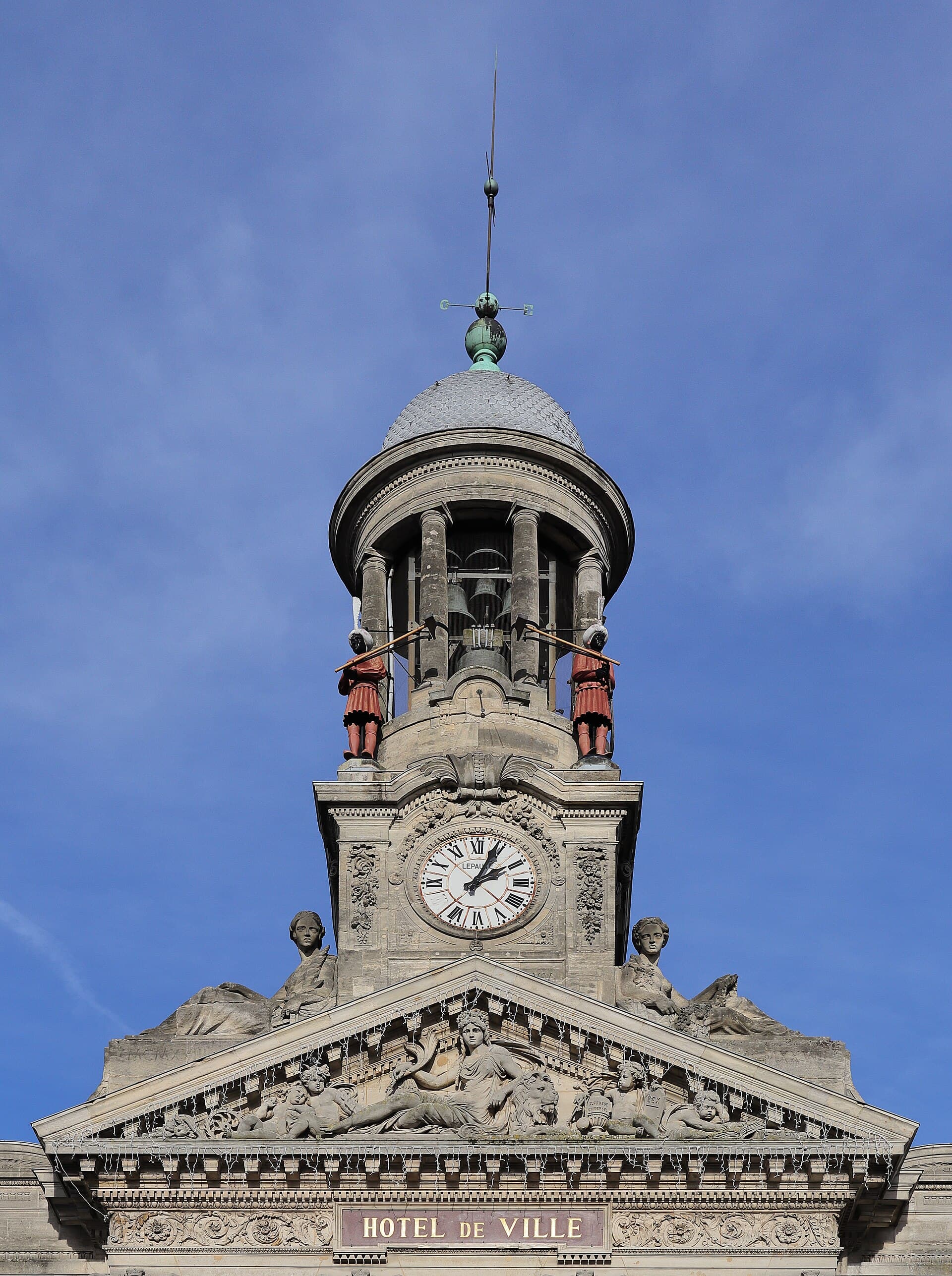
Look up at the Town Hall's bell tower, and you'll see two figures striking the hours, but their origin story is more defiant than decorative.
Full story unlocks in the tour
 JackyM59 / CC BY-SA 4.0, via Wikimedia Commons
“Where history's echoes meet sweet surprises.”
Not the postcards. The stories even locals don't know — whispered in your ear, right where they happened.
Look up at the Town Hall's bell tower, and you'll see two figures striking the hours, but their origin story is more defiant than decorative.
The name of Cambrai's famous mint candies, 'Bêtises,' literally means 'mistakes' or 'nonsense' in French, and it's no accident.
Cambrai once held a magnificent Gothic cathedral, so grand it was nicknamed 'the Wonder of the Low Countries,' yet today, almost no trace of it remains.
Discover every secret of Cambrai
Every address, every reveal in full — in your ear, right where it happened.
You pick your stops. You walk. The voice reveals what the others miss.
No tours available yet. Check back soon — we're preparing them.
Cambrai, a city in the Nord department of northern France, offers a captivating blend of architectural charm, cultural depth, and a history marked by both strategic importance and resilience. Situated along the Escaut (Scheldt) River, Cambrai's origins stretch back to Roman times as Camaracum, a vital crossroads between the North Sea and the interior.
Today, the city presents a pleasant face to visitors, with its compact historic center easily explored on foot. It's a place where medieval fortifications meet neoclassical elegance, and where the echoes of pivotal historical events resonate alongside the relaxed rhythm of daily life. Cambrai invites those seeking an authentic French experience, combining heritage, local specialties, and a welcoming atmosphere.
## From Roman Outpost to Episcopal Powerhouse Cambrai's story begins as Camaracum, a Roman settlement that gained importance due to its strategic location at a crossroads of ancient routes. By the early 5th century, it had replaced Bavay as the regional capital of the Nervii. The city's Christian roots are tied to Saint Géry in the 6th and 7th centuries, and it grew into a powerful episcopal city during the Middle Ages. Its bishops held significant spiritual and temporal power, making Cambrai a prince-bishopric within the Holy Roman Empire, distinct from the Kingdom of France for centuries.
## A City of Treaties and Transitions Cambrai's frontier position made it a frequent point of contention and negotiation between European powers. In 1508, it hosted the formation of the League of Cambrai, an alliance against Venice. Two decades later, the city was the setting for the 'Paix des Dames' (Peace of Ladies) in 1529, a significant treaty negotiated by Louise of Savoy and Margaret of Austria, ending a phase of conflict between France and the Holy Roman Empire. Cambrai was eventually annexed to the Southern Netherlands under the Habsburgs and later conquered by Louis XIV, becoming permanently part of France in 1677, a union confirmed by the Treaty of Nijmegen in 1678.
## War and Rebirth The 20th century brought immense challenges to Cambrai. The city was occupied by the German army for four years during World War I, experiencing looting and destruction. The Battle of Cambrai in November–December 1917 is particularly notable as the first large-scale, effective use of tanks in warfare, fundamentally changing military strategy. The city center suffered significant damage, with its town hall and municipal archives destroyed when the Germans burned Cambrai in 1918 before retreating. World War II also left its mark, with air strikes targeting railway lines. Despite these devastations, Cambrai has been rebuilt and revived, preserving its extensive past and architectural treasures.
Begin your exploration at the UNESCO-listed Belfry of Cambrai, a symbol of communal freedom that offers expansive views of the city from its 62-meter height. The Grand'Place, overlooked by the belfry, is a lively hub with Flemish facades and brasseries, hosting markets and festivals. Here, you'll also find the Town Hall, a classical building rebuilt after WWI, and the 16th-century Maison Espagnole, which houses the tourist information center.
A short walk leads to the Notre-Dame-de-Grâce Cathedral, a neoclassical structure rebuilt after the French Revolution, featuring a luminous interior and the tomb of Archbishop Fénelon. Do not overlook the Church of Saint-Géry, one of the city's oldest sites, home to Rubens' masterpiece, 'The Entombment,' and a marble rood screen.
For a deeper dive into Cambrai's past, the Musée des Beaux-Arts in an 18th-century mansion showcases art from various periods, including a remarkable 17th-century relief map of Cambrai. Explore the remains of the Citadel of Emperor Charles V, including the Royal Gate with its drawbridge and a 16th-century arsenal. The Porte Notre-Dame is one of the best-preserved medieval gates, with ancient ramparts now serving as tree-lined promenades.
Beyond the city center, the Cambrai Tank 1917 Museum in Flesquières provides insight into the pivotal World War I battle. For art enthusiasts, the Matisse Museum in nearby Le Cateau-Cambrésis, the artist's birthplace, houses a significant collection of his works.
The most pleasant times to visit Cambrai are during spring (April to June) and early autumn (September). These months offer mild weather, comfortable temperatures ranging from 19°C to 24°C, and lighter crowds, perfect for exploring the city's outdoor attractions and enjoying its gardens. Summer (July and August) is also suitable, with warmer temperatures and more sunshine, ideal for riverside relaxation and outdoor dining. Winter brings a quieter atmosphere and occasional festive lights around Christmas. Market days, Tuesdays and Saturdays, offer a glimpse into local life.
Cambrai is well-connected and easily accessible. By train, regional (TER) services link Cambrai to Lille, Douai, Valenciennes, and Saint-Quentin, with connections to Paris. The train station is conveniently located within walking distance or a short bus ride from the city center. If traveling by car, Cambrai sits at a junction of motorways (A1, A2, A26), making it easily reachable from Paris, Lille, Reims, and Belgium. Several public car parks are available near the town center; check local signage for current conditions.
The city center is compact and walkable, with many attractions close to each other. Public transportation, primarily a bus network, is available, but there are no underground or tramway services. For visiting World War I sites outside the city, a car or bicycle rental is recommended. Dressing in layers is advisable due to changeable weather, and comfortable walking shoes are a necessity for the charming, uneven surfaces of the city. The European emergency line is 112.