Calle Puchalt (The Spanish Flag Stairs)
There's a street in Calpe's Old Town that's more than just a path; it's a lively canvas.
Full story unlocks in the tour
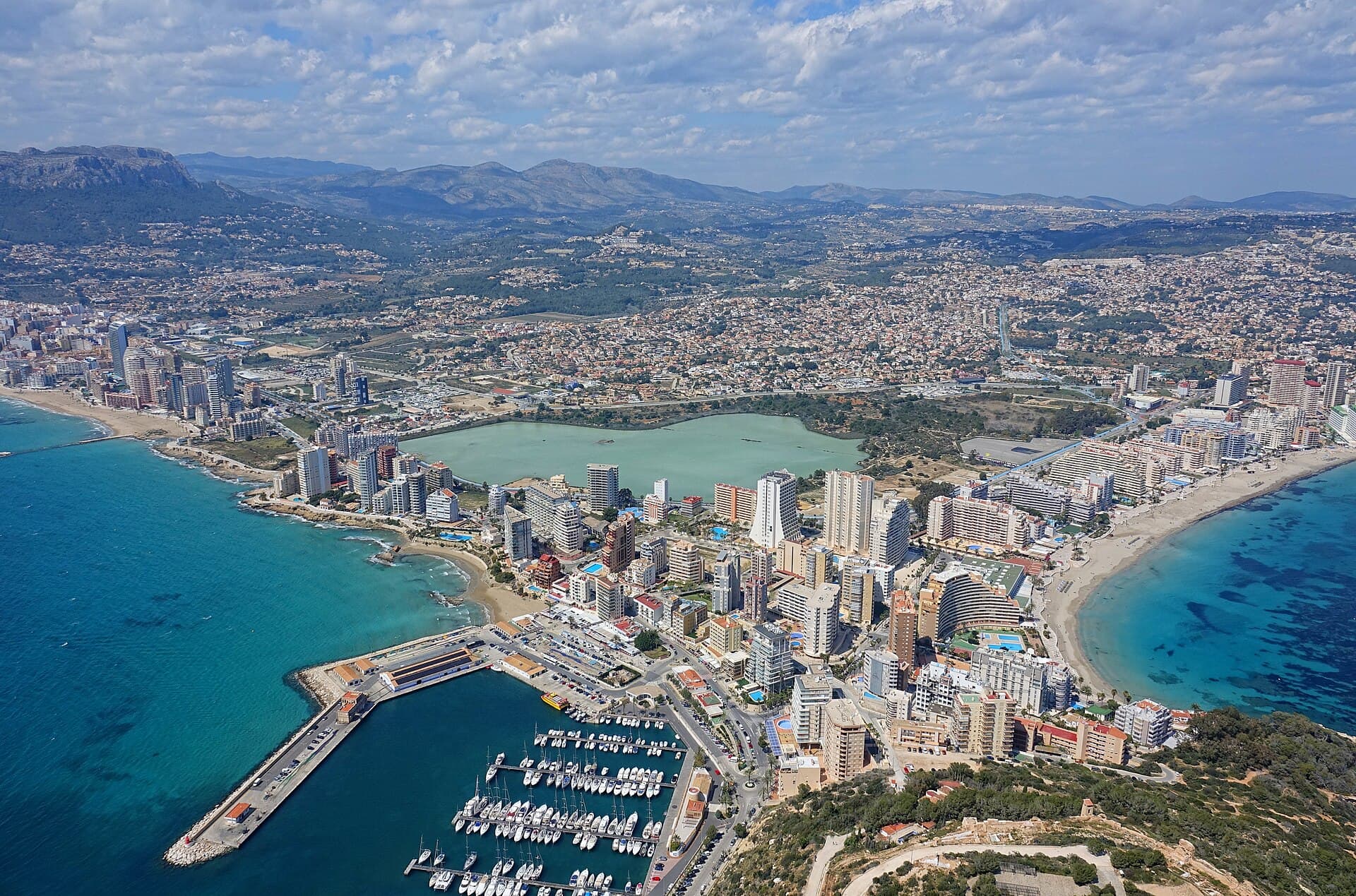 Bjørn Christian Tørrissen / CC BY-SA 4.0, via Wikimedia Commons
“Where ancient stone meets the Mediterranean air.”
Not the postcards. The stories even locals don't know — whispered in your ear, right where they happened.
There's a street in Calpe's Old Town that's more than just a path; it's a lively canvas.
Imagine a gap in an ancient wall, not for defense, but for something far more elemental to a fishing town.
In the heart of an urban landscape, a natural saltwater lagoon thrives with unexpected residents.
Discover every secret of Calpe
Every address, every reveal in full — in your ear, right where it happened.
You pick your stops. You walk. The voice reveals what the others miss.
No tours available yet. Check back soon — we're preparing them.
Calpe, or Calp in Valencian, is a coastal town in Spain's Alicante province, part of the Valencian Community. It is a place where the dramatic Peñón de Ifach, a towering limestone rock, rises 332 meters from the sea, serving as an iconic landmark for the Costa Blanca. This former fishing village has evolved into a popular destination, blending its enduring story and natural splendor with modern amenities.
With over 12 kilometers of coastline, Calpe offers a diverse range of experiences, from expansive sandy beaches to secluded coves. The town's strategic location has attracted various civilizations throughout history, leaving behind a compelling cultural imprint. Calpe is a destination that appeals to a variety of travelers, whether seeking sun-soaked relaxation, outdoor adventures, or a taste of authentic Spanish life.
## From Ancient Settlements to Pirate Raids Calpe's story stretches back thousands of years, with evidence of human civilization dating to the Bronze Age. Its strategic coastal position on the Mediterranean attracted various cultures, including Iberian tribes, Phoenicians, Romans, and Moors, all of whom left their mark on the town.
The Romans established a significant colony in Calpe around the 3rd century BC, developing it into an important commercial and fishing hub. They built a port to facilitate trade and a prosperous industry for salted and canned fish, utilizing the natural salt flats. The archaeological site of the Baños de la Reina (Queen's Baths), with its Roman-era fish farms and baths, stands as a testament to this period.
Following the fall of the Roman Empire, Calpe was successively ruled by the Visigoths and then the Muslims. During the Middle Ages, the town experienced periods of both prosperity and peril. Fortifications were built in the 14th century to protect against constant pirate raids, a recurring threat to the coastal community. In 1659, the town was sacked, and 300 citizens were taken captive, only to be released after a hefty ransom. These historical struggles are commemorated annually in the town's festival of Moors and Christians.
## Modern Development and Tourism By the end of the 19th and beginning of the 20th centuries, as pirate attacks became less frequent, Calpe began to attract tourism, building on its established fishing and salt industries. The construction of the Ifach Parador hotel in 1935 marked a significant step in its development as a holiday destination. Today, Calpe harmoniously blends its historical roots with a modern tourism infrastructure, offering a unique mix of natural beauty, cultural heritage, and contemporary comforts.
Begin your exploration at the iconic Peñón de Ifach Natural Park, a towering limestone rock offering expansive views of the Costa Blanca. You can hike to its summit, with trails ranging from accessible to more challenging sections through a tunnel. Afterwards, unwind on one of Calpe's appealing beaches like Arenal-Bol or La Fossa, both known for their golden sands and clear waters. For a quieter experience, seek out smaller coves such as Cala del Morelló or Cala Calalga.
Delve into the past by exploring Calpe's Old Town, with its maze of narrow streets, whitewashed houses, and colorful murals. Key historical sites include the Torreó De La Peça, a restored watchtower, and the Gothic-Mudejar style Ancient Church. Do not overlook the archaeological site of Baños de la Reina, Roman-era fish farms right on the bay. For nature lovers, Las Salinas de Calpe, a saltwater lagoon, is a prime spot for birdwatching, especially for flamingos.
Calpe enjoys a classic Mediterranean climate with over 300 days of sunshine annually, making it a year-round destination. The best times to visit are from March to June and September, when the weather is warm, and crowds are thinner. During these months, temperatures are comfortable for hiking and exploring, and the sea is warm enough for swimming. Summer (July and August) is peak season, ideal for beach lovers and festivals, though it can be very hot and crowded. Autumn offers warm sea temperatures with fewer crowds, while winter provides a mild climate, popular with long-stay visitors.
Calpe is conveniently located on the northern Costa Blanca, approximately one hour from Alicante Airport, which is the nearest major airport. It is easily accessible by road and well-connected to surrounding coastal resorts and inland villages. The local languages are Spanish and Valencian, with English widely spoken in tourist areas. The town offers modern medical facilities and pharmacies.
For getting around, Calpe's compact layout makes it visitor-friendly, with long promenades perfect for strolling. Public transportation options are available, though renting a car can provide more flexibility for exploring the wider region. Parking can be found at locations like APK2 Plaza Mayor Calpe. Various accommodations are available, from modern apartments to villas with sea views.