El Gato del Río Park
A giant bronze cat stands sentinel by the Cali River, surrounded by numerous smaller, colorful felines. There's a particular reason these 'girlfriends' joined the original years later.
Full story unlocks in the tour
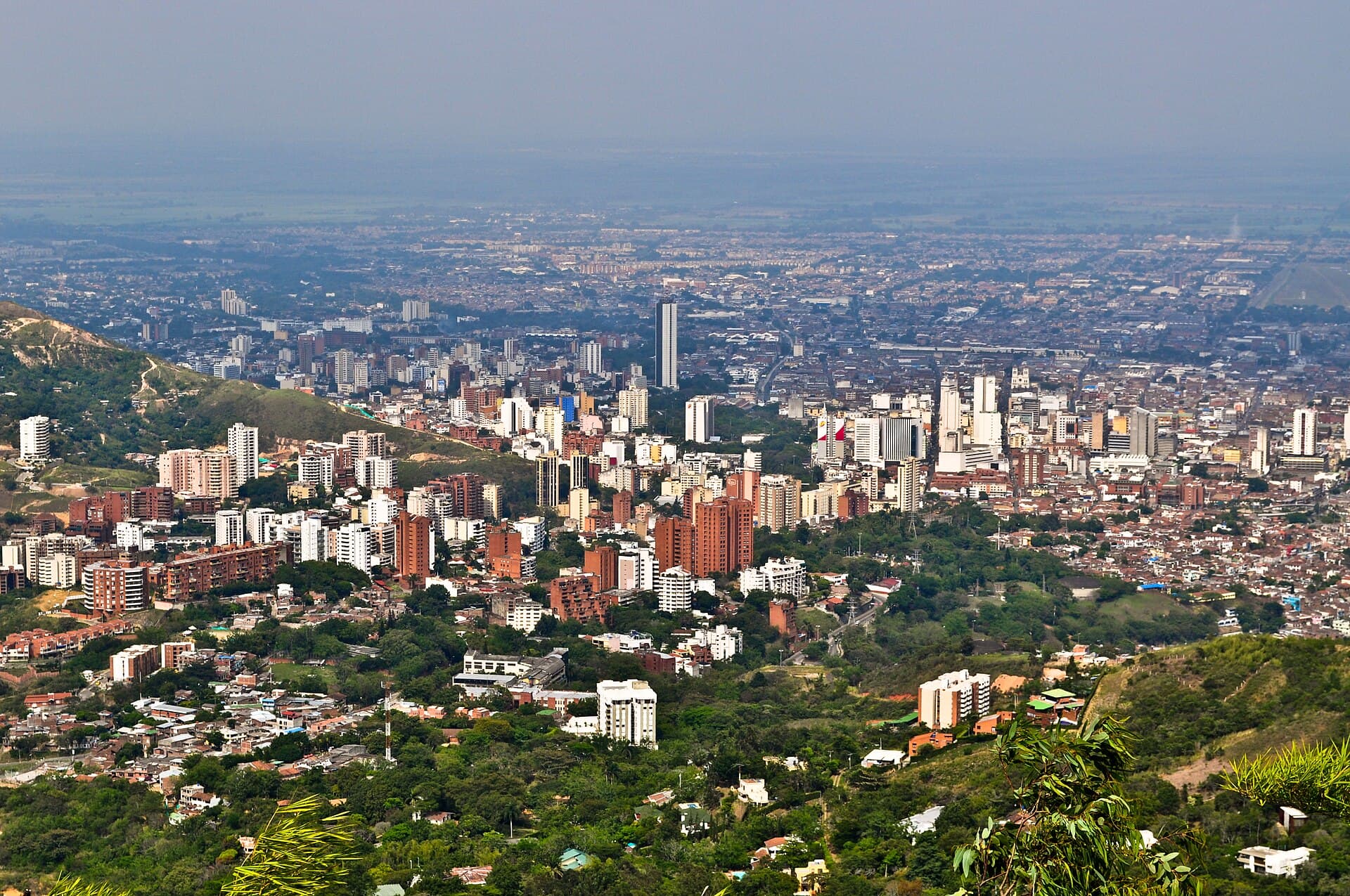 Aleko | David Alejandro Rendón © / CC BY-SA 3.0, via Wikimedia Commons
“Cali: Where salsa's rhythm orchestrates life itself.”
Not the postcards. The stories even locals don't know — whispered in your ear, right where they happened.
A giant bronze cat stands sentinel by the Cali River, surrounded by numerous smaller, colorful felines. There's a particular reason these 'girlfriends' joined the original years later.
Cali, celebrated as the 'Salsa Capital of the World,' developed its distinctive, rapid 'Salsa Caleña' style not by chance. Its evolution connects surprisingly to how DJs spun their records.
The verdant landscape surrounding Cali, filled with sugarcane fields, tells a story far deeper than mere agriculture. This crop carries a profound and often challenging history, woven into the region's identity.
Discover every secret of Cali
Every address, every reveal in full — in your ear, right where it happened.
You pick your stops. You walk. The voice reveals what the others miss.
No tours available yet. Check back soon — we're preparing them.
Santiago de Cali, Colombia's third-largest city, serves as the capital of the Valle del Cauca department. It rests in the subtropical intermontane Cauca Valley, at an elevation of approximately 1,000 meters (3,280 feet). The city experiences a tropical savanna climate, often described as an 'eternal summer,' with consistent temperatures throughout the year. This steady warmth, complemented by a refreshing 'Brisa Valluna' (valley breeze) that descends from the Farallones de Cali mountains each afternoon, sets the scene for a city that truly awakens in the evenings.
Globally recognized as the 'Salsa Capital of the World,' Cali pulses with an irresistible rhythm. Music flows from every corner, and locals, known as Caleños, move with an intrinsic connection to the beat. Beyond its renowned dance scene, Cali offers a rich array of cultural experiences, from its diverse cuisine—a blend of Spanish, indigenous, and African influences—to its many museums and historical sites. It is a city that invites you to not merely visit, but to feel its pulse and embrace its distinct character.
Before Spanish arrival, indigenous tribes, primarily Cariban language speakers like the Gorrones, inhabited the region between the Cauca River and the Western Cordillera. Santiago de Cali was established on July 25, 1536, by Spanish explorer Sebastián de Belalcázar. Initially, the settlement was in a different location, but it moved to its current site in 1537, where the Church La Merced now stands. During the colonial era, Cali formed part of the gobernación of Popayán, though Popayán eventually became the capital due to its more favorable weather.
For centuries, Cali's economy remained largely agricultural, centered on large estates, or haciendas, cultivating sugarcane, cotton, and corn, alongside livestock ranching. Sugarcane, introduced by Belalcázar in 1540, became a defining crop of the region. This plantation economy, however, relied on the labor of enslaved Africans, leaving a profound demographic and cultural legacy still deeply visible in Cali today. This fusion of European, indigenous, and African cultures formed the bedrock of Cali's unique identity.
Cali's economic development truly accelerated in the 1950s. The city became the capital of the newly formed Valle del Cauca department in 1910, and the completion of the railway connecting Cali to the Pacific port of Buenaventura in 1914 significantly boosted trade. In 1957, the inaugural Feria de Cali (Cali Fair) took place, an event that would become a defining cultural cornerstone. The 1970s marked the beginning of Cali's salsa boom, as Cuban rhythms traversed the Caribbean and were embraced by the city, leading to the development of its distinctive 'Salsa Caleña' style. In 1971, Cali hosted the Pan American Games, earning it the designation of 'Sports Capital of Colombia.'
Begin your exploration in the historic San Antonio neighborhood, known for its colonial architecture and artistic atmosphere. Wander its appealing streets, discover local artisan shops, and enjoy the sunset from San Antonio Park. The city center offers historical landmarks like La Ermita Church, a neo-Gothic structure inspired by Germany's Ulm Minster, and the grand Plaza de Caicedo.
Along the Cali River, visit El Gato del Río Park, home to the iconic bronze 'River Cat' sculpture by Hernando Tejada and its many colorful 'girlfriends'—smaller cat sculptures decorated by various Colombian artists. For sweeping city views, make your way to Cristo Rey, a large statue overlooking Cali, or ascend Cerro de las Tres Cruces. Immerse yourself in Cali's cultural heritage at the Museo La Tertulia, a modern art museum, or the Museo del Oro Calima, displaying pre-Columbian gold artifacts. A visit to Cali remains incomplete without experiencing its salsa scene; consider taking a dance class or visiting a local salsa club.
Cali enjoys a tropical climate with consistent temperatures year-round, averaging around 24°C (75°F). The city experiences two relatively dry seasons: from December to March and from July to September. These periods are generally considered the best times to visit, offering sunny weather and fewer rainy days. The most celebratory time is during the Feria de Cali, a week-long observance of music, parades, and dance from December 25th to 30th. Another excellent time for cultural immersion is August, during the Petronio Álvarez Festival, Latin America's largest Afro-Pacific music festival.
Navigating Cali is made easy by the Masivo Integrado de Occidente (MIO) mass transit system, which covers most of the city with dedicated lanes. Taxis also offer a reliable and inexpensive option, and ride-sharing apps like Uber, Didi, Beat, Way Cali, and Cabify are widely utilized. For safety, it is advisable to use trusted taxi services or apps, especially after dark.
When exploring Cali, particularly in public areas, it is wise to be discreet with valuables and avoid displaying expensive items to minimize the risk of theft. Carrying only essential documents and a photocopy of your passport is recommended, leaving originals in a secure location. While Cali has seen significant improvements in safety, particularly in tourist areas, it is always best to be aware of your surroundings, avoid walking alone at night, and politely decline items offered by strangers.