Calgary Tower
Developers of the Calgary Tower initially understated its height.
Full story unlocks in the tour
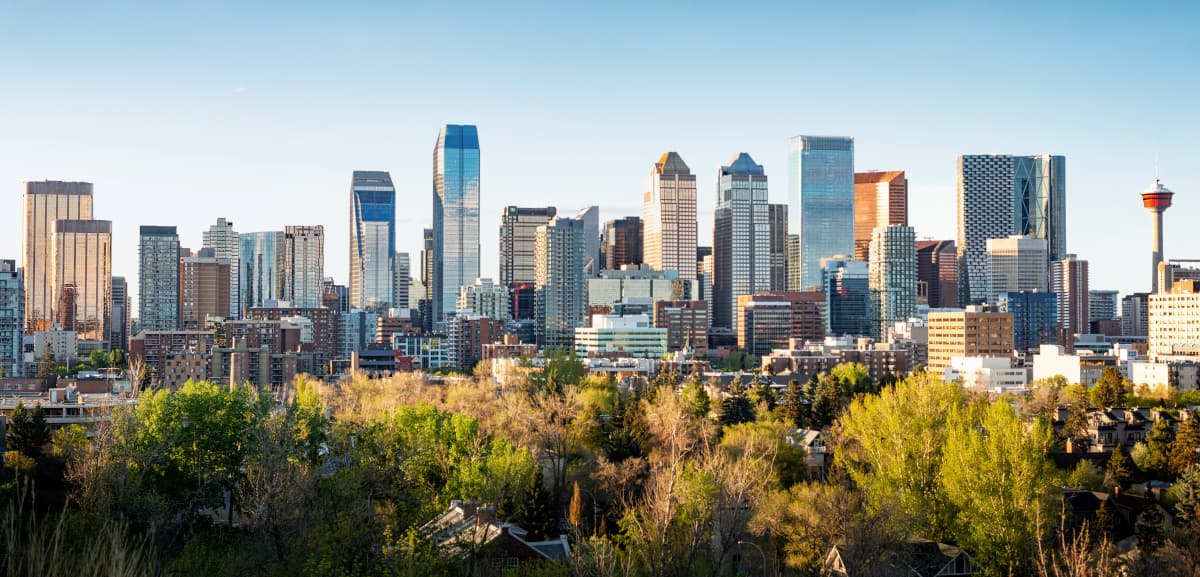 AceYYC / CC BY-SA 4.0, via Wikimedia Commons
“Where prairie spirit meets mountain grandeur.”
Not the postcards. The stories even locals don't know — whispered in your ear, right where they happened.
Developers of the Calgary Tower initially understated its height.
A Canadian-Chinese culinary staple was invented in Calgary, not China.
There's a vast, climate-controlled world above Calgary's streets that most visitors don't fully explore.
Discover every secret of Calgary
Every address, every reveal in full — in your ear, right where it happened.
You pick your stops. You walk. The voice reveals what the others miss.
No tours available yet. Check back soon — we're preparing them.
Calgary, Alberta's largest city, is a dynamic urban center where the vast Canadian prairies meet the foothills of the Rocky Mountains. Known as 'Cowtown' and 'Stampede City,' Calgary embraces a metropolitan Wild West charm, blending its past with a forward-thinking spirit. The city presents a modern skyline, with the Calgary Tower offering sweeping views of the city, the surrounding prairies, and the mountains in the distance.
Calgary is a city of intriguing contrasts. It is recognized for its high quality of life and is one of Canada's sunniest major cities, averaging over 2,300 hours of sunshine annually. This abundance of sun encourages an active outdoor lifestyle, complemented by an extensive urban pathway network. Beyond its natural beauty and outdoor pursuits, Calgary is a center for Canada's oil and gas industry, while also investing heavily in clean energy innovation. The city's diverse population, with over 120 languages spoken, contributes to a rich cultural scene.
Calgary's story begins in 1875 with the establishment of a North-West Mounted Police post where the Bow and Elbow rivers meet. Originally named Fort Brisebois, it was renamed Fort Calgary in 1876, taking its name from Calgary Bay in Scotland. The fort's initial purpose was to combat the illegal whisky trade and maintain law and order in Western Canada, setting the stage for future settlement.
The arrival of the Canadian Pacific Railway in 1883 was a pivotal moment, connecting Calgary to eastern Canada and spurring rapid growth. The settlement quickly expanded, becoming an incorporated town in 1884 and a city just ten years later, in 1894. Early Calgary gained a reputation as a 'cow town' due to its role as a shipping center for the developing cattle industry.
A devastating fire in 1886 destroyed many of Calgary's early timber-frame buildings. In response, the city rebuilt with fire-resistant sandstone, leading to its nickname 'Sandstone City' and shaping its distinctive architectural style, which can still be seen on streets like Stephen Avenue.
The discovery of natural gas in 1914 and crude oil in 1936 further transformed Calgary, cementing its status as a business center and attracting a new wave of growth centered on the petroleum industry. This oil boom continued throughout the century, with Calgary becoming the administrative heart of the Canadian oil industry. The city also made its mark on the global stage by hosting the XV Olympic Winter Games in 1988, an event that significantly raised Calgary's international profile.
Begin your exploration at the Calgary Tower, an observation tower offering 360-degree views of the city, the prairies, and the distant Rocky Mountains. For a journey back in time, visit Heritage Park Historical Village, Canada's largest living history museum, showcasing life in Western Canada from the 1860s to the 1950s. Animal lovers will enjoy the Calgary Zoo, one of North America's top-rated zoos, recognized for its diverse exhibits and conservation efforts.
Immerse yourself in arts and culture at Studio Bell, home of the National Music Centre, a state-of-the-art facility featuring a museum, performance hall, and recording studios. The Glenbow Museum is another cultural highlight, with extensive collections focused on Western Canadian art, history, and culture. For a peaceful escape within the city, stroll through Prince's Island Park, an urban oasis on the Bow River with walking paths, gardens, and seasonal outdoor skating. Don't miss the striking Peace Bridge, a bright red architectural landmark spanning the Bow River, designed by Santiago Calatrava.
The best time to visit Calgary is during the summer months, from June to August, when the weather is warm and pleasant. Average temperatures range from 20°C to 26°C (68°F to 79°F), making it ideal for outdoor activities. This period is also Calgary's festival season, highlighted by the Calgary Stampede in July. Spring (April-May) and fall (September-October) offer milder temperatures and fewer crowds, with beautiful foliage in autumn. While winters are cold, they provide opportunities for winter sports, and Calgary is Canada's sunniest major city year-round.
Calgary International Airport (YYC) is a major hub with numerous flight options. While public transit, including the CTrain and buses, is available and efficient, with free fares in the downtown core, renting a car is often recommended for exploring beyond city limits, especially if you plan to visit the nearby Rocky Mountains. Taxis and rideshare services are also readily available.
Calgary generally offers a safe environment for tourists, particularly in well-trafficked areas. It's always advisable to be aware of your surroundings, especially at night, and stick to well-lit, populated areas. The Alberta Tourism Levy and a Destination Marketing Fee apply to hotel stays. For detailed travel information, including entry requirements for Canada, consult the Government of Canada's official websites.