Zrinski Castle
Čakovec's most iconic landmark, Zrinski Castle, holds a secret that speaks to its very foundations.
Full story unlocks in the tour
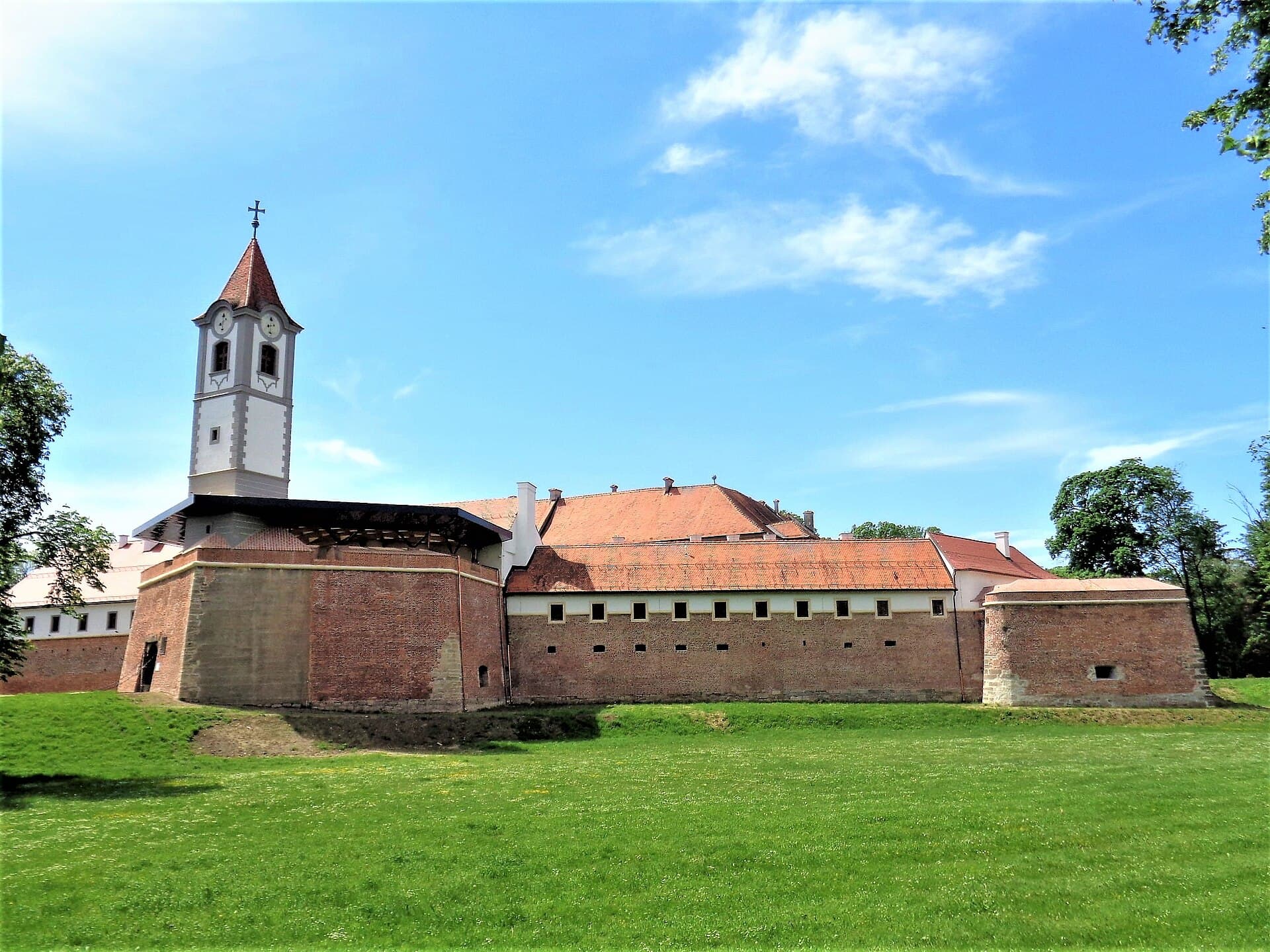 Silverije / CC BY-SA 4.0, via Wikimedia Commons
“Where history echoes through modern roundabouts.”
Not the postcards. The stories even locals don't know — whispered in your ear, right where they happened.
Čakovec's most iconic landmark, Zrinski Castle, holds a secret that speaks to its very foundations.
Navigating Čakovec's city center is surprisingly smooth, a testament to an unusual urban planning decision.
A quiet corner in Čakovec marks a significant, yet somber, piece of the city's past.
Discover every secret of Čakovec
Every address, every reveal in full — in your ear, right where it happened.
You pick your stops. You walk. The voice reveals what the others miss.
No tours available yet. Check back soon — we're preparing them.
Čakovec, the county seat of Međimurje, is a city in northern Croatia, approximately 90 kilometers (56 miles) north of Zagreb. It is the northernmost, smallest, and most densely populated Croatian county, situated along the Trnava river, close to the borders with Slovenia and Hungary.
Known as the 'City of Zrinskis' due to its historical connection with the influential Zrinski noble family, Čakovec offers a blend of historical charm and modern efficiency. The city has been recognized for its tidiness, receiving the 'Green Flower' award multiple times for the tidiest continental city in Croatia.
## From Roman Fort to Noble Stronghold Čakovec's origins stretch back to the 1st century when it was known as Aquama, a Roman military post and legionnaire camp in a marshland area. The city's current name is believed to derive from Count Csáky, who erected a wooden fort in the early 13th century, which later expanded into the Old Town.
Significant economic and cultural growth began on March 15, 1546, when Nikola IV Zrinski became the owner of the area. The Zrinski family, a prominent Croatian noble family, transformed the castle into a lavishly decorated Renaissance court with ramparts and unique brick bastions, making Čakovec a significant political and cultural center. On May 29, 1579, Duke Juraj IV Zrinski granted privileges to the inhabitants, a date still celebrated as 'City Day,' marking Čakovec's establishment as a free market town.
## Earthquakes, Fires, and Industrial Growth The city faced challenges, including a devastating earthquake in 1738 and a large fire in 1741. The castle was rebuilt in the Baroque style after the earthquake, an appearance that largely remains today. In the late 18th century, the Festetics family took ownership, fostering industrial, craft, and trade development. The mid-19th century brought further connections, with the first railroad track built in 1860, linking Budapest with the ports of Rijeka and Trieste, solidifying Čakovec's role as an important trading station. Electricity was introduced in 1893.
## 20th Century and Beyond Čakovec was part of Hungary until 1918 when it was annexed to Croatia. It was again part of Hungary during World War II, from 1941 to 1945, before being returned to Croatia by the Soviet Red Army. In the late 1990s and early 2000s, Čakovec implemented a distinctive urban planning strategy, replacing all inner-city traffic lights with roundabouts to improve traffic flow. Today, Čakovec continues to be a regional hub, with a strong economy based on textile, footwear, food processing, and metal industries.
The heart of Čakovec is its well-preserved historical core. The most prominent landmark is Zrinski Castle, also known as the 'Zrinski Old Town,' which houses the Međimurje Museum. The museum's collection includes approximately 17,000 exhibits, ranging from archaeological artifacts to medieval weapons and local artworks. The castle's atrium also serves as an outdoor theater during summer months. Surrounding the castle is Zrinski Park, a spacious green area with walking paths and monuments to members of the Zrinski family.
Just a short walk from the central square is the Church of Saint Nicholas, a Baroque-style Franciscan church and monastery built in the first half of the 18th century. Its facade, from the turn of the 20th century, features reliefs of Hungarian kings. On the main square, Trg Republike, you'll find the Commercial Casino building (Trgovački Kasino), an example of Hungarian Secession style architecture from 1903. While its interior is generally not open to the public, its exterior is notable. For those interested in local art, the Zgrada Scheier is an old house that hosts an art gallery and various events. Additionally, a memorial marks the site of the former Čakovec Synagogue, which was destroyed in 1944.
The best time to visit Čakovec for warm-weather activities is from early June to early September. During this period, average high temperatures range from 20°C (68°F) to 27.4°C (81.3°F), with ample daylight for exploration. May also offers pleasant spring weather, with mild to warm temperatures and moderate crowds, making it a good shoulder season option. Rainfall is relatively low in June, making it ideal for outdoor activities.
If you visit in late July and early August, you can experience the Porcijunkulovo Festival, a lively event that fills the city with colorful umbrellas, local food producers, crafters, and music.
The official currency in Croatia is the Euro (€). While Croatian is the official language, English and German are also spoken, especially in tourist areas. Čakovec is easily accessible, located approximately 90 kilometers north of Zagreb. You can reach Čakovec from Zagreb by bus in about 1 hour and 55 minutes, with tickets costing between €7 and €17. The central bus station in Čakovec is located adjacent to the town center, offering kiosks, shops, bakeries, and coffee shops. Most attractions in the city center are within walking distance, and Čakovec is known for its pedestrian-friendly areas. Local bus fares are typically inexpensive. Tap water in Čakovec is safe to drink.