Quebrada de las Conchas Amphitheater
The natural acoustics of this colossal rock formation are so precise, they transform even a simple tune into something profound.
Full story unlocks in the tour
 Bernard Gagnon / CC BY-SA 4.0, via Wikimedia Commons
“Where the Andes meet the vine, and the desert murmurs ancient stories.”
Not the postcards. The stories even locals don't know — whispered in your ear, right where they happened.
The natural acoustics of this colossal rock formation are so precise, they transform even a simple tune into something profound.
In a region celebrated for its high-altitude wines, locals have discovered another, unexpected way to savor their renowned Torrontés.
This historic hotel, now a luxurious sanctuary, once played an unexpected role in the region's agricultural past, long before it welcomed guests.
Discover every secret of Cafayate
Every address, every reveal in full — in your ear, right where it happened.
You pick your stops. You walk. The voice reveals what the others miss.
No tours available yet. Check back soon — we're preparing them.
Cafayate, a town in Argentina's Salta province, offers a compelling fusion of high-altitude vineyards and striking desert expanses. It rests at an elevation of 1,683 meters (5,522 feet) above sea level within the Calchaquí Valleys, a region recognized for its clear, sun-drenched skies and a more tranquil pace than Argentina's larger wine areas. The town itself is compact and welcoming, gathered around a verdant main square where cafes extend onto the pavements and local life gently unfolds.
While Mendoza may claim the title for Argentina's most famous wine region, Cafayate forges its own identity, particularly revered for its Torrontés grape. This aromatic white wine thrives in the unique terroir of the Calchaquí Valleys, characterized by intense sunlight, dry sandy loam soils, and a significant diurnal temperature variation—hot days and cool nights. Beyond its viticultural prowess, Cafayate serves as a gateway to inspiring natural wonders, with the vivid red rock formations of the Quebrada de las Conchas just a short drive away.
The journey to Cafayate is an experience in itself, with scenic routes like National Route 68 from Salta providing expansive views of shifting landscapes, from green canyons to towering red rock formations. Whether you are a wine enthusiast, an outdoor adventurer, or simply seeking a peaceful escape, Cafayate extends a distinctive and memorable Argentine experience.
The region of Cafayate, within the Calchaquí Valleys, possesses a history reaching back to pre-Columbian times. Indigenous groups, primarily the Diaguita-Calchaquí cultural complex, including the Cafayates and Tolombón tribes, inhabited the area from approximately 1000 AD. These communities engaged in settled agriculture and herding, supporting dense populations. The name 'Cafayate' itself is thought to derive from the Cafayates tribe, with its etymology traced to either Quechua or Cacán linguistic origins, possibly meaning 'water basket' or 'grave of sorrows'.
Around 1480, the influence of the Inca Empire reached these valleys, following a period of prolonged resistance from the local tribes. The arrival of the Spanish conquistadors in 1535 marked a new era of fierce resistance from the indigenous populations. The Quilmes people, for instance, famously resisted Spanish conquest for about 150 years. Their enduring legacy is evident in archaeological sites like the Ruins of Quilmes, located approximately 50 km from Cafayate, which stands as Argentina's largest pre-Columbian settlement with over 3,000 stone structures.
Cafayate was officially established in 1840 by Manuel Fernando de Aramburu, on land donated by his mother, Doña Josefa Antonia Frías de Aramburu. The town was founded at the site of a former Jesuit mission. In 1863, the Cafayate Department was created, with Cafayate as its capital, gaining independence from San Carlos. By the late 19th century, the town's population reached about 5,000, growing to over 10,000 by the mid-20th century.
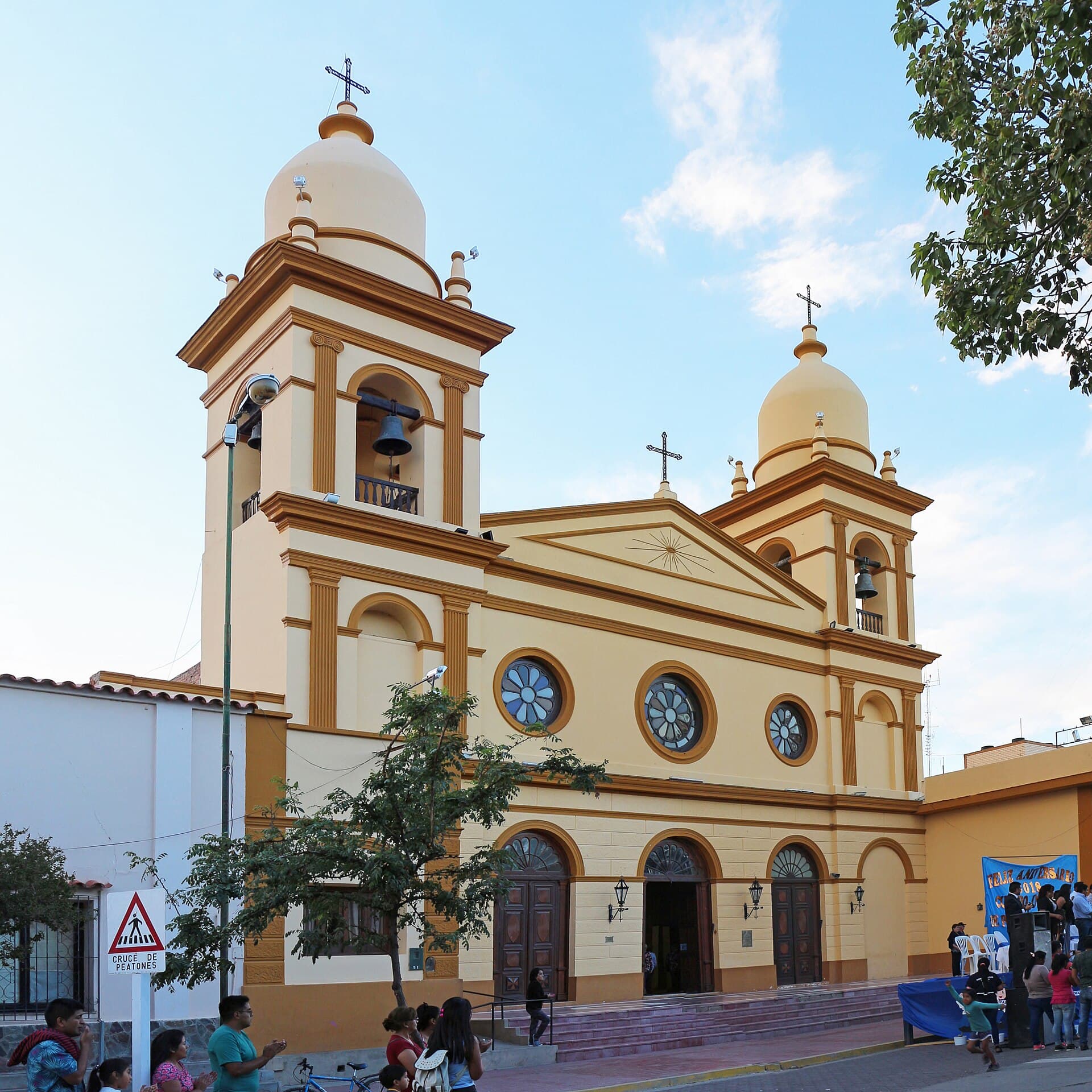
While maintaining its pastoral and agrarian atmosphere for many decades, the local agricultural activity gradually fostered a robust viticulture industry. The late 19th century saw significant developments, including the inauguration of the Banco de la Nación Argentina in 1896 and the installation of the first electrical power plant in 1926. The present church, consecrated in 1895, is notable as one of only three churches in America to have five aisles.
Today, Cafayate preserves its colonial-era buildings and continues to be a center for cultural events, including the annual 'Serenade to Cafayate' folklore festival, established in 1974. Indigenous heritage remains a core element of Cafayate's ancestral diversity, with ongoing cultural practices and traditional festivals highlighting indigenous craftsmanship and spirituality. The town's flourishing wine culture, particularly its Torrontés, has brought it international recognition, making it a significant tourist destination within the Calchaquí Valleys.
Cafayate presents a compelling blend of natural wonders and cultural experiences. A visit to the Quebrada de las Conchas Natural Reserve is essential. This dramatic gorge, with its vivid red sandstone formations sculpted by wind and water, is a regional highlight. Key formations include the Amphitheater, known for its exceptional acoustics, and the Devil's Throat (Garganta del Diablo), a towering red rock gorge. Other notable formations along this scenic drive (National Route 68) include Los Castillos (The Castles), El Obelisco (The Obelisk), El Sapo (The Toad), and El Fraile (The Friar).
For wine enthusiasts, exploring Cafayate's numerous bodegas (wineries) is a rewarding endeavor. Many are within walking or cycling distance of the town center, offering tours and tastings of the region's distinctive high-altitude wines, especially the aromatic Torrontés. Notable wineries include Bodega El Esteco, Bodega Nanni, Piattelli Vineyards, and San Pedro de Yacochuya. The Museum of the Vine and Wine (Museo de la Vid y el Vino) provides an interactive overview of the region's viticultural heritage.
In town, wander around the verdant central square and explore the Paseo de los Artesanos craft market for local pottery, textiles, and wood carvings. For a deeper look into local history, the Rodolfo Bravo Archaeological Museum houses artifacts from the Diaguita-Calchaquí people. Beyond the immediate vicinity, consider a day trip to the Ruins of Quilmes, Argentina's largest pre-Columbian settlement, located in the neighboring Tucumán Province.
Cafayate experiences a semi-arid, continental climate with abundant sunshine throughout the year. The ideal time to visit for general outdoor activities is from early October to late April. During this period, the weather is pleasant with warm days and comfortable nights. March is particularly lively, coinciding with the grape harvest season and wine festivals.
Alternatively, April to November is also recommended, offering pleasant weather and minimal rainfall. Summers (December to February) are warm and dry, with daytime temperatures often exceeding 30°C (86°F), perfect for exploring natural landscapes. Winters (June to August) are cool, with daytime temperatures around 20°C (68°F) and cold nights that can drop near 0°C (32°F), ideal for enjoying wine by a fireplace. Note that the unpaved stretch of National Route 40 between Cafayate and Cachi should be avoided during the rainy season.
Cafayate is easily reached, positioned approximately 183 km (114 miles) south of Salta city. The most common way to arrive is by car or bus via National Route 68, a scenic drive that takes about 3 to 4 hours. Renting a car in Salta is a popular choice, offering the flexibility to explore the Quebrada de las Conchas and surrounding areas at your own pace. Regular bus services also connect Salta and Cafayate.
Once in Cafayate, the town center is simple to navigate on foot. Many wineries are also within walking or cycling distance, and bike rentals are available. Accommodation options range from simple hostels to boutique wine lodges. When preparing for your trip, consider comfortable, light-colored clothing, sunscreen, sunglasses, and a hat for the sunny days. A light jacket is advisable for cooler evenings, especially during summer, and warm clothes are recommended for winter visits. It is also wise to carry insect repellent.