Château de Caen
William the Conqueror's formidable castle guards a secret beneath its ancient stones.
Full story unlocks in the tour
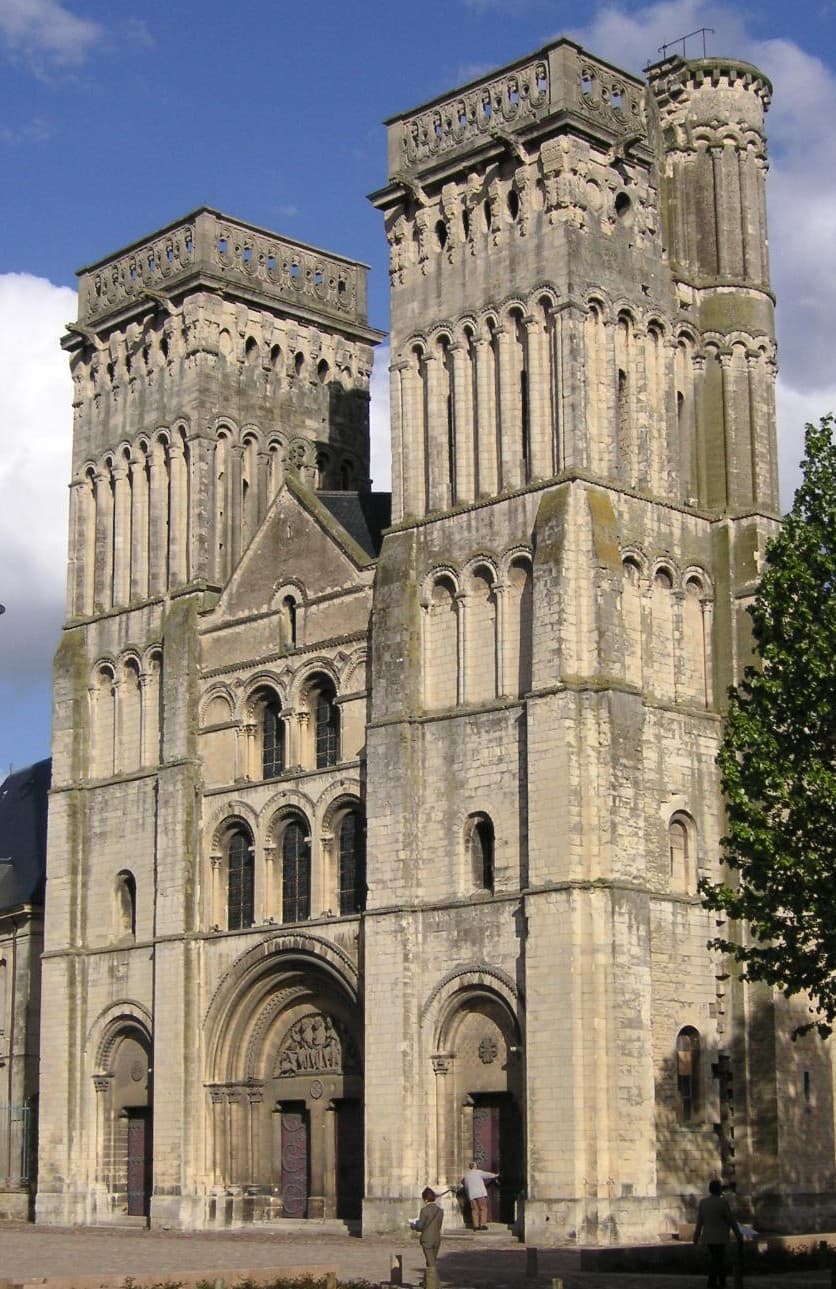 TTaylor / CC BY-SA 3.0, via Wikimedia Commons
“Caen: Where Norman foundations meet a spirit of renewal.”
Not the postcards. The stories even locals don't know — whispered in your ear, right where they happened.
William the Conqueror's formidable castle guards a secret beneath its ancient stones.
This grand abbey, established by William the Conqueror, reveals a playful aspect often overlooked.
One of Caen's most elegant Renaissance buildings is said to host a permanent, spectral resident.
Discover every secret of Caen
Every address, every reveal in full — in your ear, right where it happened.
You pick your stops. You walk. The voice reveals what the others miss.
No tours available yet. Check back soon — we're preparing them.
Caen, the historic heart of Lower Normandy, is a city forged by influential figures and defining moments. Positioned on the Orne River, a mere 15 kilometers inland from the English Channel, it presents a compelling fusion of medieval grandeur and contemporary fortitude. Often serving as an entry point to the D-Day landing beaches, Caen stands as a compelling destination in its own right, inviting travelers to delve into its layered past and dynamic present.
Though much of the city was reconstructed following the devastation of World War II, Caen retains its distinct Norman character, evident in its remarkable historical monuments and appealing neighborhoods. From the imposing Château de Caen to the tranquil abbeys, the city recounts a narrative of conquest, destruction, and enduring spirit. It is a place where history is not merely preserved in museums but felt on its well-trod pathways and animated squares.
Caen is also a verdant city, offering numerous parks and gardens for quiet ambles. As a university town, it pulses with youthful energy, reflected in its cafés, markets, and cultural events. Whether drawn to its profound historical weight, its architectural grace, or its authentic French atmosphere, Caen promises a rich and satisfying experience.
Caen's origins trace back to Roman times, when it was known as 'Catumagos,' a minor settlement. The city's prominence truly began to flourish in the 10th and 11th centuries under the Norman dukes. William the Conqueror, Duke of Normandy and later King of England, selected Caen as a primary center of power, initiating the construction of its most iconic medieval sites around 1060.
To atone for marrying his cousin, Matilda of Flanders, William established the Abbaye aux Hommes (Men's Abbey), dedicated to Saint-Étienne, where he was eventually interred. Matilda, in turn, founded the Abbaye aux Dames (Women's Abbey), dedicated to the Holy Trinity. These two grand Benedictine monasteries, alongside the formidable Château de Caen, a ducal castle and one of Europe's largest medieval fortifications, solidified Caen's status as a capital of Lower Normandy.
The city was seized by the English twice during the Hundred Years' War, in 1346 and 1417, remaining under their control until 1450. The revocation of the Edict of Nantes in 1685, which had granted rights to Protestants, significantly impacted Caen's prosperity as it had become a center of Calvinism. During the French Revolution, Caen was associated with the Girondist movement.
Caen's most dramatic modern chapter unfolded during World War II. It was a crucial strategic point in the Battle of Normandy, with the Allies initially intending to capture it on D-Day, June 6, 1944. However, fierce German resistance meant the city became a major battlefield, with intense fighting lasting over two months. Allied bombing raids heavily damaged Caen, destroying approximately 70% of the medieval city, including the spire of Saint-Pierre Church and the University of Caen, and causing over 2,000 civilian casualties. The city was finally liberated on August 6, 1944. The post-war reconstruction, completed by 1962, saw the city rebuilt largely in Caen stone, blending modern architecture with surviving historical structures.
Begin your exploration at the Château de Caen, a vast medieval fortress constructed by William the Conqueror. Walk its ramparts for expansive city views and explore the two museums within: the Musée des Beaux-Arts and the Musée de Normandie. A short distance away stands the Abbaye aux Hommes, or Men's Abbey, a magnificent Romanesque and Gothic structure housing William the Conqueror's tomb in the Church of Saint-Étienne. Its counterpart, the Abbaye aux Dames (Women's Abbey), founded by Matilda of Flanders, offers a serene atmosphere and contains her simple tomb in the Église de la Trinité.
For a thoughtful reflection on modern history, visit the Mémorial de Caen, a museum dedicated to war and peace, with extensive exhibits on World War II, the D-Day landings, and the Cold War. Stroll through the Vaugueux neighborhood, known for its few remaining half-timbered houses and medieval character, particularly lively in the evenings with restaurants. Be sure to see the Church of Saint-Pierre, a Gothic church with Renaissance additions, notable for its intricate decorations and a spire that was rebuilt after WWII damage. For a touch of greenery, explore the Jardin des Plantes (Botanical Garden) or the Parc de la Colline aux Oiseaux, a large landscaped park with themed gardens.
The best time to visit Caen is from mid-May to mid-September, when the weather is mildest and sunniest, ideal for exploring the city and nearby beaches. Summer, from June to August, offers highs around 22°C (72°F) and a lively atmosphere with festivals. However, it's also peak tourist season, so anticipate more visitors. Spring (March to May) and autumn (September to November) provide cooler temperatures (6°C to 20°C / 43°F to 68°F) and fewer people, making them excellent choices for sightseeing at a more relaxed pace. May and September are often considered the best overall months, balancing pleasant weather with moderate crowd levels.
Caen is readily accessible, located approximately two hours from Paris by train from Saint-Lazare station. The city also has its own airport, Caen-Carpiquet, with flights from southern France, Ireland, and the UK during summer. For those arriving by ferry, daily services connect Portsmouth, UK, to Ouistreham, just 15 km from Caen, with bus connections available.
The city center is easily navigable on foot, and many major attractions are within comfortable walking distance. Public transport, including the Twisto network, serves the city, with bus line 2 connecting the city center to the Mémorial de Caen. Caen is an excellent starting point for exploring the wider Normandy region, with the D-Day landing beaches, Bayeux, and other appealing towns a short drive or guided tour away. The local currency is the Euro (EUR).