The Devonshire Dome
This architectural marvel, with one of the world's largest unsupported domes, began its life in a surprising way.
Full story unlocks in the tour
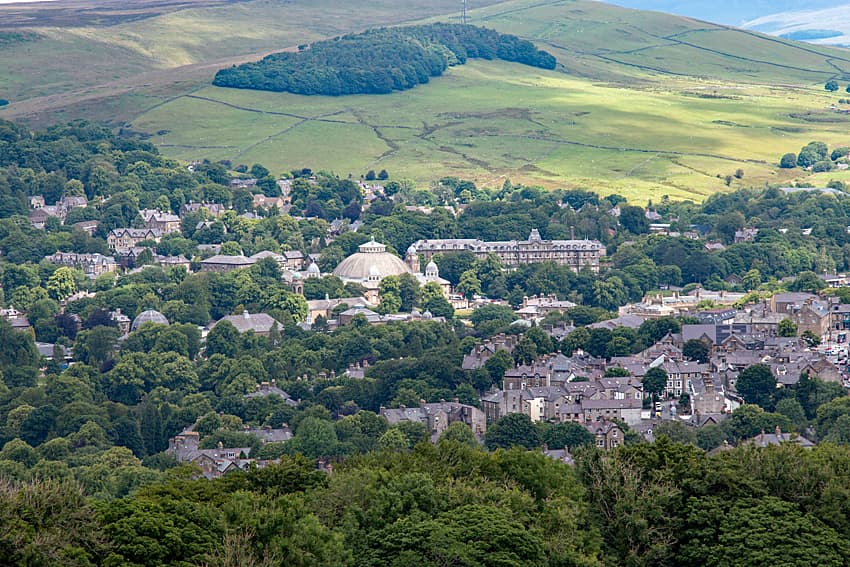 Murgatroyd49 / CC BY 4.0, via Wikimedia Commons
“Where ancient waters meet Georgian elegance, and every corner tells a story.”
Not the postcards. The stories even locals don't know — whispered in your ear, right where they happened.
This architectural marvel, with one of the world's largest unsupported domes, began its life in a surprising way.
Beneath the surface of Buxton lies a cave system with a history far more dramatic than mere geological formation.
This grand Edwardian theatre, designed by a renowned architect, almost met a silent end.
Discover every secret of Buxton
Every address, every reveal in full — in your ear, right where it happened.
You pick your stops. You walk. The voice reveals what the others miss.
No tours available yet. Check back soon — we're preparing them.
Buxton, resting on the edge of the Peak District National Park in Derbyshire, is England's highest market town, sitting at over 1,000 feet above sea level. Its elevated position contributes to a cooler, wetter climate than surrounding areas. The town is known for its geothermal spring, which has been gushing mineral-rich water at a constant 27.5°C (81.5°F) for millennia. This unique natural resource has shaped Buxton's identity as a spa town, drawing visitors seeking its therapeutic properties for centuries.
From Roman settlements to Georgian grandeur, Buxton's architecture and cultural offerings reflect its enduring appeal. The town features impressive Georgian and Victorian buildings, including the iconic Buxton Crescent and the elegant Pavilion Gardens. Today, Buxton seamlessly blends its enduring legacy with contemporary attractions, offering a diverse experience for those exploring its historic streets and the dramatic landscapes of the surrounding Peak District.
The history of Buxton begins with water. Around 5,000 years ago, at the end of the last Ice Age, rainfall began a slow journey through the Peak District's limestone, eventually emerging as the thermal springs that define the town. The Romans, deeply moved by these warm springs, established a settlement here called Aquae Arnemetiae, meaning "Waters of the Goddess of the Grove," dedicating the site to Arnemetia, a local Celtic deity. Archaeological excavations have uncovered lead-lined baths and a hoard of Roman coins and bronze bracelets, left as sacred offerings.
During medieval times, St. Ann's Well, fed by the geothermal spring, became a significant pilgrimage site, attracting those seeking relief from ailments like rheumatism. The town's name, "Buckestones," was first recorded in the 12th century. Buxton's reputation soared with the visits of Mary Queen of Scots between 1573 and 1584. Imprisoned under the custody of George Talbot, the 6th Earl of Shrewsbury, she stayed at the Old Hall Hotel, finding solace in the same waters that had soothed Roman soldiers centuries before.
The 18th century marked a pivotal period for Buxton, largely due to the vision of William Cavendish, the 5th Duke of Devonshire. He used profits from his copper mines to transform Buxton into a fashionable Georgian spa town, aiming to rival the elegance of Bath. Between 1780 and 1784, architect John Carr of York brought the Duke's vision to life with the construction of the Buxton Crescent. This Grade I listed building, inspired by Bath's Royal Crescent, originally housed a grand hotel, lodging houses, and an opulent assembly room that became the social hub of Georgian Buxton.
The arrival of the railway in 1863 dramatically increased Buxton's accessibility, leading to a surge in its population and further development. This Victorian era saw the construction of significant landmarks, including the Palace Hotel (1868) and the Pavilion Gardens (1871), designed by Edward Milner. The Devonshire Dome, originally the Great Stables, was crowned with what was then the world's largest unsupported dome in 1880, transforming it into the Devonshire Royal Hospital. The Buxton Opera House, designed by Frank Matcham, opened in 1903, providing a cultural centre for the throngs of visitors.
Buxton offers a collection of architectural and natural wonders. The Buxton Crescent, a Grade I listed Georgian masterpiece, stands as a testament to the town's spa heritage. Nearby, St. Ann's Well provides free access to the naturally warm spring water that has drawn visitors for centuries. Adjacent to the well, the Pump Room now serves as the Buxton Tourist Information Centre.
The Pavilion Gardens, a Victorian landscaped park, offers 23 acres of manicured lawns, ornamental flowerbeds, and lakes, with facilities including children's playgrounds and a miniature train. The Buxton Opera House, an exquisite Edwardian Baroque theatre designed by Frank Matcham, hosts a year-round program of performances, including opera, dance, and musicals. Just a short walk away, the Devonshire Dome, with its impressive unsupported dome, is now part of the University of Derby and a venue for events.
For those seeking underground adventure, Poole's Cavern offers guided tours through a two-million-year-old limestone cave system, showcasing unique stalactite and stalagmite formations. Above ground, Solomon's Temple, an 1896 tower built atop a Bronze Age burial mound, provides panoramic views of the surrounding Peak District.
The best time to visit Buxton for warm-weather activities is from early July to late August. During these summer months, daytime temperatures typically range from 17°C to 19°C, with nights remaining fresh around 10–12°C. This period also coincides with the Buxton International Festival in July. Spring and autumn offer cooler, pleasant transitional weather, with average temperatures between 7.6°C and 13.1°C. While Buxton experiences frequent but generally light rain year-round, an umbrella or raincoat is advisable at any time.
Buxton is easily walkable, with many of its key attractions within walking distance of each other. The town is well-connected by train, and the railway's arrival in 1863 significantly boosted its popularity. For those driving, Buxton sits on the edge of the Peak District National Park, offering a gateway to exploring the surrounding Derbyshire Hills. Keep in mind that due to its elevation, Buxton can be cooler than surrounding areas, so layers are recommended, even in summer. The Cavendish Arcade, located within the historic thermal baths, offers a range of independent shops and boutiques. Public toilets and food and drink facilities are available at the Pavilion Gardens.