Butuan National Museum
Before the Philippines was a unified nation, Butuan was a prosperous kingdom known for its gold.
Full story unlocks in the tour
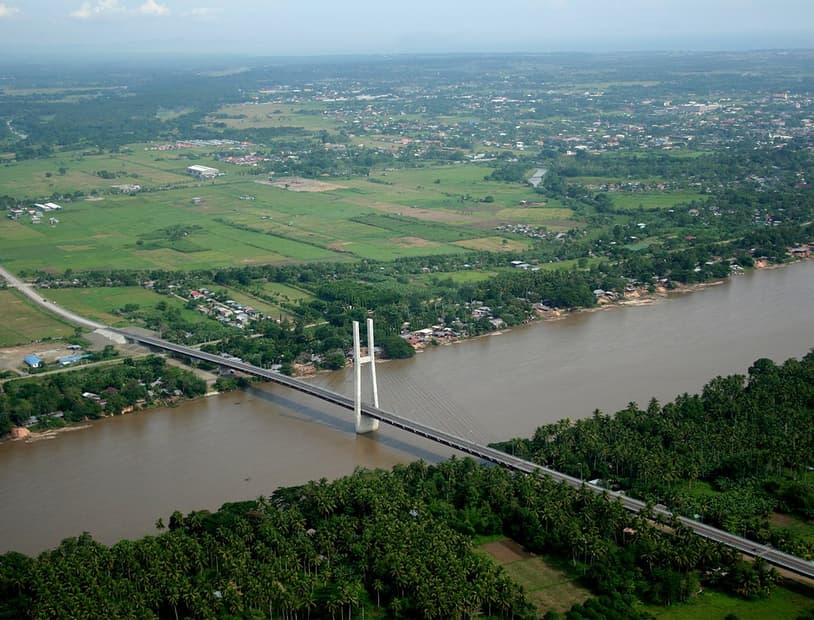 Yanong Lumad (talk) / Public domain, via Wikimedia Commons
“Where ancient maritime narratives unfurl into a lively present.”
Not the postcards. The stories even locals don't know — whispered in your ear, right where they happened.
Before the Philippines was a unified nation, Butuan was a prosperous kingdom known for its gold.
The oldest church ruins in Mindanao offer an unexpected sight.
Along the Agusan River's banks, some residents have devised an ingenious method to power their homes.
Discover every secret of Butuan
Every address, every reveal in full — in your ear, right where it happened.
You pick your stops. You walk. The voice reveals what the others miss.
No tours available yet. Check back soon — we're preparing them.
Butuan City, situated in Mindanao's northeastern expanse, possesses a profound connection to its past, often asserting, "In the beginning there was no Philippines…but there was Butuan." This urban center serves as the regional heart of Caraga, a gateway to both historical revelations and natural vistas. Spreading along the Agusan River, one of Mindanao's longest waterways, Butuan's geography has historically shaped its identity as a significant trading nexus.
Referred to as the "Home of the Balangays," Butuan's character is deeply woven with its ancient maritime legacy. The discovery of these sophisticated wooden vessels, dating as far back as 320 A.D., underscores a pre-colonial civilization with advanced shipbuilding techniques and expansive trade networks across Southeast Asia and beyond. Beyond its archaeological marvels, Butuan presents a blend of urban convenience and cultural experiences, from lively markets to tranquil natural parks.
Butuan's chronology extends over a thousand years, predating the arrival of Spanish colonizers. It was a flourishing pre-colonial city-state, known as the Rajahnate of Butuan, thriving between the 10th and 11th centuries CE. This ancient kingdom was a primary trading center, maintaining active ties with civilizations such as China, Champa (ancient Vietnam), and the Srivijaya Empire (Indonesia). Ancient Chinese accounts even reference a kingdom called "P'u-tuan" recognized for its gold and other exotic commodities, with Butuan dispatching emissaries to China's Song Dynasty by 1001.
The city's affluence was largely attributed to its metallurgic industry and sophisticated naval technology, evidenced by the discovery of the balangay boats. These large, wooden plank-built and edge-pegged vessels, some dating to the 4th century, represent the oldest known watercraft in the Philippines and stand as a testament to Butuan's advanced maritime culture. Nine balangays have been brought to light, with several excavated and others remaining in situ.
Ferdinand Magellan's expedition reached Butuan's shores in 1521, marking one of the initial encounters between local inhabitants and Europeans. A Jesuit mission station was established in the late 16th century, and Butuan became the first site of formal evangelization in Mindanao on September 8, 1597. The city officially became a municipality under American administration on January 31, 1901, and was elevated to a chartered city on August 2, 1950, through Republic Act No. 523. During the mid-20th century, Butuan earned the designation "Timber City of the South" due to its burgeoning logging industry. In 1995, Butuan City was reclassified as a Highly Urbanized City and became the regional center of the newly formed Caraga Administrative Region.
To grasp Butuan's deep past, begin at the Butuan National Museum, which houses archaeological artifacts, including remnants of the balangay boats, gold ornaments, ceramics, and other objects that illuminate the city's ancient prosperity and trade connections. Nearby, the Balangay Shrine Museum offers a closer examination of these ancient vessels, protecting and preserving the actual excavated boats.
For a glimpse into the Spanish colonial era, visit the Banza Church Ruins, where the bell tower of a 16th-century church stands, intertwined with the roots of a banyan tree. The Diocesan Ecclesiastical Museum, located at the St. Joseph Cathedral, is the only one of its kind in Mindanao, displaying religious artifacts and art. One can also visit Magellan's Anchorage in Masao, believed to be where Ferdinand Magellan disembarked and formed a blood compact.
For outdoor pursuits, Delta Discovery Park provides zip-lining and expansive views amidst abundant greenery. The Agusan River itself offers opportunities for eco-friendly boat tours and peaceful nature walks, revealing much about Butuan's culture and history.
Butuan experiences a tropical climate with consistent warmth and humidity throughout the year. The dry season, from November to April, is generally considered the most opportune time to visit, with April and May typically receiving the least rainfall. During these months, the weather is agreeable for outdoor activities and exploration. While the wet season extends from May to October, with frequent showers, it can offer a quieter ambiance and verdant landscapes for nature enthusiasts.
Butuan City is accessible by air, land, and sea. The most direct route is via Butuan Airport (BXU), also known as Bancasi Airport, approximately 6.8 km from the city center and serviced by major domestic airlines. A taxi or shuttle ride to downtown usually takes around 30 minutes. For land travel, Butuan is linked to major cities in Northern Mindanao like Surigao City and Cagayan de Oro City by regular bus services. The nearby Nasipit Port serves as a significant maritime entry point for ferries from Cebu, Manila, and other islands.
Navigating Butuan is convenient with various local transportation options including tricycles, multicabs, and bao-baos (motorized tricycles). The minimum fare typically ranges from ₱11-15. While cash is the primary mode of payment, some establishments accept card and online payment methods like Maya and GCash. It is advisable to carry sufficient cash. Butuanons predominantly speak Butuanon, Cebuano, Bisaya, Filipino, and English.