The Belfry of Bruges
The grand Belfry has watched over Bruges for centuries, yet it holds a subtle secret about its posture.
Full story unlocks in the tour
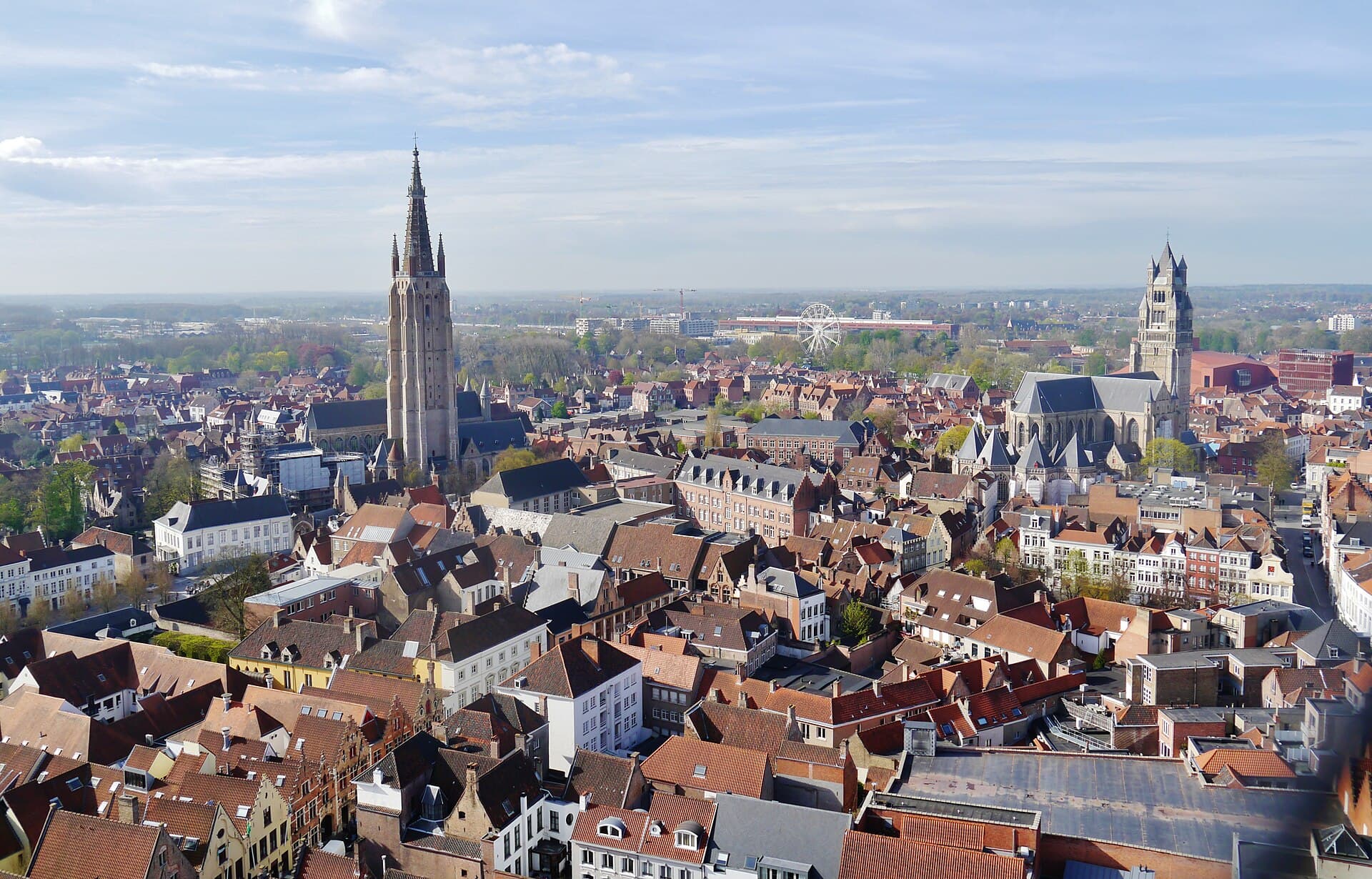 Zairon / CC BY-SA 4.0, via Wikimedia Commons
“Bruges: Where ancient waterways carry the city's quiet grandeur.”
Not the postcards. The stories even locals don't know — whispered in your ear, right where they happened.
The grand Belfry has watched over Bruges for centuries, yet it holds a subtle secret about its posture.
Markt Square, the lively pulse of Bruges, once served purposes beyond mere commerce.
The graceful swans adorning Bruges' canals are more than a beautiful sight; they are connected to a peculiar local legend involving a historical decree.
Discover every secret of Bruges
Every address, every reveal in full — in your ear, right where it happened.
You pick your stops. You walk. The voice reveals what the others miss.
No tours available yet. Check back soon — we're preparing them.
Bruges, or Brugge in Dutch, is a city that feels as though it has emerged from a storybook, its stone-paved lanes and meandering waterways earning it the epithet 'Venice of the North.' This Belgian city, recognized as a UNESCO World Heritage site, invites visitors to slow their pace and wander, uncovering centuries of history reflected in its carefully preserved medieval architecture. From its active Markt square to the serene beguinages, Bruges presents a captivating blend of cultural depth and calm beauty.
Initially settled by Vikings, Bruges gained prominence in the late medieval period and early Renaissance (1000s-1400s) as a significant trading port, particularly for textiles. Its strategic position, linked to the North Sea by natural waterways and later by constructed canals, allowed it to thrive as a commercial hub. Today, Bruges continues to charm visitors with its distinct character, encouraging exploration of its historic squares, scenic waterways, and enduring traditions like lace-making and chocolate craftsmanship.
The city's compact dimensions make it wonderfully accessible on foot, allowing easy discovery of secluded courtyards, charming bridges, and artisan shops. Whether indulging in Belgian chocolates, gazing upon Gothic spires, or simply appreciating the gentle rhythm of life along the canals, Bruges promises an enduring journey into a past that feels alive.
The story of Bruges is deeply intertwined with water. The city's advantageous location, where coastal plains meet higher sandy ground and streams converge to form the River Reie, provided a natural connection to the North Sea via tidal channels. This natural inlet, known as Het Zwin, was essential to Bruges' early growth. By the 12th century, Bruges had become an important center of the Flemish cloth industry, receiving its city charter in 1128, which led to the construction of new walls and canals.
The 13th, 14th, and 15th centuries defined Bruges' 'Golden Age.' It flourished as a major trading nexus, strategically positioned at the intersection of the northern Hanseatic League and southern trade routes, facilitating the exchange of goods like wool, grains, and spices. The city's population swelled to an estimated 200,000 by 1400, drawing artists, bankers, and weavers, and becoming a renowned production center for luxury items. However, this period of prosperity eventually waned. Around 1500, the Zwin began to fill with silt, severing Bruges' direct access to the sea. This environmental shift precipitated a significant economic decline, with the city's population decreasing dramatically.
Despite its economic downturn, Bruges' diminished resources inadvertently preserved its medieval character, as inhabitants focused on repairing existing structures rather than erecting new ones. In the late 19th century, affluent British and French travelers began to rediscover the city's singular beauty, establishing it as one of the world's first tourist destinations. This renewed appreciation for its heritage eventually led to the entire historic center of Bruges being designated a UNESCO World Heritage Site in 2000. The city further elevated its international presence as the Cultural Capital of Europe in 2002 and gained global recognition through films like 'In Bruges' in 2008. Today, Bruges stands as a testament to its enduring past, its waterways and medieval architecture continuing to attract millions of visitors each year.
Begin your exploration at the Markt Square, the lively core of Bruges. This expansive public space has hosted market activities since the 10th century and is encircled by impressive Gothic and Neoclassical buildings. Standing prominently in the square is the Belfry of Bruges, an 83-meter tall 13th-century bell tower and a UNESCO World Heritage site. Ascend its 366 steps for sweeping views of the city.
A short walk from the Markt is Burg Square, where you will find the elegant City Hall and Old Courthouse. Be sure to visit the Basilica of the Holy Blood here, which safeguards a revered relic believed to contain the blood of Jesus Christ.
A canal tour is an essential part of any visit to Bruges. These guided boat rides offer a distinct perspective of the city's historic landmarks, including the Church of Our Lady and its soaring spire, and glide beneath charming stone bridges. The Church of Our Lady also houses Michelangelo's marble sculpture of Madonna and Child, thought to be the only one of his works to leave Italy during his lifetime.
For a moment of quiet reflection, visit the Princely Beguinage Ten Wijngaerde. Established in 1245, this serene complex, with its whitewashed residences and peaceful garden, once provided a home for beguines—emancipated laywomen who led devout, celibate lives. Today, it functions as a convent for Benedictine sisters and single women, maintaining its atmosphere of silence and contemplation. Finally, delve into the city's extensive textile heritage at the Kantcentrum (Lace Centre), where you can learn about Bruges' renowned lace-making tradition.
Bruges welcomes visitors throughout the year, with each season offering a distinct atmosphere. For the most comfortable weather and moderate crowds, consider visiting in May, June, or September. These months provide pleasant temperatures and extended daylight, ideal for sightseeing and canal excursions. The transitional months of April and October also offer agreeable weather with fewer tourists and potentially lower accommodation rates. If you prefer a calmer, more intimate experience, the off-season from November to early March is suitable, though anticipate cooler, damp conditions. During this period, you can enjoy the Christmas market in December or the Bruges Beer Festival in February.
Bruges is a compact city, easily navigable on foot, allowing you to explore most attractions without needing transportation. The train station is approximately a 15-minute walk from the main square, and public transport within the city center is generally not required. If you arrive by car, several car parks are available in the city center, though finding parking can be challenging.
The local language in Bruges is Dutch, but English is widely spoken, especially in areas frequented by tourists, so communication should be straightforward. For those planning to visit multiple museums, the Musea Brugge Card can offer savings, including entry to the Belfry Tower. To enhance your visit, consider booking a free walking tour on your first day to familiarize yourself with the city's layout and history. Bruges experiences consistent humidity and rain throughout the year, so pack a waterproof jacket, comfortable walking shoes, and an umbrella. Layered clothing is also advisable due to potential temperature fluctuations.