Gantheaume Point
At low tide, you can walk among the fossilized footprints of dinosaurs. But there's a particular set of prints that have a rather curious local legend attached to them.
Full story unlocks in the tour
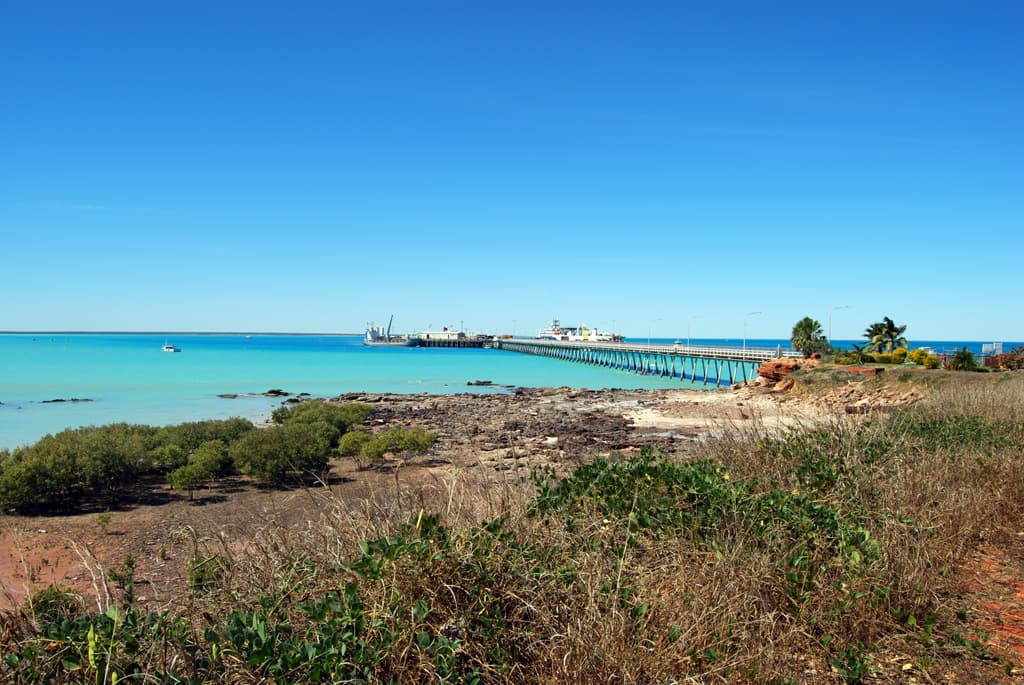 Kat Clay from Sydney, Australia / CC BY 2.0, via Wikimedia Commons
“Where the red dirt meets the turquoise sea, and ancient stories drift on the breeze.”
Not the postcards. The stories even locals don't know — whispered in your ear, right where they happened.
At low tide, you can walk among the fossilized footprints of dinosaurs. But there's a particular set of prints that have a rather curious local legend attached to them.
This seemingly ordinary jetty in Chinatown holds a secret from Broome's pearling boom, a testament to the town's wild and sometimes lawless past.
Among the hundreds of graves of Japanese pearl divers, one particular headstone stands out, not for its grandeur, but for a poignant detail that speaks volumes about the dangers of the industry.
Discover every secret of Broome
Every address, every reveal in full — in your ear, right where it happened.
You pick your stops. You walk. The voice reveals what the others miss.
No tours available yet. Check back soon — we're preparing them.
Broome, a remote coastal town in Western Australia's Kimberley region, offers a blend of natural splendor, pearling history, and multicultural character. Its location on the Indian Ocean shapes a landscape defined by the striking contrast of Pindan red earth meeting the turquoise sea. The town serves as a portal to the rugged Kimberley, while also standing as a destination in its own right, recognized for its expansive Cable Beach, camel excursions, and the 'Staircase to the Moon' phenomenon.
Beyond its scenic appeal, Broome's identity is deeply intertwined with its pearling industry, which drew a diverse influx of Japanese, Chinese, Malay, and European settlers, shaping its singular cultural fabric. This history is visible in its architecture, cemeteries, and the enduring legacy of pearl farming. The town maintains a relaxed, tropical atmosphere, inviting visitors to explore its natural wonders and delve into its compelling past.
## The Pearling Capital Broome's story is inextricably linked to the pearling industry, which began in the late 19th century. The discovery of extensive pearl oyster beds in Roebuck Bay transformed the quiet outpost into a bustling, cosmopolitan center. Initially, Indigenous Australians were exploited for their diving skills, often under harsh conditions. As demand for mother-of-pearl grew, indentured laborers from Japan, China, Southeast Asia, and Europe were brought in, creating a diverse, yet often segregated, society.
## A Multicultural Melting Pot The influx of different nationalities led to a unique cultural mosaic. Chinatown, with its distinctive architecture, became the lively core of the pearling community, a place where different languages were spoken and diverse customs practiced. However, this multiculturalism was not without its tensions. Racial discrimination was prevalent, and the pearling industry itself was fraught with danger, with many divers succumbing to 'the bends' or cyclones. The Japanese Cemetery, with its hundreds of graves, stands as a poignant reminder of the human cost of the industry.
## War and Decline The pearling industry faced significant challenges during World War II. The bombing of Broome by Japanese aircraft in March 1942 resulted in considerable loss of life and damage to the town and its pearling fleet. The war effectively halted pearling operations, and many non-European residents were interned or evacuated. Post-war, the industry slowly revived, shifting from mother-of-pearl to cultured pearls, a less labor-intensive but still economically significant enterprise.
## Modern Broome Today, Broome has transitioned from a purely industrial town to a prominent tourist destination, while still maintaining its connection to cultured pearling. The town's historical buildings, museums, and cultural sites preserve the stories of its past. Efforts are also being made to acknowledge and celebrate the deep Indigenous history and culture of the Yawuru people, the traditional custodians of the land, ensuring their stories are an integral part of Broome's narrative.
Cable Beach stands as Broome's most celebrated attraction, recognized for its 22 kilometers of white sand and magnificent sunsets, often enjoyed from atop a camel. Gantheaume Point offers a glimpse into prehistoric times with its dinosaur footprints visible at low tide, alongside striking red rock formations. In town, explore Chinatown, the historic precinct that was once the bustling center of the pearling industry, with its singular architecture and pearl showrooms. The Japanese Cemetery provides a sobering insight into the lives of the pearl divers. For a cultural experience, visit the Broome Historical Museum to delve deeper into the town's past. Do not miss the 'Staircase to the Moon,' a natural phenomenon occurring during certain full moon cycles, where the moonlight creates an illusion of a staircase reaching to the moon over the exposed mudflats of Roebuck Bay.
The best time to visit Broome is during the dry season, from May to October. Temperatures are milder, typically ranging from 20°C to 30°C, with clear skies and lower humidity. This period is ideal for outdoor activities and experiencing the 'Staircase to the Moon.' The wet season, from November to April, brings higher humidity, monsoonal rains, and hotter temperatures, often exceeding 30°C.
Broome is accessible by air, with daily flights from Perth and seasonal connections from other Australian cities. The town center is compact and walkable, but a car is recommended for exploring further afield, such as Cable Beach or Gantheaume Point. Taxis and local bus services are also available. Accommodation options range from resorts and hotels to caravan parks and budget stays. Be sure to book well in advance, especially during the peak dry season. Sun protection, including hats, sunscreen, and long-sleeved clothing, is essential year-round due to the intense sun.