Old Town Hall
Examine the main portal of the Old Town Hall. A peculiar detail awaits discovery on one of its pinnacles.
Full story unlocks in the tour
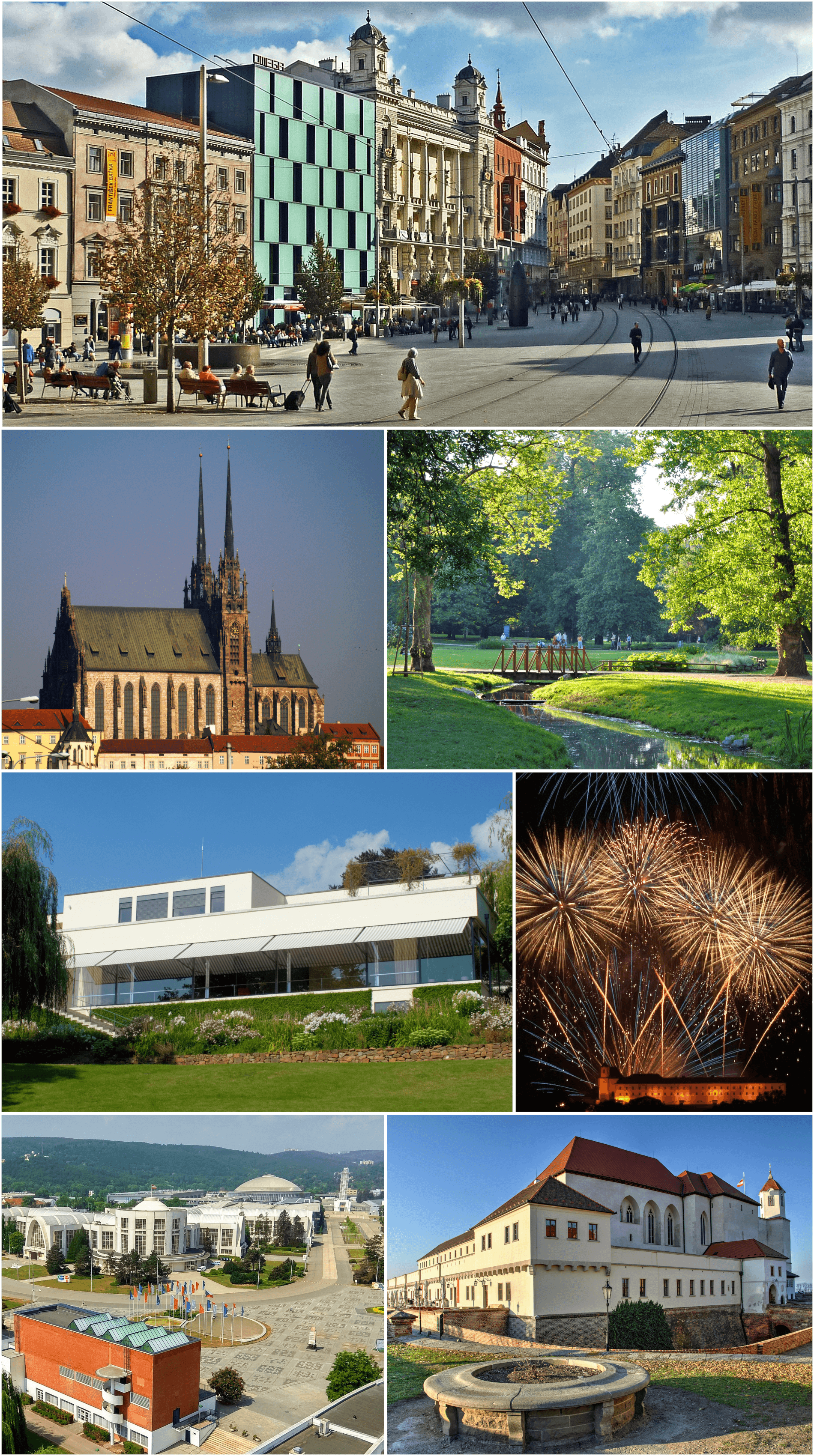 Brno-Freiheitsplatz2.jpg: SchiDD Brno_Katedrála_sv._Petra_a_Pavla_(St.Peter_and_St.Paul_Cathedral).jpg: JRodSilva Brno-Lužánky_XIV.jpg: Millenium187 Brno,_Vila_Tugendhat.jpg: Petr1987 Ignis_Brunensis_Grandfinale_2007.jpg: Jiří Nedorost Brno,_BVV,_výhled_z_výškové_budovy_(11.29.22).jpg: Martin Strachoň Hrad_Špilberk,_Brno_04.jpg: Doronenko / CC BY-SA 4.0, via Wikimedia Commons
“Where ancient stones hum with contemporary life.”
Not the postcards. The stories even locals don't know — whispered in your ear, right where they happened.
Examine the main portal of the Old Town Hall. A peculiar detail awaits discovery on one of its pinnacles.
Listen for the bells of the Cathedral of St. Peter and Paul. They mark the hour in an unexpected way.
Locate the equestrian statue of Jobst of Moravia in Moravian Square. From a particular vantage point, it reveals a surprising form.
Discover every secret of Brno
Every address, every reveal in full — in your ear, right where it happened.
You pick your stops. You walk. The voice reveals what the others miss.
No tours available yet. Check back soon — we're preparing them.
Brno, the Czech Republic's second-largest city, offers a compelling blend of historical depth and contemporary energy. Situated where the Svitava and Svratka rivers meet, it has long served as a crossroads for trade and cultural exchange. With a significant student population, the city pulses with an innovative artistic spirit and a lively array of pubs and cafes.
While Prague often draws larger crowds, Brno provides a more intimate and perhaps more authentic Central European experience. Its historic core, defined by compelling architecture, is easily walkable, allowing for a relaxed exploration of its many layers. From ancient castles to modernist villas, and from sprawling underground ossuaries to quirky public art, Brno consistently surprises and delights those who venture beyond the more familiar Czech destinations.
## From Royal Seat to Modern Hub Brno's story reaches back to the 13th century, officially established as a royal city in 1243. Its strategic position between the Svitava and Svratka rivers made it a vital hub for trade routes connecting northern and southern Europe.
For centuries, Brno served as the capital of Moravia, a historical land within the Czech Republic. This status was reaffirmed after the Thirty Years' War in 1648 and continued until 1948. During the 17th century, Špilberk Castle, originally a 13th-century royal stronghold, was transformed into a formidable Baroque citadel and later a notorious prison.
The city has endured centuries of conflicts, including sieges and bombings, yet many of its historic buildings endure. In more recent times, Brno has evolved into a significant center for law in the Czech Republic, housing important institutions like the Constitutional Court and the Supreme Court. It is also a thriving intellectual center, with 13 universities and colleges contributing to a student population exceeding 62,000. This academic presence fuels a dynamic cultural scene, with the city dedicating substantial resources to museums, theaters, and festivals. The Brno Exhibition Centre, established in 1928, stands as one of Europe's largest, hosting numerous international trade fairs and events annually.
Begin your exploration at the Cathedral of St. Peter and Paul, a Gothic masterpiece on Petrov Hill, providing sweeping city views from its towers. Descend into its crypt to view remnants of the original 12th-century Romanesque-Gothic structure. A short walk away, the Old Town Hall offers another excellent viewpoint and holds the intriguing legend of its crooked pinnacle.
Delve into Brno's subterranean world at the Ossuary at the Church of St. James, Europe's second-largest ossuary, containing the remains of over 50,000 individuals. Nearby, the Capuchin Crypt offers a more exclusive and eerie experience, displaying naturally mummified Capuchin friars and benefactors.
For a different historical perspective, visit Špilberk Castle, a 13th-century royal castle that became a military fortress and prison, now home to the Brno City Museum. Observe the Brno Astronomical Clock in Freedom Square, a striking black granite monument with a daily marble release at 11:00 AM, commemorating a pivotal moment in the city's past. Finally, explore the Labyrinth Under the Vegetable Market for more underground passages.
Brno experiences four distinct seasons, each with its own appeal. The warmest and sunniest period, ideal for outdoor activities and festivals, spans from mid-May to mid-September. July and August are the hottest months, with average highs around 26°C (79°F), though urban heat can make it feel warmer. Spring (March to May) brings mild weather and blooming parks, with May often considered one of the best months to visit, despite increased rainfall. Autumn (September to November) offers comfortable temperatures and rich foliage, with September notable for wine harvest festivals. Winter (December to February) is cold but enchanting, especially with the Christmas markets in December.
Brno is readily accessible by train and bus, with direct routes from Prague, Vienna, and Bratislava. The city's public transport system is extensive, encompassing trams, buses, and trolleybuses, including night lines. Tickets can be purchased from yellow vending machines, newsagents, or by simply tapping a contactless bank card directly on board. A 60-minute ticket costs 25 CZK, with shorter and longer options available.
The Czech Republic is considered a very safe country, and Brno is generally a low-risk destination for travelers. Violent crime is rare, and petty theft is minimal, though it is always wise to be aware of your belongings in crowded areas like trams and transport hubs. The local currency is the Czech Koruna (CZK). Tipping around 10% is customary in restaurants if a service charge is not included.