Martinsturm (St. Martin's Tower)
The Martinsturm, a medieval tower dominating Bregenz's Upper Town, holds a secret within its historic walls that goes beyond its sweeping views.
Full story unlocks in the tour
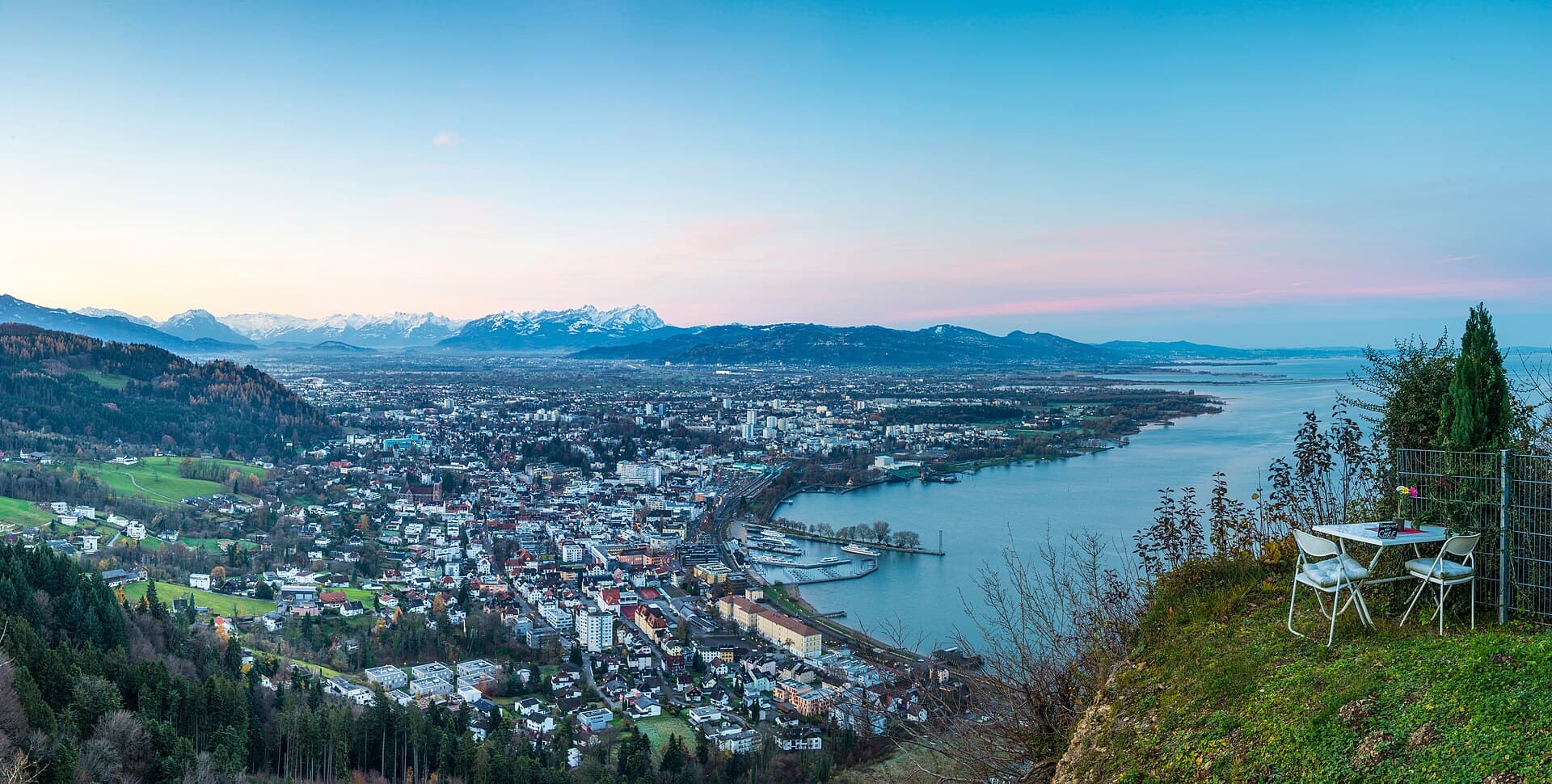 Feel free to use my photos, but please mention me as the author and if you want send me a message. or (rufre@lenz-nenning.at) / CC BY-SA 4.0, via Wikimedia Commons
“Where Alpine peaks meet the boundless expanse of Lake Constance, Bregenz orchestrates a symphony of history and innovation.”
Not the postcards. The stories even locals don't know — whispered in your ear, right where they happened.
The Martinsturm, a medieval tower dominating Bregenz's Upper Town, holds a secret within its historic walls that goes beyond its sweeping views.
This striking minimalist building, a beacon of contemporary art, has a surprising connection to a common household item.
Scattered around Bregenz, you might encounter a curious sculpture of a Porsche, cast in an unexpected material.
Discover every secret of Bregenz
Every address, every reveal in full — in your ear, right where it happened.
You pick your stops. You walk. The voice reveals what the others miss.
No tours available yet. Check back soon — we're preparing them.
Bregenz, the capital of Vorarlberg, Austria's westernmost state, is a city where the natural grandeur of the Alps converges with the tranquil waters of Lake Constance. With a population of around 29,500, it presents a blend of ancient heritage and modern cultural vibrancy. Its unique location at the crossroads of Austria, Germany, and Switzerland makes it an ideal base for exploring Central Europe.
The city's character is shaped by its continuous engagement with the vastness of Lake Constance, which has fostered trade and welcomed new ideas for over two millennia. From the historic streets of the Upper Town, revealing traces of ancient civilizations, to the contemporary architecture seamlessly integrated into the landscape, Bregenz offers a distinctive atmosphere for both leisurely exploration and cultural immersion. It is particularly renowned for its annual summer music festival, the Bregenzer Festspiele, which features a spectacular floating stage directly on the lake.
The history of Bregenz stretches back over two millennia, making it one of the oldest cities in the region. Around 500 BC, the Celtic Brigantii tribe established a fortified settlement called Brigantion. In 15 BC, Roman forces under Tiberius and Drusus conquered the area, recognizing its strategic importance and transforming it into a major military and commercial hub known as Brigantium. This Roman settlement, which became the seat of the Roman admiralty for Lake Constance, featured a theatre and developed infrastructure including a forum, temples, and thermal baths.
In 259/260 AD, Brigantium was destroyed by the Alemanni, Germanic peoples who subsequently settled in the area around 450 AD. The early 7th century saw Bregenz become a significant center for the spread of Christianity, largely due to the missionary work of Saint Columbanus and Saint Gall from 610 to 612 AD. From 917 AD, the castle in Bregenz served as the residence for the Udalrichinger, who were known as the Counts of Bregenz. The town was chartered around 1200.
Bregenz came under Habsburg rule through sales in 1451 and again in 1523, remaining an Austrian territory, though briefly occupied by Swedish forces during the Thirty Years' War. From 1805 to 1814, it was under Bavarian rule before returning to Austria after the Congress of Vienna in 1815. The 19th century brought significant infrastructure developments, including the construction of a harbor on Lake Constance between 1842 and 1850, and the inauguration of railway services in 1872. Since 1726, Bregenz has served as the main seat of Austrian administration in Vorarlberg.
Begin your exploration in the medieval Oberstadt (Upper Town), the 13th-century walled core, accessible via a short climb from the lakefront. Here, the Martinsturm (St. Martin's Tower), with its distinctive baroque onion dome, offers expansive views of Bregenz and Lake Constance.
The Pfänder mountain, rising 1,064 meters directly from the lakeshore, is an iconic symbol of the city. A six-minute ride on the Pfänder cable car transports you to the summit for a signature panorama encompassing Lake Constance and over 240 Alpine peaks across Austria, Germany, and Switzerland. At the base, the lakefront promenade is a popular spot for strolls, offering beautiful sunset views, particularly from the 'Sunset Steps' (Molo).
For art enthusiasts, the Kunsthaus Bregenz (KUB), an impressive minimalist building designed by Peter Zumthor, showcases international contemporary art with revolving exhibitions. Nearby, the Vorarlberg Museum presents the history and modern aspects of Vorarlberg, with its new building offering impressive architecture and panoramic lake views from the fourth floor.
The best time to visit Bregenz for warm-weather activities is from late June to early September. July and August are particularly popular due to comfortable temperatures averaging around 19°C (66°F) and highs reaching 23°C (73°F), ideal for sightseeing and enjoying the lake. This period also coincides with the famous Bregenzer Festspiele, though booking accommodation well in advance is highly recommended due to increased demand and peak prices. Spring and autumn offer milder temperatures and fewer crowds, making them excellent transitional periods for exploring the city's cultural and natural beauty. Winters are cool, with average January temperatures around 0.5°C (33°F), but still offer opportunities for cultural activities and walks along the promenade.
Bregenz is a compact city, and its historic center is best explored on foot. The public transport system, primarily buses, is efficient and covers the entire Vorarlberg region. Renting a car is generally not necessary for navigating the city itself due to paid parking and short distances, but it can be useful for longer trips into the Alps. The official currency is the Euro (EUR). While bank cards are widely accepted, it's advisable to carry some cash for smaller establishments or markets. ATMs are readily available. Bregenz is considered a very safe city, with walking at night generally not a concern. Public transport runs less frequently at night, but taxis are available. The cost of living in Bregenz is slightly higher than the Austrian average, particularly for childcare, restaurants, housing, and transportation.