Brecon Cathedral
Within the solemn walls of Brecon Cathedral lies a peculiar stone, unlike any other in Wales. It speaks of a time when light was a precious, flickering commodity.
Full story unlocks in the tour
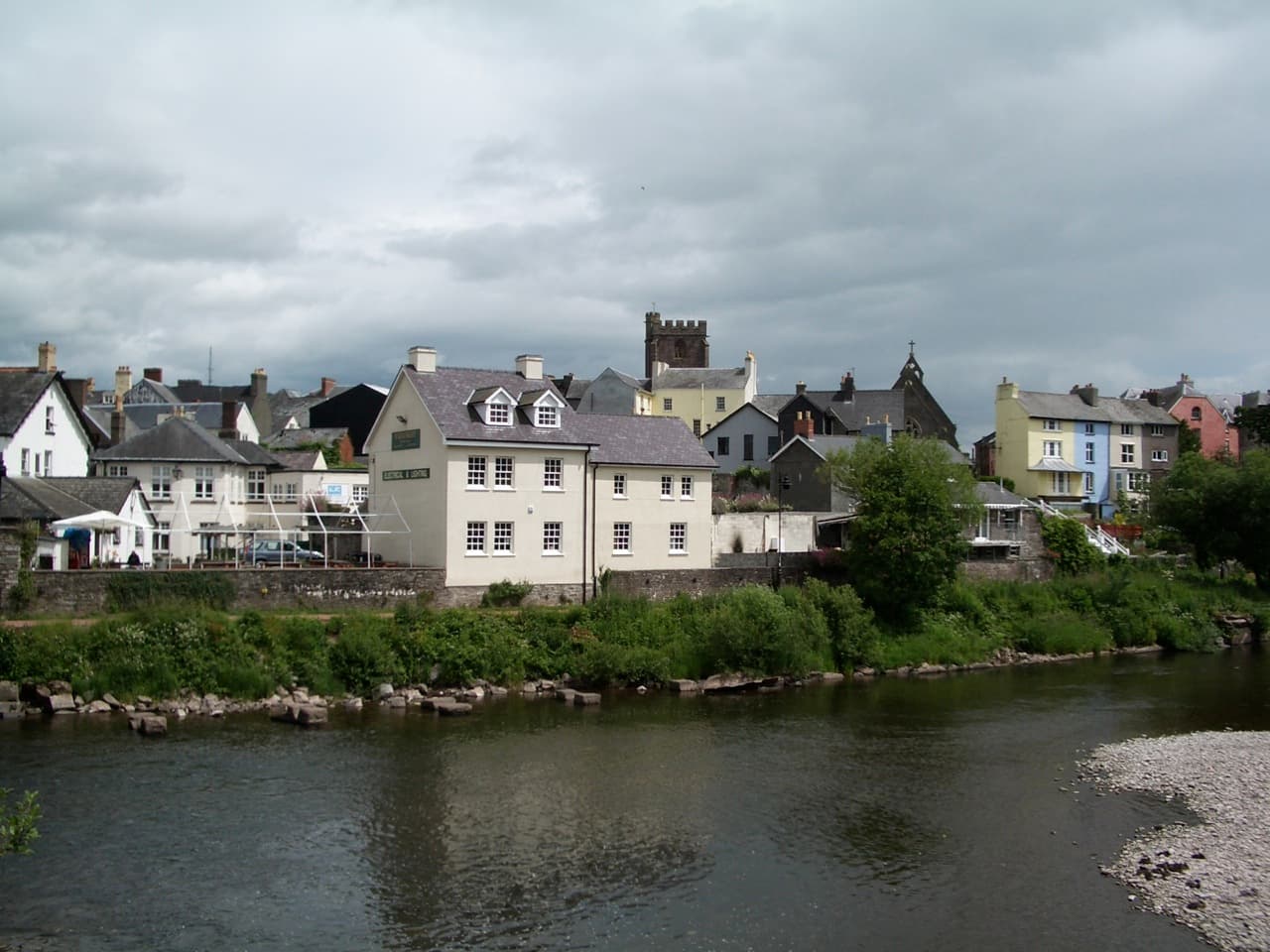 Keith Salvesen / CC BY-SA 2.0, via Wikimedia Commons
“Where ancient stones meet mountain majesty in the heart of Wales.”
Not the postcards. The stories even locals don't know — whispered in your ear, right where they happened.
Within the solemn walls of Brecon Cathedral lies a peculiar stone, unlike any other in Wales. It speaks of a time when light was a precious, flickering commodity.
A cobbled path in Brecon holds a secret route, said to have been used by a king making a hasty departure during a turbulent period in British history.
The walls of this museum tell tales of extraordinary bravery, particularly from a conflict far from Welsh shores, where a small group of soldiers faced overwhelming odds.
Discover every secret of Brecon
Every address, every reveal in full — in your ear, right where it happened.
You pick your stops. You walk. The voice reveals what the others miss.
No tours available yet. Check back soon — we're preparing them.
Brecon, known in Welsh as Aberhonddu, is a market town in Powys, Mid Wales. It rests at the northern edge of the Brecon Beacons National Park, where the Rivers Usk and Honddu converge, creating a tranquil setting for observing wildlife and embarking on walks. Brecon presents a blend of heritage sites, independent shops, and inviting cafes, all framed by the distant peaks of the Brecon Beacons. It serves as a natural entry point to the national park, drawing those who seek outdoor activities, cultural experiences, and local narratives.
## From Roman Fort to Market Town Brecon's origins extend to an earlier Celtic church, with a new church dedicated to St. John built around 1093 by Bernard de Neufmarché, the Norman knight who conquered the kingdom of Brycheiniog. The town's Welsh name, Aberhonddu, signifies its position at the 'mouth of the Honddu,' where the river meets the Usk. An 8-acre Roman fort, Y Gaer, constructed to house a garrison of 500 cavalry around A.D. 80, lies to the west of the modern town, indicating early strategic importance.
By the 15th century, a cloth trade had taken root, and Brecon became one of Wales's most significant towns by the early 16th century, owing to its location on a main route across southern Wales. In 1556, a Royal Charter was bestowed by Philip and Mary, shaping the town's political and commercial life for many years. Brecon's strategic location was important during the Civil War, with King Charles I seeking support in the town in 1645.
The Monmouthshire & Brecon Canal, originally two independent canals, was constructed between 1797 and 1812 to transport raw materials and finished goods from the coal mines and ironworks of the South Wales valleys. The canal reached Brecon in December 1800, bringing affordable coal and lime and facilitating trade in forestry, building materials, and farm produce. Though commercial use diminished with the arrival of railways, sections of the canal have been restored since 1970 for leisure.
Brecon maintains a strong military presence, serving as a garrison town. Brecon Barracks is the administrative headquarters for the Army in Wales, and the Infantry Battle School at Dering Lines trains junior officers and non-commissioned officers. The town also shares strong connections with the Gurkhas, who were granted the Freedom of the Town in 1985, marked by an annual parade.
Begin your exploration at Brecon Cathedral, a site of worship since 1093, originally a Benedictine Priory. Its impressive walled close is unique in Wales, and inside you'll find a rare Celtic font and exhibits related to the Zulu Wars. The Regimental Museum of The Royal Welsh, situated next to Brecon Barracks, offers a comprehensive collection of military artifacts spanning four centuries and four continents, with a notable Zulu War Room.
For a glimpse into local history and art, visit Y Gaer, which houses a museum, art gallery, and library. The Monmouthshire & Brecon Canal Basin is a tranquil spot for walks along the towpath or for canal boat trips, offering views of the Usk Valley. Adjacent to the canal basin is Theatr Brycheiniog, Brecon's center for theatre and arts, hosting a varied program of performances and exhibitions.
Beyond the town, the Brecon Beacons National Park offers extensive walking opportunities, including trails along the River Honddu and to Iron Age hillforts like Pen-y-Crug. The highest peak in Southern Britain, Pen y Fan, at 886 meters (2,907 feet), provides expansive views across the Beacons. For a different perspective, consider a nostalgic journey on the Brecon Mountain Railway.
Brecon welcomes visitors throughout the year. Spring (April–May) offers blooming countryside and quieter trails, while summer (June–August) is ideal for walking and outdoor festivals like the Brecon Jazz Festival. Autumn (September–October) brings vivid foliage and harvest festivals, and winter (November–March) provides a cozy atmosphere with snow-dusted peaks, though it is a quieter time. The warmest weather for outdoor activities is typically from late June to late August, with July being the hottest month, averaging 19°C (66°F).
Brecon is accessible via the A40 trunk road, positioned midway between Abergavenny and Llandovery, and from Cardiff via the A470. The town center is compact and walkable, with many attractions within easy reach. The Brecon Tourist Information Centre, located at 11a Lion Yard, provides maps, guides, and assistance with walking routes, attractions, and public transport. Guided walks are also available to explore the town's history and culture. Accommodation options include charming holiday cottages in and around the town. The Brecon Jazz Festival in August and the Brecon Food Festival in October are popular annual events.