The Castle Courtyard
Most visitors are drawn to Bran Castle by the promise of Dracula, but the castle's true heart lies elsewhere, literally.
Full story unlocks in the tour
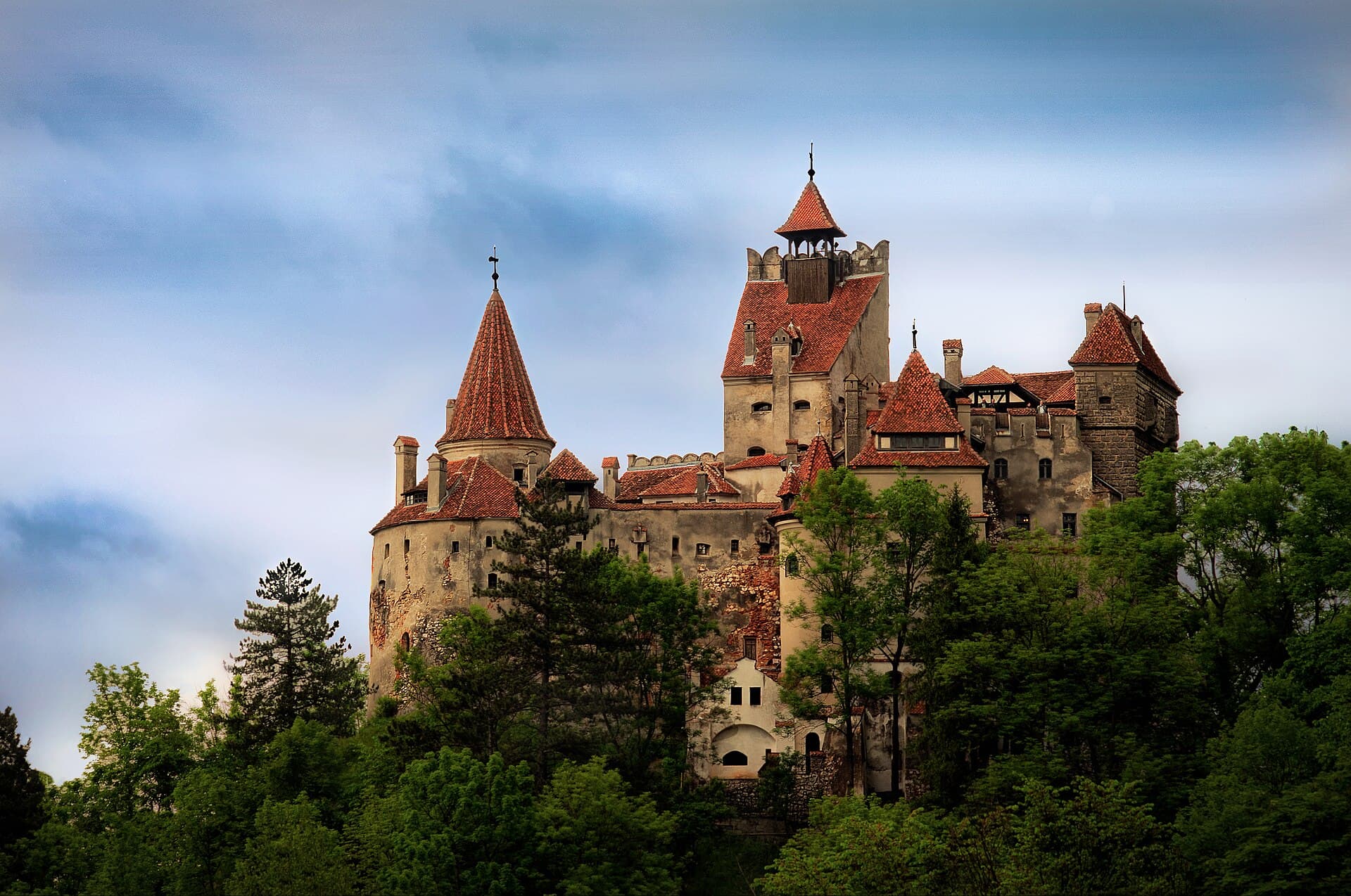 Dobre Cezar / CC BY-SA 3.0 ro, via Wikimedia Commons
“Beyond the myth, where Transylvanian history breathes.”
Not the postcards. The stories even locals don't know — whispered in your ear, right where they happened.
Most visitors are drawn to Bran Castle by the promise of Dracula, but the castle's true heart lies elsewhere, literally.
Within the castle's thick walls, a passage once offered a clandestine escape or a swift route between floors.
A deep well in the central courtyard once provided vital water, but its purpose dramatically shifted in the 20th century.
Discover every secret of Bran
Every address, every reveal in full — in your ear, right where it happened.
You pick your stops. You walk. The voice reveals what the others miss.
No tours available yet. Check back soon — we're preparing them.
Bran Castle, often marketed as 'Dracula's Castle,' stands as a national monument and landmark in Transylvania, Romania. Its imposing silhouette, rising from a 200-foot-high rock overlooking the Bran Gorge, has long captured imaginations. While its association with Bram Stoker's fictional Count Dracula is largely a tourism-driven phenomenon, the castle's true history is a compelling narrative of medieval defense, royal transformation, and cultural significance.
Though Bram Stoker never visited Romania and his novel's description of Dracula's crumbling castle does not match Bran Castle, an illustration of Bran Castle in a 19th-century travelogue may have served as his visual inspiration. The historical figure Vlad the Impaler, who inspired aspects of Dracula, had only tangential associations with Bran Castle; he never lived there and his actual residence was Poenari Castle. Instead, Bran Castle's story is deeply intertwined with its strategic location and the influential figures who shaped its destiny.
The earliest fortification in the Bran area was a wooden castle built by the Teutonic Order in 1212, which was later destroyed by the Mongols around 1242. The current stone castle's documented history begins on November 19, 1377, when King Louis I of Hungary granted the Saxons of Kronstadt (modern Brașov) the privilege to construct a stone castle at their own expense. Completed by 1388, this fortress served a dual purpose: defending against the expansion of the Ottoman Empire and functioning as a customs post on the vital mountain pass between Transylvania and Wallachia.
Throughout the 15th century, Bran Castle played a crucial military role, defending against Ottoman incursions. Control of the castle shifted over time, with the city of Brașov regaining possession in 1533 after King Vladislas II failed to repay loans. The castle's military significance continued until the mid-18th century.
A significant chapter in Bran Castle's history began in 1920 when the city of Brașov gifted the castle to Queen Marie of Romania, a granddaughter of Queen Victoria. Queen Marie, captivated by the medieval fortress, undertook extensive renovations with the help of Czech architect Karel Zdeněk Líman, transforming it into a cherished royal summer residence. She introduced modern conveniences like a hydroelectric plant and an elevator, while carefully preserving its medieval character. She also added elegant touches, including secret staircases, reading nooks, and an English-style park.
Upon Queen Marie's death in 1938, the castle was inherited by her daughter, Princess Ileana, who ran a hospital there during World War II. In 1948, the communist regime seized the castle, and the royal family was expelled. For decades, Bran Castle operated as a museum of medieval art and furniture. Following a 2005 law allowing restitution claims, ownership of the castle was returned to Archduke Dominic of Austria, Princess Ileana's son, in 2006. Since 2009, the Habsburg family has managed Bran Castle as Romania's first private museum, showcasing Queen Marie's art and furniture collection.
Bran Castle offers a journey through centuries of history and captivating architecture. Begin your exploration in the central courtyard, a characteristic feature of medieval edifices. Inside, you'll discover 57 rooms, some adorned with hand-carved features. The castle's Gothic architecture is evident in its steeply pitched roofs, arched windows, and prominent towers. The narrow, spiral staircases and dimly lit rooms contribute to the castle's mysterious ambiance.
Beyond the castle's interiors, the Royal Park, established by Queen Marie, provides a serene setting. At the bottom of the hill, a small open-air museum showcases traditional Romanian peasant structures from the Bran region, including cottages, barns, and water-driven machinery. For those interested in the more macabre, the Torture Chambers are an optional addition to your visit. The 'Time Tunnel,' a multisensory installation located in the former well shaft, offers a unique blend of heritage and modern technology.
While exploring, pay attention to the details that Queen Marie introduced, such as the elegant furniture and artistic touches that transformed the fortress into a royal home. The castle's elevation provides wide views across the Bran Gorge, a strategic vantage point it held for centuries.
The shoulder seasons of spring (April and May) and autumn (September and most of October) are often considered the most favorable times to visit Bran Castle. During these months, temperatures are mild, and the surrounding natural landscape is particularly scenic, with spring bringing lush greenery and autumn showcasing colorful fall foliage. Weekday mornings during these periods typically see shorter queues, offering a more tranquil experience. Summer (June to August) is the international high season, with larger crowds and longer wait times, especially between 11:00 AM and 3:00 PM. Halloween is also a very popular, and therefore crowded, time to visit. To avoid the busiest times, consider arriving right at opening or later in the afternoon.
Bran Castle is located in Bran, approximately 25 kilometers southwest of Brașov. Many visitors opt for guided tours from Bucharest, which often include Bran Castle along with other regional attractions like Peleș Castle and Brașov. If traveling independently, a train from Bucharest to Brașov takes between 2.5 and 3.5 hours, followed by a bus or taxi to Bran.
Standard adult entry tickets typically cost around 100 Lei (approximately $29.15 USD). Reduced prices are available for seniors, students, and children. Additional tickets are required for attractions like the Torture Chambers and the Time Tunnel. Purchasing tickets in advance or opting for a tour that includes fast-track entry can help avoid long queues, especially during peak season. The castle is not wheelchair accessible due to its medieval architecture and narrow staircases. Allow at least an hour for your visit to explore the castle at a relaxed pace.