Bozcaada's vineyards
The island's winemaking tradition is ancient, yet a relatively recent shift threatened its very existence.
Full story unlocks in the tour
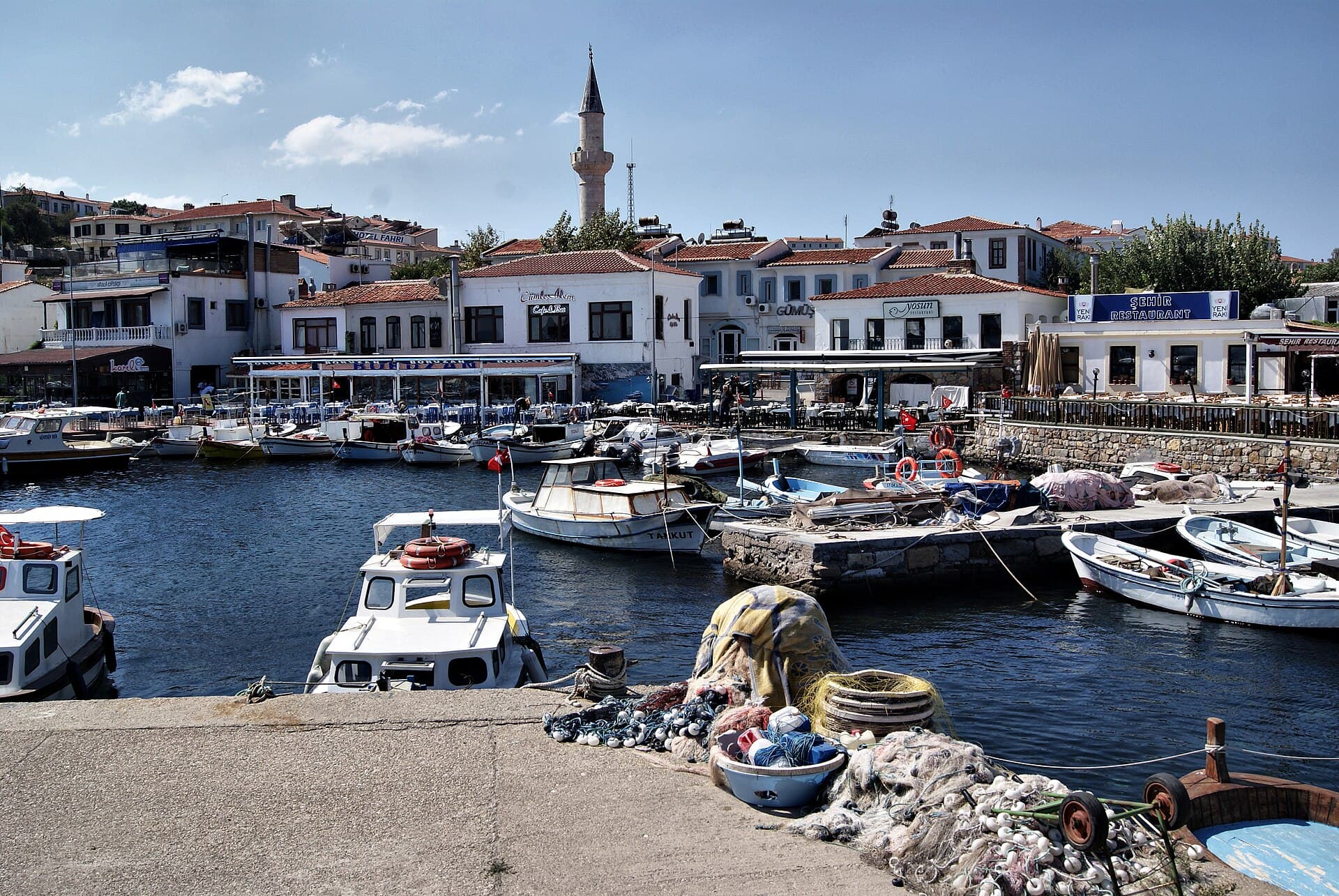 HALUK COMERTEL / CC BY 3.0, via Wikimedia Commons
“Where Aegean breezes carry tales of ancient wines and quiet streets.”
Not the postcards. The stories even locals don't know — whispered in your ear, right where they happened.
The island's winemaking tradition is ancient, yet a relatively recent shift threatened its very existence.
The island's main town once had a natural divider that shaped its distinct cultural neighborhoods.
Despite its reputation for clear waters, choosing the right beach on Bozcaada requires a specific local consideration.
Discover every secret of Bozcaada
Every address, every reveal in full — in your ear, right where it happened.
You pick your stops. You walk. The voice reveals what the others miss.
No tours available yet. Check back soon — we're preparing them.
Bozcaada, historically known as Tenedos, is a Turkish island in the northeastern Aegean Sea, approximately 5 kilometers from the mainland. It is the third largest Turkish island and is celebrated for its unique blend of Greek and Turkish influences, visible in its architecture, cuisine, and relaxed pace of life. The island's appeal resides in its carefully laid streets, traditional homes with colorful windowpanes, and a serene atmosphere that offers a peaceful escape from the clamor of city life.
Bozcaada's identity is deeply intertwined with its winemaking heritage, which dates back millennia. Beyond its vineyards, the island offers clear Aegean waters, secluded coves, and a past that echoes stories of ancient civilizations. With a year-round population of around 3,000 residents, which can swell significantly during the summer months, Bozcaada maintains a commitment to preserving its authenticity and natural beauty.
The history of Bozcaada stretches back to approximately 2000 BCE, with archaeological evidence from its necropolis dating to 3000 BCE. In ancient times, the island was known as Leukophrys, and later as Tenedos in Greek mythology. Homer's Iliad mentions Tenedos as a sacred site to Apollo and a strategic location for the Achaean fleet during the Trojan War, before their surprise attack on Troy with the wooden horse. The island's strategic position at the mouth of the Dardanelles Strait made it a sought-after territory, leading to a history of successive occupations by various empires, including the Greeks, Persians, Romans, and Byzantines.
In 1455, Bozcaada became part of the Ottoman Empire under Sultan Mehmet the Conqueror, who rebuilt the island's castle and re-established its vineyards. For five centuries, Turks and Greeks coexisted on the island, creating a shared culture that influenced everything from food and drink to dress. This unique cultural blend is still evident today in the distinct Greek and Turkish quarters of Bozcaada town. After the Turkish War of Independence, the Treaty of Lausanne in 1923 ceded Bozcaada to the Republic of Turkey, exempting its Greek inhabitants from the population exchange between Greece and Turkey and allowing them to retain their schools and churches. However, the Greek population significantly decreased after the mid-1960s due to political tensions.
Throughout its history, viticulture and wine production have been central to Bozcaada's economy and identity, with the island's wines being traded across the Eastern Mediterranean during classical and Ottoman times. Despite periods of decline, particularly in the 1980s, efforts are now underway to revive this ancient tradition, focusing on native grape varieties like Kuntra, Karalahna, Vasilaki, and Çavuş. Today, the island continues to balance its historical legacy with a growing tourism industry, striving to protect its natural and archaeological heritage.
Begin your exploration at Bozcaada Castle, an imposing structure at the harbor entrance. Built upon the ruins of earlier fortifications, its current form dates back to Sultan Mehmet the Conqueror, and it offers expansive views of the marina and town. Wander through the town center, where the distinct Greek and Turkish quarters showcase a blend of architectural styles. The Greek district features white-washed houses, a clock tower, and the Church of St. Mary, while the Turkish quarter is characterized by mosques and Ottoman architecture.
The island's wineries are a significant draw, with several offering tours and tastings of local grape varieties like Kuntra, Karalahna, Vasilaki, and Çavuş. For a memorable sunset experience, head to the windmills at the western tip of the island, near the abandoned Polente Lighthouse. Bozcaada also offers numerous beaches and coves. Ayazma Beach is the most popular, known for its soft sands and clear waters, while Aquarium Cove (Mermer Burnu) is ideal for snorkeling. For a panoramic view of the island, ascend to Göztepe, Bozcaada's highest point.
Bozcaada experiences a Mediterranean climate with warm, dry summers and cold, wet winters. The optimal time to visit for warm-weather activities and enjoying the beaches is from late June to early September, when temperatures are highest and skies are clearest. Spring and autumn offer milder, pleasant weather, suitable for exploring the vineyards and historical sites without the peak summer crowds. The island can be quite windy year-round.
Bozcaada is accessible only by ferry. Regular car and passenger ferries depart from Geyikli on the Turkish mainland, with the journey taking approximately 35 minutes. Pre-booking is not typically required for the Geyikli ferry if you are a passenger, and vehicles are permitted. A passenger-only ferry service is also available from Çanakkale, requiring pre-booking at least 24 hours in advance. During the summer, vehicular traffic on the island, particularly in the town center, is regulated. Once on the island, walking and biking are excellent ways to get around, as Bozcaada has no traffic lights and minimal traffic. Accommodation options range from boutique hotels to charming guesthouses, with advance booking recommended during peak season (May through September).