Textile Fashion Center
This hub of textile innovation holds a secret beneath its modern facade, literally.
Full story unlocks in the tour
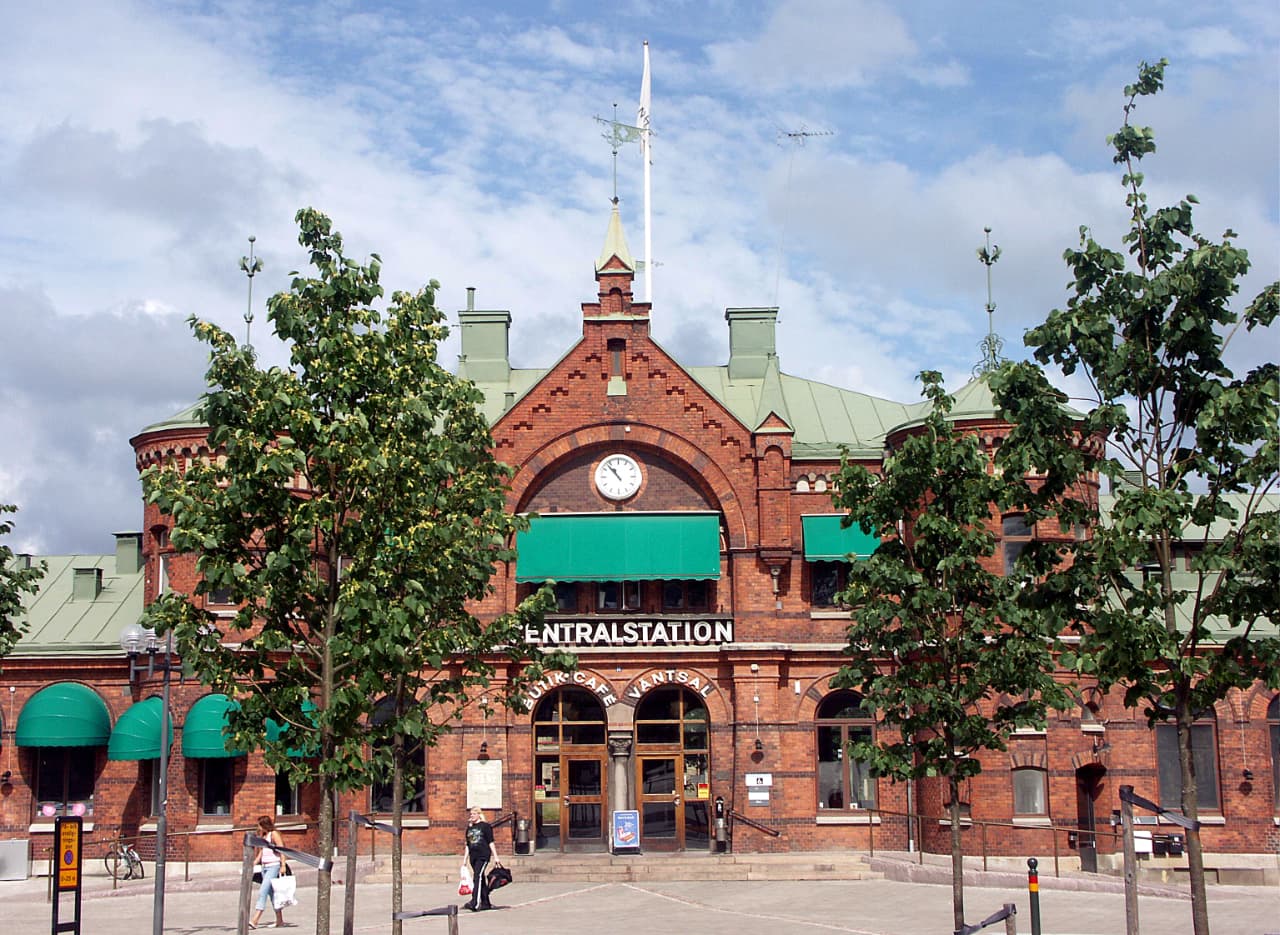 This image was produced by me, David Castor (user:dcastor). The pictures I submit to the Wikipedia Project are released to the public domain. This gives you the right to use them in any way you like, without any kind of notification. This said, I would still appreciate to be mentioned as the originator whenever you think it complies well with your use of the picture. A message to me about how it has been used would also be welcome. You are obviously not required to respond to these wishes of mine, just in a friendly manner encouraged to. (All my photos are placed in Category:Images by David Castor or a subcategory thereof.) / Public domain, via Wikimedia Commons
“Where threads of innovation weave through a city of public art.”
Not the postcards. The stories even locals don't know — whispered in your ear, right where they happened.
This hub of textile innovation holds a secret beneath its modern facade, literally.
The zoo's origins are a tale of unexpected travel companions.
Borås's central square transforms dramatically with the seasons, but one tradition ensures a consistent sparkle.
Discover every secret of Borås
Every address, every reveal in full — in your ear, right where it happened.
You pick your stops. You walk. The voice reveals what the others miss.
No tours available yet. Check back soon — we're preparing them.
Borås, a city in western Sweden, presents a dynamic fusion of deep-rooted textile heritage and a flourishing contemporary art scene. Often known as "the textile city," its history is intricately woven with commerce and manufacturing, evolving from a center for pedlars in the 17th century to a modern hub for textile research and design. Beyond its industrial origins, Borås has cultivated an impressive open-air art gallery, with large-scale murals and sculptures gracing its public spaces.
Situated approximately an hour east of Gothenburg, Borås offers a distinctive urban experience, characterized by a relaxed pace and a focus on creativity. The city's dedication to design, culture, and textiles is apparent in its institutions, public installations, and ongoing events, making it a compelling destination for those seeking both historical understanding and modern artistic expression.
Borås received its city privileges in 1621 from King Gustav II Adolf, primarily to establish a legal marketplace for local pedlars and to streamline tax collection on their trade. The city experienced swift expansion after its founding, reaching over 2,000 inhabitants within a century. However, its early history also included difficulties, as Borås was devastated by fires four times: in 1681, 1727, 1822, and 1827. The Caroli Church, the oldest structure in Borås, remarkably endured all these conflagrations.
The 19th century saw Borås emerge as Sweden's foremost textile center. The city's landscape became dotted with cotton and woolen mills, dye works, and hosiery factories. During the height of the textile industry in the mid-20th century, an astonishing 70% of the city's inhabitants found employment in the textile sector. Companies like Algots and Borås Wäfveri played a significant role in establishing the city's reputation. While much of the textile production relocated in the 1970s, Borås maintained its profound expertise and transformed into a center for fashion design, research, and innovation.
In recent decades, Borås has embraced a new identity as a city of public art. It is home to Sweden's largest collection of urban street art, with murals often rising several stories high. This outdoor gallery is constantly evolving, with new installations and sculptures appearing regularly. The Borås International Sculpture Biennale, held every other year, further solidifies the city's dedication to presenting world-class international art. Notable sculptures include Jim Dine's nine-meter-tall bronze Pinocchio, known locally as Walking to Borås, and Jaume Plensa's eight-meter-high House of Knowledge, composed of letters forming a human figure. The city's commitment to art extends to its museums, such as the Borås Art Museum, which features contemporary art, and the Abecita Pop Art & Photo Museum, known for its world-class art photography.
Begin your exploration at the Textile Fashion Center, a modern complex constructed within old industrial buildings. It houses the Swedish School of Textiles, the Nordic Textile Academy, and the Textile Museum, offering insights into Borås's textile heritage and future innovations. Notice the distinctive stone carpet at its entrance.
Walk through the city center to discover Borås's extensive outdoor art collection. Within a 1.5-kilometer radius, you will encounter hundreds of sculptures and murals. Look for Jim Dine's Walking to Borås (Pinocchio) and Jaume Plensa's House of Knowledge. Significant murals include NeSpoon's red and white lace wall on Västerbrogatan, DALeast's blue eagle near Borås University, and Peeta's three-dimensional work at the corner of Järnvägsgatan and Olovsgatan.
For a change of pace, visit Borås Zoo, a 40-hectare park recognized for its African savannah and Nordic wildlife. It stands as one of Sweden's largest zoos and the only one in Sweden with African bush elephants. The zoo also provides "zookeeper for a day" experiences.
The Stora Torget (Main Square) serves as the city's heart, connecting popular streets and hosting markets, concerts, and outdoor cinema throughout the year. Nearby, Stadsparken (City Park) offers a green refuge with walking paths and spaces for quiet moments.
The most pleasant period to visit Borås for warm-weather activities extends from late June to mid-August. During these months, average daytime temperatures range from 19°C to 22°C (66°F to 72°F), providing comfortable conditions for exploring the city's outdoor art and attractions. While July is the warmest month, it also experiences the highest precipitation. Spring (April-June) and early autumn (September) also offer mild weather, with blooming flowers in spring and a balanced mix of sunny and rainy days.
Borås is easily accessible, situated approximately 25 minutes from Landvetter International Airport. Public transport, particularly bus line 100, connects Borås to Gothenburg in about 50 minutes. Once in Borås, the city center is compact and inviting for walkers, allowing easy access to many attractions on foot.
Accommodation options range from modern hotels like Scandic Plaza Borås and Quality Hotel Grand Borås to more budget-friendly choices and even a wildlife camp at Borås Zoo. Dining in Borås presents a diverse culinary landscape, with options from traditional Swedish fare to international cuisine, including numerous cafes, contemporary bistros, and restaurants along the Viskan River.
The Borås Tourist Information Center can offer assistance with planning your visit, providing maps, brochures, and local insights.