Bodrum Castle
The formidable Bodrum Castle, constructed by the Knights of St. John, holds a secret within its very foundations.
Full story unlocks in the tour
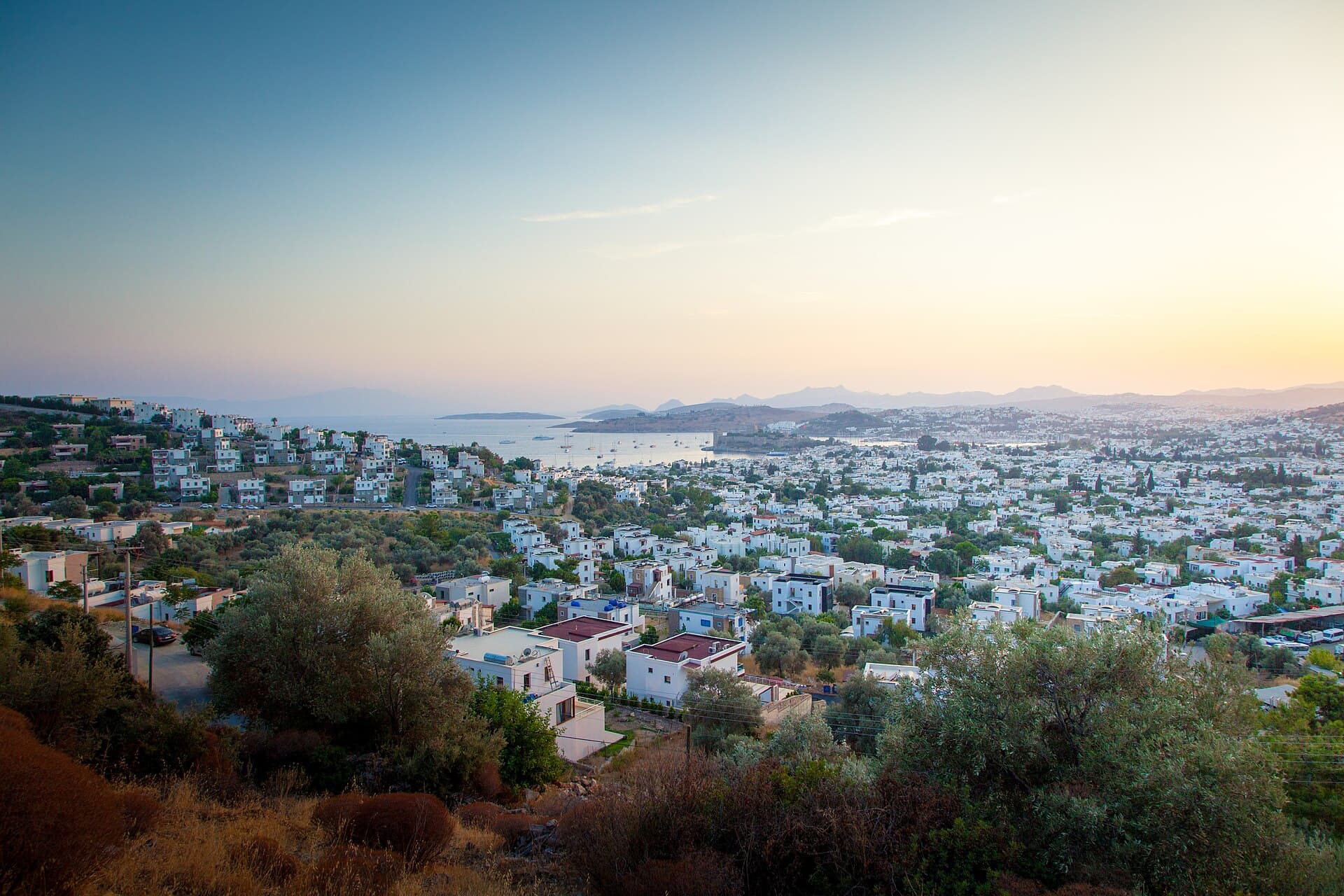 The 3B's / CC BY 2.0, via Wikimedia Commons
“Where ancient stones meet the Aegean's endless blue, Bodrum unfurls its story.”
Not the postcards. The stories even locals don't know — whispered in your ear, right where they happened.
The formidable Bodrum Castle, constructed by the Knights of St. John, holds a secret within its very foundations.
The very word 'mausoleum' originates from Bodrum's most renowned, though now ruined, ancient structure.
During Alexander the Great's siege of Halicarnassus, a particular gate presented a formidable, and watery, challenge.
Discover every secret of Bodrum
Every address, every reveal in full — in your ear, right where it happened.
You pick your stops. You walk. The voice reveals what the others miss.
No tours available yet. Check back soon — we're preparing them.
Bodrum, a captivating port town on Turkey's Aegean coast, reveals layers of history at every turn. Known in antiquity as Halicarnassus, it once contained one of the Seven Wonders of the Ancient World, the Mausoleum of Halicarnassus. Today, Bodrum gracefully intertwines its ancient past with a lively contemporary atmosphere, drawing visitors with its sparkling blue waters, whitewashed homes, and a bustling marina.
The city's strategic location at the entrance to the Gulf of Gökova has secured its importance across millennia, evolving from an ancient Dorian settlement to a significant port under various empires. While it remained a quiet fishing village for many centuries, Bodrum has transformed into a celebrated tourism center since the mid-20th century, recognized for its cultural depth and natural allure.
Bodrum's story stretches back an estimated 3,000 to 7,000 years, with archaeological evidence indicating the presence of various cultures and civilizations, including the Leleges, Carians, Persians, Dorians, Hellenes, Romans, Byzantines, and Ottomans. The city, originally known as Halicarnassus, is believed to have been established by the Carians in the 11th century BC, or by the Dorians around 1000 BC on what was then an island where Bodrum Castle now stands.
Under Persian dominion, Halicarnassus became the capital of the satrapy of Caria. This era saw the reign of Mausolus, who moved the capital from Mylasa to Halicarnassus and oversaw its rebuilding, ushering in its most brilliant period. After Mausolus's passing in 353 BC, his sister-wife Artemisia II commissioned the Mausoleum at Halicarnassus, a monumental tomb that became one of the Seven Wonders of the Ancient World.
In 334 BC, Macedonian forces under Alexander the Great besieged and captured the city. Following Alexander's death, Halicarnassus passed through the hands of successive Hellenistic rulers before falling under Roman rule in 129 BC. The city later became a bishopric under the Aphrodisias Metropolitan after the division of the Roman Empire in 324 AD.
Bodrum entered Turkish hands in the late 11th century and later became part of the Menteşe Principality in the 13th century. The formidable Bodrum Castle, also known as the Castle of St. Peter, was constructed by the Knights of St. John beginning in 1402. This transnational effort saw different nations of the Knights (English, French, German, Italian) contributing to its towers. The castle incorporated stones and marble from the ruined Mausoleum, a testament to the city's layered history. In 1523, with the conquest of Rhodes by Suleiman the Magnificent, Bodrum and its castle became part of the Ottoman Empire. The castle served various purposes over the centuries, including a military base and a prison, before becoming the home of the Bodrum Museum of Underwater Archaeology in the 1960s.
Bodrum remained a quiet town of fishermen and sponge divers until the mid-20th century. From 1965 onwards, the development of tourism spurred significant growth, transforming it into the popular destination it is today.
Begin your exploration at Bodrum Castle, a striking 15th-century fortress erected by the Knights of St. John. This impressive structure now houses the Museum of Underwater Archaeology, displaying artifacts from shipwrecks, including the Uluburun shipwreck. From the castle, it's a short walk to the remnants of the Mausoleum at Halicarnassus, once one of the Seven Wonders of the Ancient World. While only foundations and scattered fragments endure, interpretive signs assist in visualizing its former magnificence.
Proceed to the Bodrum Amphitheater, a well-preserved structure dating back to the 4th century BC, during the reign of King Mausolus. It once accommodated up to 13,000 spectators for plays and gladiator contests, and still hosts concerts today. Ascend to the upper levels for expansive views of Bodrum Castle and the marina. Do not overlook the Myndos Gate, the last remaining gate of ancient Halicarnassus's city walls, also constructed by Mausolus. Here, you can observe the remnants of a moat where Alexander the Great's soldiers reportedly drowned during a siege. Wander through Bodrum's appealing old town with its whitewashed homes and explore the lively Bodrum Bazaar for local goods. For a different perspective, consider a boat trip on a traditional Turkish gulet to explore the nearby bays and islands.
The ideal time to visit Bodrum is between May and September, when temperatures are pleasant, and rainfall is minimal, perfect for beach activities and exploration. Average daytime temperatures range from 25°C to 35°C during these months, with sea temperatures inviting for swimming. For those who prefer milder weather and fewer crowds, the latter half of May to mid-June, and the final two weeks of September through mid-October, offer agreeable conditions. September, in particular, is often cited as an excellent time, with warm seas and diminishing crowds. April and October also provide favorable weather for outdoor activities like hiking. Even winter offers a quieter experience with mild temperatures, though with more rain.
The local currency in Bodrum is the Turkish Lira (TRY), though Euros, British Pounds, and US Dollars are often accepted at major tourist venues. However, smaller shops and rural areas typically prefer Lira, and it's wise to carry cash for these instances and for tipping. You can exchange money at banks and exchange offices, but compare rates and be aware of potential hidden markups. Using ATMs and opting to be charged in Turkish Lira can often provide a fairer rate.
Turkish is the official language, but English is widely spoken in tourist areas. Learning a few basic Turkish phrases is always appreciated. Moving around Bodrum is easy; the town center is walkable, and local minibusses called 'dolmuş' are a frequent and affordable way to travel between towns and resorts on the peninsula. Taxis are readily available, and metered rates are regulated, though agreeing on a price for longer journeys is recommended. Car and scooter rentals are also options for exploring the wider peninsula.
Bodrum is generally considered a secure destination for visitors, with low crime rates. Standard precautions like being aware of your belongings in crowded areas and avoiding isolated spots at night are always recommended.