Bodø Airport
Most airports require a journey by vehicle to reach the city's core, but Bodø offers a different kind of arrival.
Full story unlocks in the tour
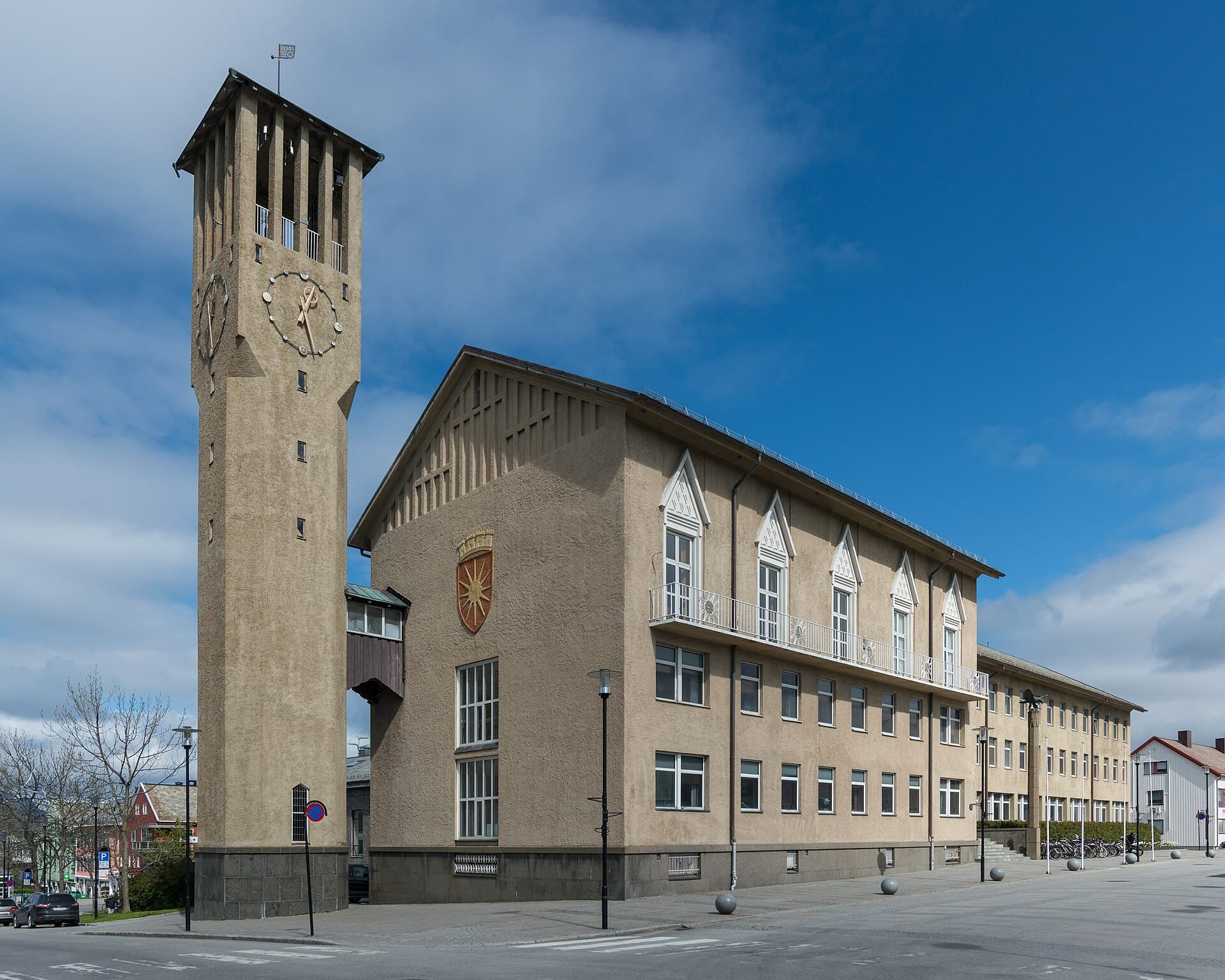 DXR / CC BY-SA 4.0, via Wikimedia Commons
“Where the Arctic wind shapes culture and wild landscapes.”
Not the postcards. The stories even locals don't know — whispered in your ear, right where they happened.
Most airports require a journey by vehicle to reach the city's core, but Bodø offers a different kind of arrival.
This is no ordinary stretch of white sand; its shores recount a singular geological narrative.
Beyond its natural wonders, Bodø's urban landscape holds an unexpected artistic dimension.
Discover every secret of Bodø
Every address, every reveal in full — in your ear, right where it happened.
You pick your stops. You walk. The voice reveals what the others miss.
No tours available yet. Check back soon — we're preparing them.
Bodø, the second-largest city in Northern Norway, rests just above the Arctic Circle, serving as a portal to dramatic landscapes and singular cultural encounters. It offers a compelling fusion of urban existence and untamed nature, where contemporary architecture coexists with powerful natural phenomena. Often considered a stepping stone to the Lofoten Islands, Bodø is increasingly recognized as a destination in its own right, providing everything from sea eagle safaris to a flourishing arts scene.
In 2024, Bodø etched its name in history as the first city north of the Arctic Circle to be named a European Capital of Culture, a testament to its evolving identity and dedication to showcasing Northern Norwegian and Sami culture. This acknowledgment has brought a renewed focus on its entrepreneurial spirit and bohemian undertones, transforming it from what some once called 'Boring Bodø' into a lively center. The city's coastal Arctic climate brings mild winters and cool summers, with the dramatic seasonal shifts of the Midnight Sun and the Northern Lights defining its character.
Bodø's compact city center makes it simple to explore on foot, with many points of interest, dining establishments, and cultural venues within easy reach. Beyond the city limits, a wealth of outdoor adventures awaits, from experiencing the world's strongest tidal current to traversing mountain trails and discovering secluded beaches.
The story of Bodø as an administrative entity officially began in 1816 when it was granted market town status. This strategic move aimed to establish an independent trading center in Northern Norway and diminish the long-standing monopoly held by merchants from Bergen over the region's fish trade.
By the mid-19th century, Bodø experienced a period of rapid economic expansion known as the "Herring Boom." The vast seasonal herring fisheries off the Nordland coast brought substantial wealth and attracted a large influx of people, solidifying Bodø's role as a pivotal hub for the production and export of stockfish, a dried cod product highly sought after in international markets.
However, Bodø's development faced a devastating setback during World War II. On May 27, 1940, German bombing raids destroyed most of the city's historic wooden buildings and much of its port area, leaving 3,500 of its 6,000 residents without homes. The city was subsequently rebuilt in a post-war Functionalist style, which gives modern Bodø a distinctive architectural identity, markedly different from other coastal settlements in Norway.
In the post-war era, Bodø also gained strategic significance as a major Royal Norwegian Air Force base during the Cold War, playing a central role in Norway's NATO defenses. This military presence further shaped the city's development and infrastructure. More recently, Bodø was designated a European Capital of Culture in 2024, a significant milestone as the first city north of the Arctic Circle to hold this esteemed title. This cultural recognition has propelled Bodø onto the international stage, underscoring its unique Arctic identity and fostering a renewed sense of cultural energy.
The powerful Saltstraumen maelstrom, the world's strongest tidal current, offers a captivating spectacle, located about 30 kilometers from the city. Here, immense whirlpools up to 10 meters in diameter form as water rushes through a narrow strait. You can observe this natural phenomenon from land or experience it up close on a RIB boat safari.
For a measure of history, visit the Norwegian Aviation Museum, housed in a distinctive propeller-shaped building. It displays over 40 civilian and military aircraft, including artifacts from WWII and the Cold War, offering interactive exhibits. Another historical highlight is the Kjerringøy Trading Post, Norway's best-preserved 19th-century trading post, located about 40 kilometers north of Bodø. Back in the city, explore the Stormen Library and Concert Hall, a modern architectural marvel of glass and wood that offers fjord views and a welcoming retreat.
Those who appreciate nature can hike to Keiservarden, a viewpoint offering expansive views of Bodø and its surroundings. For a singular coastal experience, visit Mjelle Beach, known for its red-tinged sand that shifts color with the tides. Bodø is also an excellent place for spotting sea eagles, with wilderness safaris available to observe these magnificent birds. Take time to notice the lively street art scattered around the city center, a legacy of the UpNorth art festival.
Bodø presents distinct experiences depending on the season. For long days, hiking, and the Midnight Sun, plan your visit between June and August. The Midnight Sun is officially visible from June 1 to July 13, though the days before and after are also exceptionally bright. Temperatures during this period range from approximately 15°C to 20°C.
For the best opportunity to see the Northern Lights and enjoy cozy evenings, schedule your trip between October and March. The aurora season in Bodø extends from late September to early April, with optimal viewing from December to February when nights are longest and skies are often clearest. Bodø's coastal Arctic climate means mild winters, with temperatures around -2°C.
Bodø Airport (BOO) is remarkably close to the city center, just 1.2 kilometers away, making it possible to walk to many accommodations. Flights from Oslo take about 80 minutes, and there are connections to other major Norwegian cities and some international destinations. The Nordland Railway also concludes in Bodø, offering a scenic train journey from Trondheim.
The city center is compact and easily navigated on foot. For exploring beyond the immediate downtown area or visiting attractions like Saltstraumen, a reliable local bus network is available. Renting a car is advisable for those wishing to explore the wider Nordland region at their own pace.
Norway generally has a high cost of living, and Bodø is no exception, particularly for housing and food. The local currency is the Norwegian Krone (NOK), and card payments are widely accepted, rendering cash largely unnecessary. Layered clothing, including a windproof and waterproof outer shell, is essential due to Bodø's unpredictable and often windy weather.