Château Royal de Blois
Beyond the grand facades, one queen's living quarters held a secret that fueled whispers of poison.
Full story unlocks in the tour
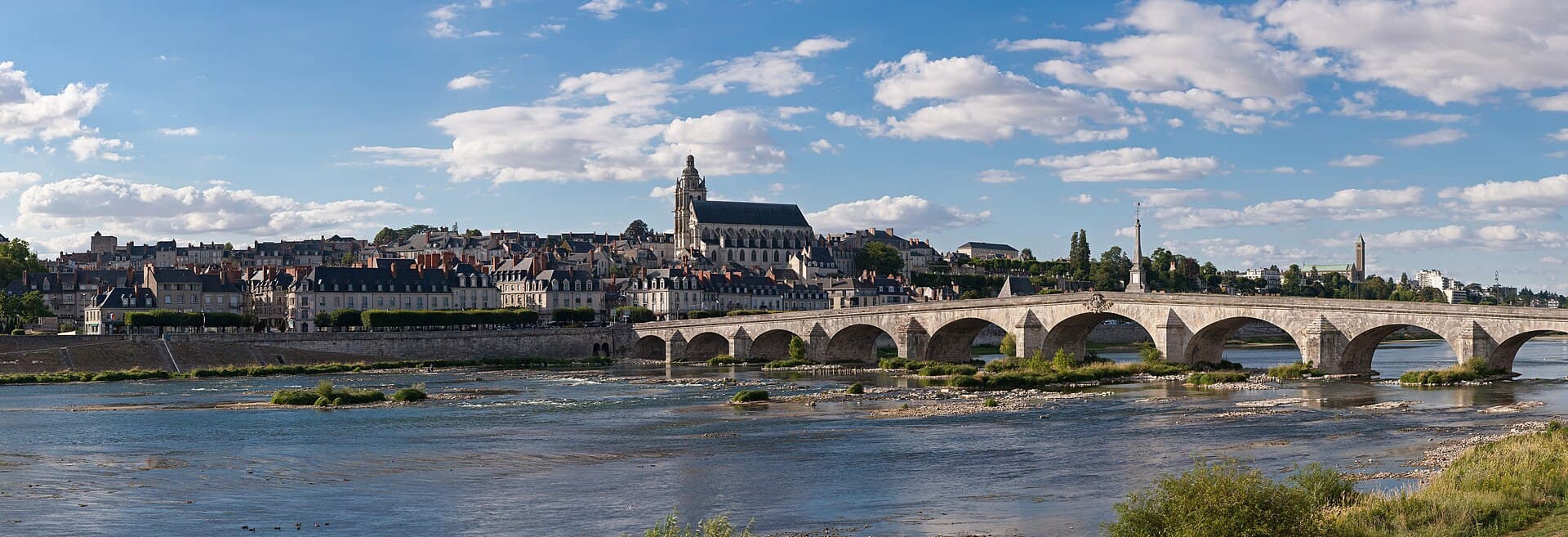 Diliff / CC BY-SA 3.0, via Wikimedia Commons
“Where royal intrigue and architectural evolution meet the magic of illusion.”
Not the postcards. The stories even locals don't know — whispered in your ear, right where they happened.
Beyond the grand facades, one queen's living quarters held a secret that fueled whispers of poison.
The elegant 18th-century bridge spanning the Loire replaced an older structure that met a dramatic end.
A building across from the Château offers a fantastical welcome every half hour.
Discover every secret of Blois
Every address, every reveal in full — in your ear, right where it happened.
You pick your stops. You walk. The voice reveals what the others miss.
No tours available yet. Check back soon — we're preparing them.
Blois, a city in France's Loire Valley, offers a journey through centuries of French history and architectural styles. Situated on the north bank of the Loire River, approximately 180 km south of Paris, Blois served as a significant center of power from the Middle Ages through the Renaissance. Its historic center, with winding streets and half-timbered houses, climbs steeply from the river up to the Royal Château, providing expansive views of the Loire and the surrounding landscape.
Often seen as a brief stop between other Loire Valley châteaux, Blois rewards those who linger, revealing a concentration of Renaissance architecture, royal intrigue, and artistic innovation. The city's unique blend of monumental heritage and intimate character, along with its peaceful riverside atmosphere, makes it a captivating destination. Blois is also a convenient base for exploring other renowned châteaux in the region, such as Chambord, Cheverny, and Chaumont, all within a 20-minute drive.
Blois's origins trace back to the 6th century, first mentioned by Gregory of Tours. By the early Middle Ages, it was the seat of the powerful counts of Blois. The city's strategic position on the Loire River established it as an important center of power. The oldest part of the existing Château Royal, the Salle des États Généraux, dates to the 13th century and was built by these counts.
In the late 14th century, Blois was acquired by Louis de France, Duke of Orléans, marking the beginning of its golden age as a royal residence. The city truly flourished in the 15th and 16th centuries, becoming a 'second capital of France.' Louis XII, born in the château in 1462, ascended to the French throne in 1498, solidifying Blois's royal status and making it his favored residence and political capital. He added terraced gardens and remodeled the château's entrance.
Under Francis I, who became king in 1515, the château underwent major refurbishment, including the creation of a large library. The French royal family continued to favor Blois throughout the 16th century, leading to a hybrid of Renaissance and Gothic architecture. The château was the setting for significant historical events, including Joan of Arc's visit in 1429 to receive the Archbishop's blessing before marching to Orléans. Later, King Henri III convened the Estates General twice in Blois, in 1576 and 1588, in an attempt to curb the Wars of Religion. It was within the château's walls that Henri III orchestrated the assassination of his rival, Henri, Duke of Guise, in 1588, with Queen Mother Catherine de' Medici dying just days later in a room below.
After the royal court moved to Paris, Blois lost its status as a primary royal residence, and the château eventually fell into disrepair. However, it was saved from demolition in 1840 when it was added to the list of French historical monuments and subsequently restored by Félix Duban, becoming a public museum.
The Château Royal de Blois is a central attraction, showcasing four distinct architectural styles—medieval, Gothic, Renaissance, and classical—around a single courtyard. Visitors can explore over 30 furnished rooms and a collection of more than 35,000 pieces, including the Musée des Beaux-Arts, which houses art from the 16th to 19th centuries. Don't miss the famous octagonal Francis I staircase.
Opposite the château, the Maison de la Magie Robert-Houdin is a unique museum dedicated to illusion and the life of the famous illusionist born in Blois. Its facade features a six-headed dragon that animates every half hour.
Stroll through Blois's old town to discover its winding streets, half-timbered houses, and Renaissance mansions, such as those on Rue du Puits-Châtel. The Cathédrale Saint-Louis, with its Gothic architecture and 33 contemporary stained glass windows, offers a luminous interior. Behind the cathedral, the Évêché terrace and its gardens provide panoramic views of the city and the Loire River. The monumental Denis-Papin Staircase, often adorned with ephemeral frescoes, also offers superb city views.
For a different artistic experience, the Fondation du Doute is a contemporary art space featuring provocative and conceptual works.
The best times to visit Blois are during the spring (April to June) and autumn (September to October). During these months, the weather is pleasant, with daytime highs ranging from 17-24°C in spring and similar comfortable temperatures in autumn. The gardens are in full bloom in spring, and crowds are generally smaller than in the peak summer months of July and August. Summer offers warm, sunny weather, with average temperatures around 21°C and highs of 26°C, ideal for exploring, but be prepared for larger crowds and occasional heatwaves. Winters are cool and mild, with average temperatures around 5-6°C, and while some châteaux may have reduced hours, you'll encounter the fewest visitors.
Blois is easily accessible by train, with regular services from Paris, Tours, and Orléans. The Blois-Chambord train station is a 10-minute walk from the Château Royal. For those traveling by car, the city is well-connected by road.
Accommodation options range from charming boutique hotels to more luxurious establishments, with many centrally located. The Blois-Chambord tourist office, located at Place du Château, provides helpful resources such as free city maps, guided tour bookings, and bus schedules for nearby châteaux.
While English is common at château ticket desks and hotel receptions, it may be less prevalent in local cafés and shops. Tap-to-pay is widely accepted, but it's useful to carry small euro cash for market vendors or smaller purchases. Comfortable footwear is essential for exploring the city's winding streets and numerous staircases. Given that rainy days occur fairly evenly throughout the year, a compact umbrella or light waterproof jacket is a sensible addition to your luggage.