Bled Island
The wishing bell on Bled Island's church isn't the only one with a story.
Full story unlocks in the tour
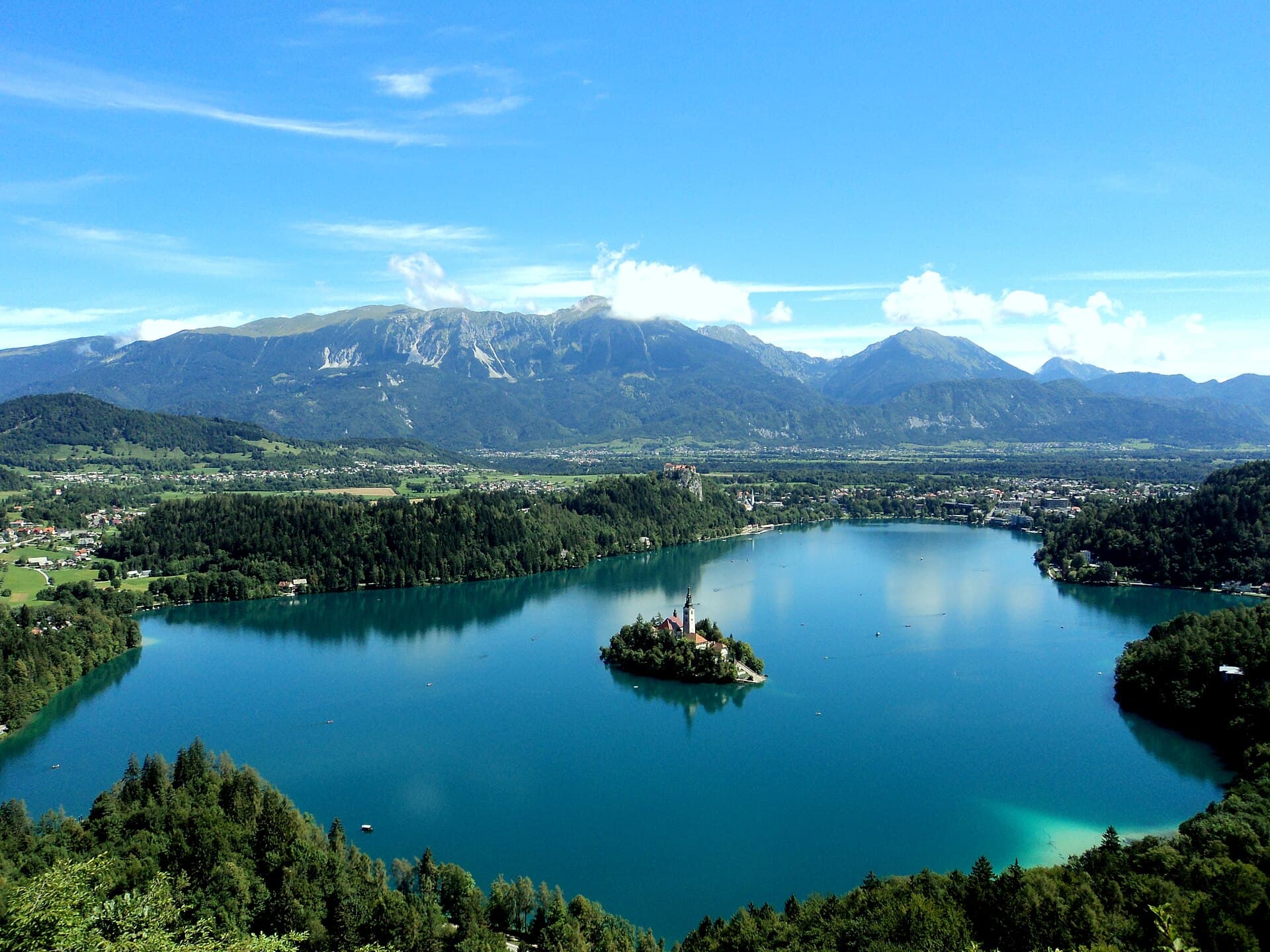 Canadianhockey91 / CC BY-SA 3.0, via Wikimedia Commons
“Where emerald waters meet ancient legends and a singular island church.”
Not the postcards. The stories even locals don't know — whispered in your ear, right where they happened.
The wishing bell on Bled Island's church isn't the only one with a story.
The iconic Bled cream cake has a very specific origin, and a fiercely protected recipe.
The distinctive Pletna boats of Lake Bled are more than just a charming way to reach the island.
Discover every secret of Bled
Every address, every reveal in full — in your ear, right where it happened.
You pick your stops. You walk. The voice reveals what the others miss.
No tours available yet. Check back soon — we're preparing them.
Bled, Slovenia, is a destination that feels pulled from a storybook, centered around a glacial lake with an emerald hue. At its heart lies a tiny, tear-shaped island, home to a picturesque church. A medieval castle rises from a dramatic cliff, providing sweeping panoramic views of the water and the Julian Alps beyond.
Beyond its visual splendor, Bled offers a blend of natural beauty and historical intrigue. The area has been inhabited since prehistoric times, drawn by its mild climate and resources, and has evolved from an important regional center under church administration to a fashionable spa town in the 19th century. Today, it's a hub for outdoor activities, from serene lake explorations to more adventurous pursuits in the surrounding alpine landscape.
## Early Settlements and Feudal Rule The history of Bled stretches back to prehistoric times, with evidence of human presence from the 11th to 8th centuries BCE, and later Slavic settlements in the 7th, 9th, and 10th centuries CE. The first written record of Bled dates to 1004, when German King Henry II granted the Bled estate to the Bishop of Brixen. This transfer marked Bled's emergence as a significant religious and cultural center. The Bishops of Brixen built the first castle around 1011 for defensive purposes, and it is considered the oldest castle in Slovenia.
## Earthquakes, Renovations, and Changing Hands Bled Castle, initially a Romanesque tower, saw additional towers and fortifications added during the Middle Ages. It suffered significant damage from earthquakes in 1511 and 1690 but was subsequently renovated. The castle's current appearance largely reflects these later renovations and further restoration work carried out in the 1950s. The bishops of Brixen rarely resided in the castle, often leasing it to noble families, and in 1278, control passed to the Habsburgs. Briefly part of Napoleon's Illyrian Provinces from 1809 to 1813, Bled was returned to the bishops of Brixen before the feudal system was abolished in 1848.
## From Spa Town to Modern Tourism In the 19th century, Bled transformed into a popular spa destination, attracting European aristocracy. Swiss healer Arnold Rikli played a key role in establishing Bled's reputation as a wellness retreat, advocating for the therapeutic benefits of alpine air, fresh water, sunshine, and outdoor activity. The town of Bled, as it is known today, developed from the gradual merging of several small villages—Grad, Mlino, Rečica, Zagorice, and Želeče—which grew due to industrialization and tourism. After a devastating fire in 1947, the castle was restored between 1951 and 1961 for tourism. Today, Bled remains a significant tourist attraction, known for its natural beauty, historical sites, and as a starting point for cycling and other outdoor adventures in the Julian Alps.
A visit to Bled begins with its iconic lake, where a walking or cycling path circles the entire 6-kilometer perimeter. A traditional pletna boat ride is the quintessential way to reach Bled Island and its Church of the Assumption. Once on the island, climb the 99 Baroque steps to the church and ring the legendary wishing bell.
Above the lake, Bled Castle offers not only a glimpse into Slovenia's oldest castle but also unparalleled views of the lake, island, and surrounding Julian Alps. While the museum inside provides historical context, the primary draw is the expansive panorama from its terraces. For postcard-perfect photos, walk to viewpoints like Ojstrica or Mala Osojnica.
Beyond the immediate vicinity of the lake, the Vintgar Gorge, located just a few kilometers northwest of Bled, offers a dramatic walk along wooden walkways through a canyon carved by the Radovna River, culminating in the Šum Falls.
Bled is captivating year-round, with each season offering a distinct experience. For warm-weather activities like swimming, boating, and hiking, the best time to visit is from late June to early September, when temperatures are comfortable and sunshine is abundant. The lake's water temperature during summer can reach 22–26°C, making it pleasant for swimming. Spring (March to May) and autumn (September to November) offer fewer crowds and beautiful scenery, with changing leaves in the fall. Winter transforms Bled into a snowy landscape, ideal for winter sports and a magical atmosphere, though some establishments may have reduced hours.
The main Tourist Information Center (TIC) in Bled is located by Lake Bled at Cesta svobode 10. Here, you can find information about local attractions, purchase tickets, rent bikes, book accommodations, and arrange activities like rafting. They also offer free Wi-Fi, PC access, and luggage storage.
Getting around Bled is straightforward. The town is walkable, and cycling is a popular way to explore the lake and surrounding areas. Buses connect Bled to Ljubljana, taking about 1 hour and 20 minutes. If arriving by train, note that the Lesce train station is about 3 kilometers from Bled, requiring a bus transfer. Driving to Bled is also an option, but be aware that parking near the lake can be limited.