The Old Port
Beyond the colorful fishing boats, a silent sentinel watches over Bizerte's maritime heart.
Full story unlocks in the tour
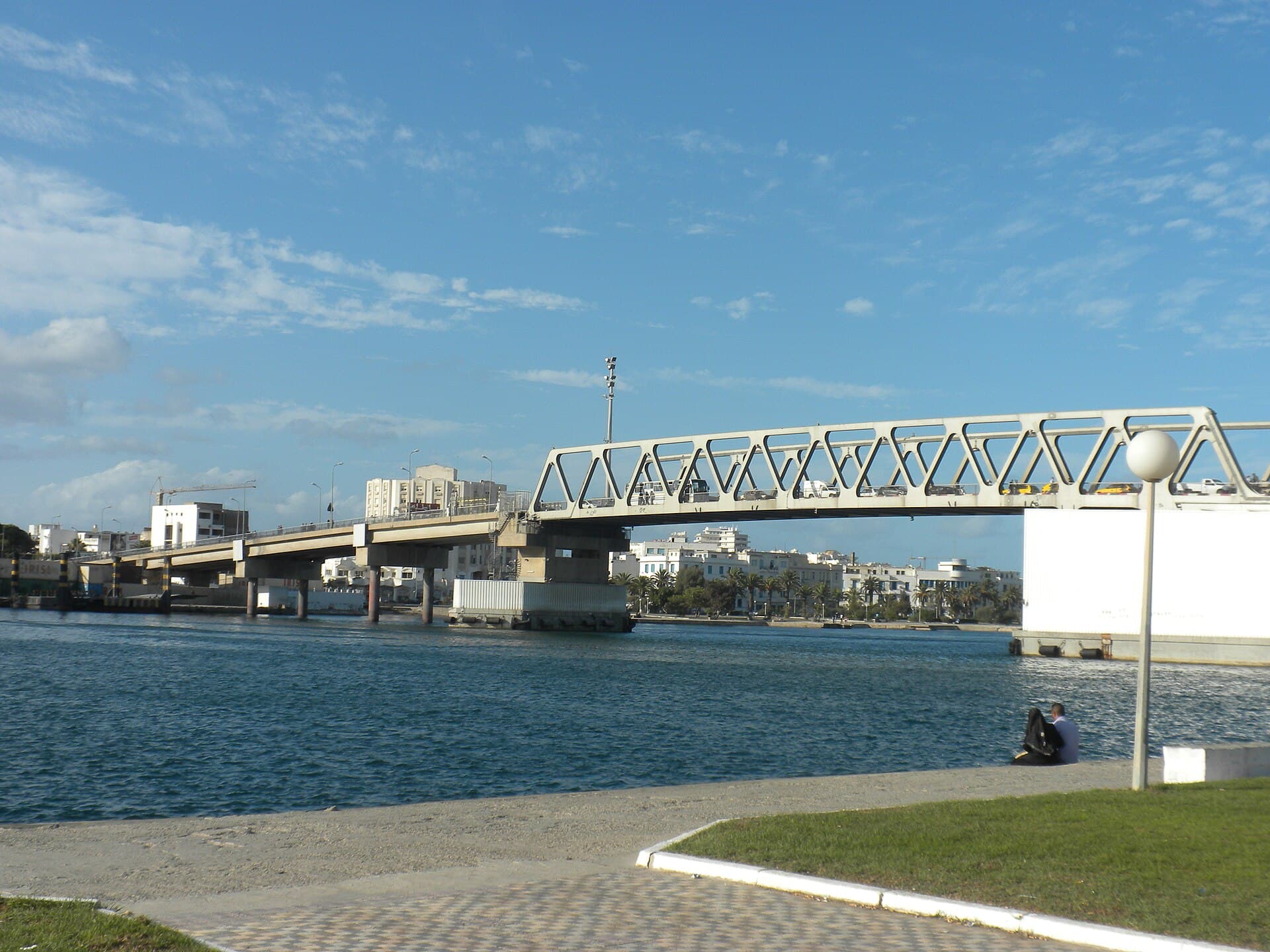 khaled abdelmoumen / CC BY 2.0, via Wikimedia Commons
“Where the Mediterranean sea meets Africa's northernmost edge, a city of quiet strength endures.”
Not the postcards. The stories even locals don't know — whispered in your ear, right where they happened.
Beyond the colorful fishing boats, a silent sentinel watches over Bizerte's maritime heart.
Unlike other Tunisian medinas, Bizerte's labyrinthine alleys hold a surprising stylistic preference.
Stand at the very tip of a continent, and you might notice a curious artistic tribute.
Discover every secret of Bizerte
Every address, every reveal in full — in your ear, right where it happened.
You pick your stops. You walk. The voice reveals what the others miss.
No tours available yet. Check back soon — we're preparing them.
Bizerte, Tunisia's northernmost city, offers a singular blend of history, coastal character, and an authentically local atmosphere. Situated at the very edge of the African continent, where the Mediterranean Sea converges with Lake Bizerte, this port city has served as a crossroads of civilizations for millennia. Unlike more heavily frequented destinations in Tunisia, Bizerte maintains a slower, saltier rhythm, inviting visitors to experience everyday life alongside its ancient fortifications and picturesque waterfront.
From its active old port, alive with brightly painted fishing boats, to the narrow, winding streets of its medina, Bizerte provides a glimpse into a Tunisia that feels both timeless and current. The city's strategic location has shaped its character, resulting in a landscape that blends historic architecture with serene beaches and natural wonders like nearby Ichkeul National Park. Bizerte rewards those who seek genuine encounters and a deeper understanding of North African culture.
## From Phoenician Outpost to Strategic Port Bizerte's history extends back to approximately 1100 BC, when Phoenicians from Tyre established it, predating even Carthage. Known in Greco-Roman times as Hippo Diarrhytus or Hippo Zarytus, a name reflecting its natural channel connecting the lake to the sea, the city's strategic maritime location has always been central to its identity.
Over centuries, Bizerte experienced a succession of occupations, including Romans, Arabs, Spanish, Turks, and French, each leaving their mark on its architecture and culture. The city became a privateering stronghold under Ottoman rule. A pivotal moment arrived in 1895 when the French completed a canal, transforming Lake Bizerte into a significant roadstead and naval port. This development cemented Bizerte's importance as a military base, particularly during the French protectorate.
During World War II, German and Italian armies occupied Bizerte, then Allied troops retook it in 1943. Perhaps its most dramatic modern chapter unfolded after Tunisia gained independence in 1956. France, recognizing Bizerte's strategic value, retained control of its naval base. This led to the Bizerte Crisis in July 1961, a violent standoff between Tunisian and French forces that resulted in significant casualties. France finally withdrew in 1963, making Bizerte the last Tunisian quarter to achieve full sovereignty. This struggle for independence has instilled in the city a quiet, hard-won pride.
Begin your exploration at the Vieux Port, Bizerte's historic fishing harbor, where colorful boats bob in the water against a backdrop of whitewashed houses. Observe fishermen mending their nets and enjoy a mint tea at a waterside café. Adjacent to the port, explore the Medina, a maze of narrow streets that offers an authentic slice of local life. Here, you will find traditional shops and a lively atmosphere.
Overlooking the harbor, the Kasbah and the Spanish Fort stand as testaments to Bizerte's defensive past. Climb the ramparts of the Spanish Fort for expansive views of the city, the port, Lake Bizerte, and the Mediterranean Sea. The Oceanographic Museum, complete with an aquarium, offers insights into marine life.
For a natural escape, head to Cap Angela, Africa's northernmost point, located just 15 km from Bizerte. Dramatic cliffs and clear waters await. Ichkeul National Park, a UNESCO World Heritage site, is a significant wetland for migratory birds, including ducks, geese, and flamingos, and is ideal for bird-watching.
Bizerte enjoys a Mediterranean climate, with mild, rainy winters and warm, dry summers. The ideal times to visit are spring (March to May) and fall (September to November). During these shoulder seasons, temperatures are pleasant, ranging from 18-24°C (64-75°F), perfect for sightseeing and outdoor activities. The Mediterranean breeze keeps summers cooler than inland areas, but July and August can still see highs around 34°C (93°F). Winter months (December to February) are mild but wetter.
Bizerte is approximately 65 km (40 miles) north of Tunis and Tunis-Carthage International Airport (TUN). The journey by car or shared taxi (louage) from Tunis typically takes around an hour. While Bizerte itself does not have an airport, Tunis-Carthage is the closest and most convenient entry point.
Within Bizerte, walking is often the best way to explore the compact medina and old port. Taxis are readily available for longer distances or trips to nearby attractions. The local currency is the Tunisian Dinar (TND), and it is advisable to carry some cash as not all establishments accept credit cards. Arabic is the official language, and French is widely spoken, while English is less common.