The Sacristy Door
This church door is more than old wood; it is a marvel of medieval engineering, once honored in Paris.
Full story unlocks in the tour
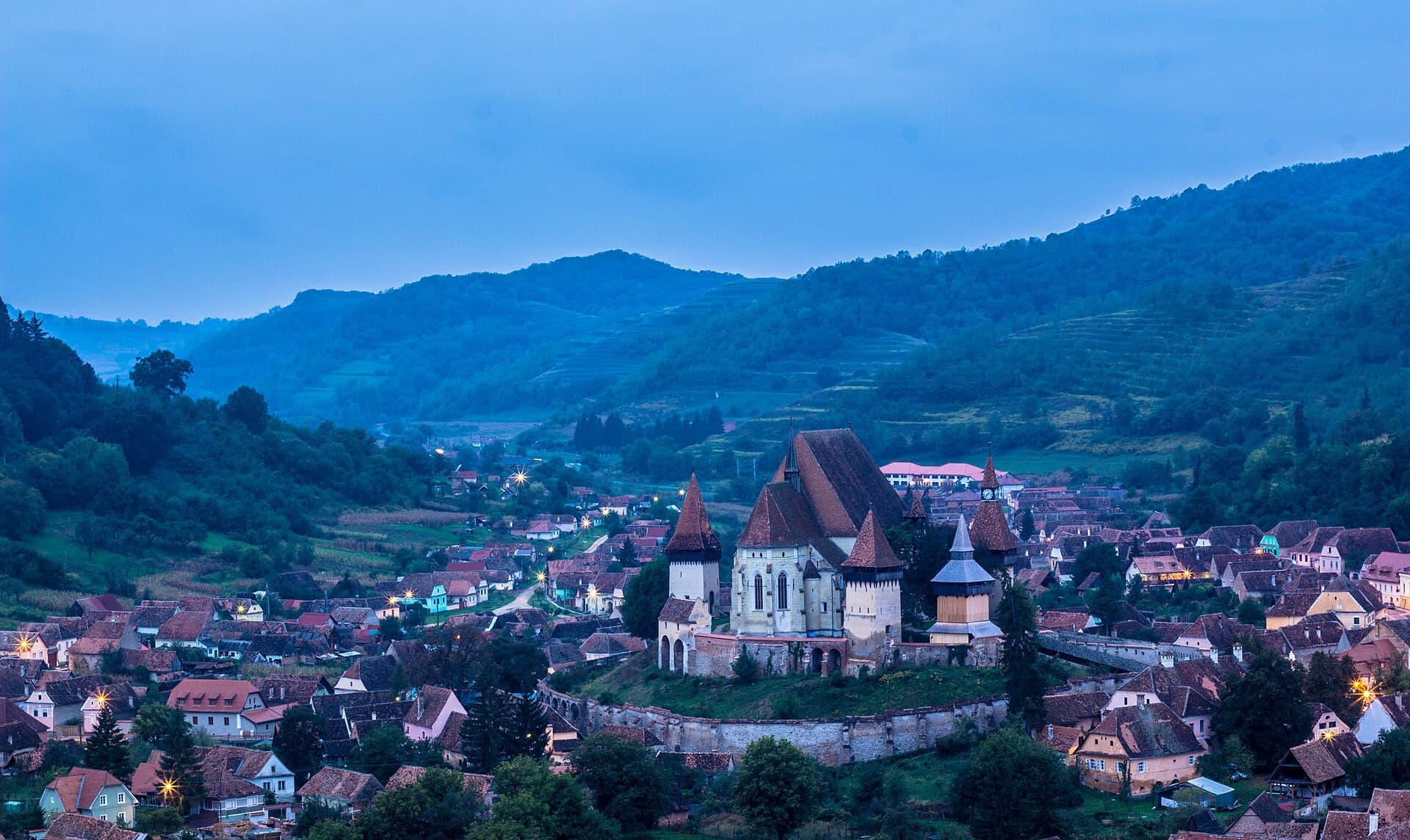 Mihai Raducanu / CC BY-SA 4.0, via Wikimedia Commons
“Where medieval walls echo Saxon ingenuity and the enduring spirit of community.”
Not the postcards. The stories even locals don't know — whispered in your ear, right where they happened.
This church door is more than old wood; it is a marvel of medieval engineering, once honored in Paris.
Before modern divorce, couples in Biertan engaged in a rather distinctive form of mandatory reconciliation.
Observe the Clock Tower closely; you will notice something quite distinctive about its presentation of time.
Discover every secret of Biertan
Every address, every reveal in full — in your ear, right where it happened.
You pick your stops. You walk. The voice reveals what the others miss.
No tours available yet. Check back soon — we're preparing them.
Biertan, a village in the heart of Transylvania, Romania, is a place where the past feels lively, not merely preserved. This UNESCO World Heritage site is celebrated for its formidable fortified church, a testament to the inventiveness and resilience of the Transylvanian Saxon community. The village itself, with its traditional Saxon houses, offers a window into a way of life that has remained largely consistent for centuries.
Elevated above the village, the Biertan Fortified Church stands as an architectural triumph, blending elements of late Gothic and Renaissance styles. Its impressive defensive structure, featuring three concentric rings of walls and multiple towers, speaks to a past where communities sought refuge and protection within their places of worship. Beyond its imposing exterior, the church holds compelling narratives and remarkable craftsmanship, inviting visitors to journey through time and explore the distinct cultural heritage of the Transylvanian Saxons.
Biertan is more than a historical landmark; it is a living village embraced by rolling hills and vineyards. It provides a peaceful retreat, a slower rhythm where the cycles of rural life continue. Whether drawn to its architectural grandeur, its intriguing stories, or simply the desire to experience an authentic Transylvanian village, Biertan offers a profound immersion into a unique cultural landscape.
Biertan's narrative begins with the Transylvanian Saxons, ethnic German settlers invited by Hungarian kings in the 12th and 13th centuries to colonize and safeguard frontier regions. The village, known by its German name 'Birthälm,' was first mentioned in a document in 1283. These communities, prosperous through commerce, crafts, and agriculture, faced persistent threats from Ottoman incursions and other invasions. Unable to fund both defensive castles and separate churches, they devised a unique architectural solution: the fortified church, integrating spaces of worship with military defense.
By the 15th century, Biertan had developed into a significant market town, with a population reaching approximately 5,000 by 1510. This prosperity enabled the construction of the current fortified church, which began in 1490 and was finished in 1524, replacing an earlier Romanesque structure. Master builders and artisans from Germany introduced Late Gothic architectural techniques, creating a church that rivaled those in prominent Central European cities. Construction continued through the Protestant Reformation, which spread across Transylvania in the 1520s and 1530s.
In 1572, Biertan was selected as the seat of the Lutheran bishop of Transylvania, a distinction it maintained for over 300 years until 1867. This made Biertan the administrative and spiritual heart of the Saxon church, bringing it considerable prestige, resources, and ecclesiastical importance. The bishop's residence and church offices were established within the fortifications. The church's defensive system is noteworthy, featuring three concentric rings of walls, in some places up to 2 meters thick, and nine defensive towers. These towers were maintained and staffed by different guilds, such as the Tailors' Tower and the Weavers' Tower, each responsible for defending their section during attacks.
Over the centuries, the church sustained some damage, including during Rákóczi's War of Independence in 1704 and the 1977 Vrancea earthquake. Extensive restoration efforts were undertaken between 1983 and 1989. In 1993, Biertan and its fortified church were designated a UNESCO World Heritage Site, acknowledging its exceptional universal value and its role in preserving the cultural legacy of the Transylvanian Saxons. Today, while the Saxon population is considerably smaller, their heritage is commemorated annually, with many Saxons, now residing in Germany, returning to Biertan.
The primary attraction in Biertan is its UNESCO World Heritage fortified church, a monumental example of late Gothic architecture. The church is encircled by three tiers of defensive walls, reaching 35 feet high, and linked by towers and gates. Explore these fortifications, observing the various towers, such as the Clock Tower, Bell Tower, Gate Tower, and the Bacon Tower.
Inside the church, admire the intricate wood carvings and the remarkable winged altarpiece, which stands as the largest multi-paneled wooden altar in Transylvania, crafted by artisans from Vienna and Nuremberg between 1483 and 1513. The stone pulpit, with its carved relief scenes, dates to 1523. Be sure to see the sacristy door, a masterpiece of medieval engineering with its complex 19-point locking system. The church also houses an organ with 1,290 pipes, manufactured in 1869.
Beyond the main church building, seek out the 'marital prison,' a small room within the church grounds where couples contemplating divorce were once sent for reconciliation. Stroll through the village itself to appreciate the traditional Saxon houses with their distinctive architecture, grand gates, and inner courtyards. Consider a walk through the surrounding countryside, with its rolling hills and vineyards.
The most pleasant time to visit Biertan is during late spring (May-June) and early autumn (September-October), when the weather is agreeable and fewer tourists are present. For warm-weather activities, late June to early September offers ideal conditions, with a peak in early August. Temperatures during these months typically range from 15°C to 25°C (59°F to 77°F). Winter months (December-February) can be quite cold, with temperatures often below freezing, and shorter daylight hours.
Biertan is situated in Sibiu County, approximately 80 kilometers north of Sibiu and 20 kilometers from Sighișoara. It can be reached by car from Sibiu in about an hour, or from Sighișoara in 30-40 minutes. While local buses are available from Sighișoara, services can be infrequent, so checking schedules is advisable. The nearest train station is in Mediaș, about 30 km away, from which one can take a taxi or local bus to Biertan.
The fortified church is generally open daily from April through October, with reduced hours in winter. A modest entrance fee is typically required. Photography is permitted, but flash photography inside the church is prohibited to safeguard the frescoes. Accommodation options in Biertan include guesthouses and bed and breakfasts, many providing authentic experiences in restored historical buildings. Booking in advance is recommended, especially during busier seasons.