Shirahige Waterfall
The water here isn't just falling; it's a canvas for an unexpected, shifting artwork.
Full story unlocks in the tour
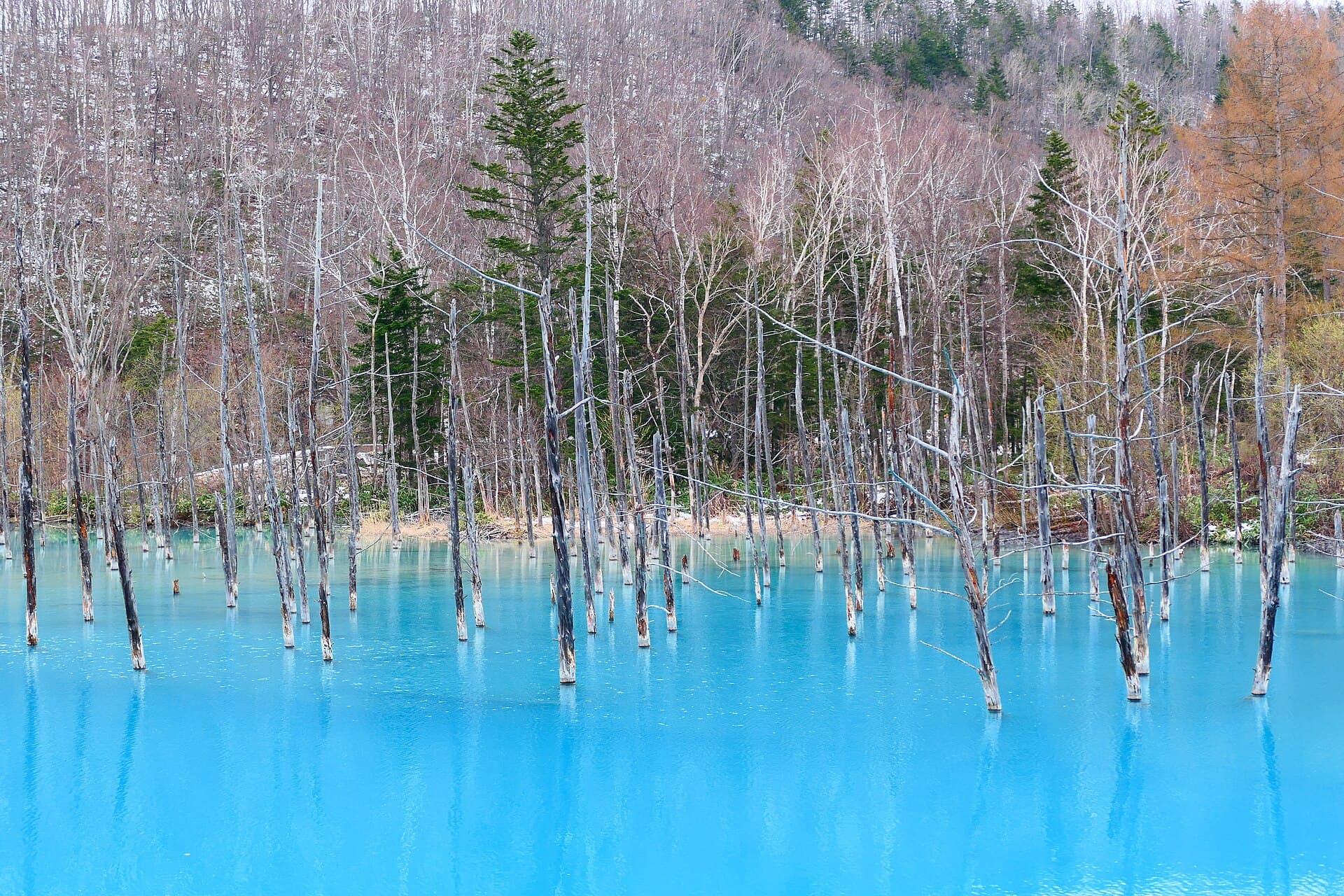 MaedaAkihiko / CC BY-SA 4.0, via Wikimedia Commons
“Where hills ripple like painted silk and nature composes its own masterpieces.”
Not the postcards. The stories even locals don't know — whispered in your ear, right where they happened.
The water here isn't just falling; it's a canvas for an unexpected, shifting artwork.
This pond's striking color isn't a trick of the light or a dye, but a natural phenomenon with a very specific, practical origin.
The iconic, rolling hills of Biei, often seen in advertisements, owe their perfectly sculpted appearance to something more than just agriculture.
Discover every secret of Biei
Every address, every reveal in full — in your ear, right where it happened.
You pick your stops. You walk. The voice reveals what the others miss.
No tours available yet. Check back soon — we're preparing them.
Biei, a small town at the core of Hokkaido, Japan, is celebrated for its evocative, undulating hills and expansive fields that shift in color with the turning seasons. Frequently referred to as 'Patchwork Road' and 'Panorama Road,' these landscapes stand as a testament to both agricultural ingenuity and inherent beauty. The area's allure resides in its elegant simplicity: vast skies, rolling terrain, and solitary trees that stand as quiet sentinels against the horizon.
Beyond the familiar fields, Biei offers a cooler respite in summer and a tranquil, snow-draped expanse in winter. Its closeness to the Daisetsuzan National Park grants passage to more rugged natural grandeur, including volcanic terrains and warm springs. The town itself is unassuming, serving as a passage to the surrounding natural attractions rather than a destination in its own right, inviting visitors to traverse its scenic pathways by automobile, bicycle, or on foot.
## Early Settlement and Agricultural Roots Biei's story is deeply interwoven with its agricultural evolution. Japanese pioneers first settled the area in the late 19th century, following the Meiji Restoration, as part of Hokkaido's broader development initiatives. These early inhabitants faced the arduous task of transforming dense forests and undeveloped ground into cultivable fields. Wheat, potatoes, and various vegetables became foundational crops, establishing the region's agricultural identity. The distinctive undulating landscape, a consequence of ancient volcanic activity and subsequent erosion, proved fertile, though challenging to work.
## The Influence of Photography and Tourism While agriculture remained the economic foundation, Biei's global recognition surged in the latter half of the 20th century, largely due to photography. Local photographer Shinzo Maeda established a gallery in the region, capturing the dramatic beauty of the patchwork fields and isolated trees. His evocative images, widely disseminated, drew attention to Biei's singular aesthetic. This photographic exposure coincided with advertising campaigns that utilized Biei's landscapes, most notably the 'Ken & Mary Tree' for a Nissan Skyline commercial in the 1970s and the 'Seven Star Tree' for a cigarette brand. These campaigns cemented Biei's image as a scenic destination, transforming it from a purely agricultural town into a significant tourist draw.
## Modern Biei: Balancing Tradition and Tourism Today, Biei continues to thrive on both agriculture and tourism. Farmers meticulously tend to their fields, maintaining the vivid array of colors that defines the landscape. Efforts are made to balance the influx of visitors with the preservation of the natural environment and the agricultural way of life. The town has developed infrastructure to support tourism, including scenic routes, observation points, and local craft shops, while striving to retain its authentic, rural character. The enduring appeal of Biei lies in its ability to offer a tranquil escape and a visually compelling experience, rooted in its unique natural history and the dedicated work of its farming community.
Begin with the Patchwork Road, a scenic drive through rolling hills north of Biei town. Here, you will encounter iconic, solitary trees such as the Ken & Mary Tree, a poplar made famous by a 1970s car commercial, and the Seven Star Tree, another poplar featured in a cigarette advertisement. The fields themselves, planted with different crops, create a shifting mosaic of color.
South of town lies the Panorama Road, presenting equally captivating vistas with a slightly different character, often featuring more expansive views and flower fields in summer. Do not overlook the Shirahige Waterfall, a striking 'white beard' waterfall near Shirogane Onsen, where water descends over rock formations.
A short drive from the waterfall is the Blue Pond (Aoiike), celebrated for its surreal, vivid blue water and the larch trees standing submerged within its depths. This ethereal pond shifts its hue depending on the light and season.
For expansive views, visit the Shikisai-no-Oka flower park, which in warmer months bursts with colorful flower fields and offers tractor rides.
Biei is captivating throughout the year, with each season offering a distinct experience. Summer (June to August) brings verdant green fields, blossoming flowers, and comfortable temperatures, ideal for cycling and exploration. Autumn (September to October) transforms the landscape with golden tones and pleasant weather. Winter (December to March) blankets the hills in snow, creating a serene, monochromatic beauty, and provides opportunities for winter activities and observing the frozen Shirahige Waterfall. Spring (April to May) witnesses the thawing of snow and the gradual return of color.
Biei is best explored by car, offering the most flexibility to navigate the scenic roads and pause at various viewpoints. Rental cars are available at Asahikawa Airport and Asahikawa Station. Alternatively, bicycle rentals are popular in the warmer months, with several shops in Biei town offering electric-assist bikes for tackling the hilly terrain. Public transportation within Biei is limited to infrequent buses to Shirogane Onsen and the Blue Pond. Consider lodging in Biei town or the nearby Shirogane Onsen area, which provides a range of accommodations from hotels to guesthouses.