Hôtel du Palais
This grand hotel, originally a summer villa, was purposefully designed to honor its imperial patron in a subtle, architectural detail.
Full story unlocks in the tour
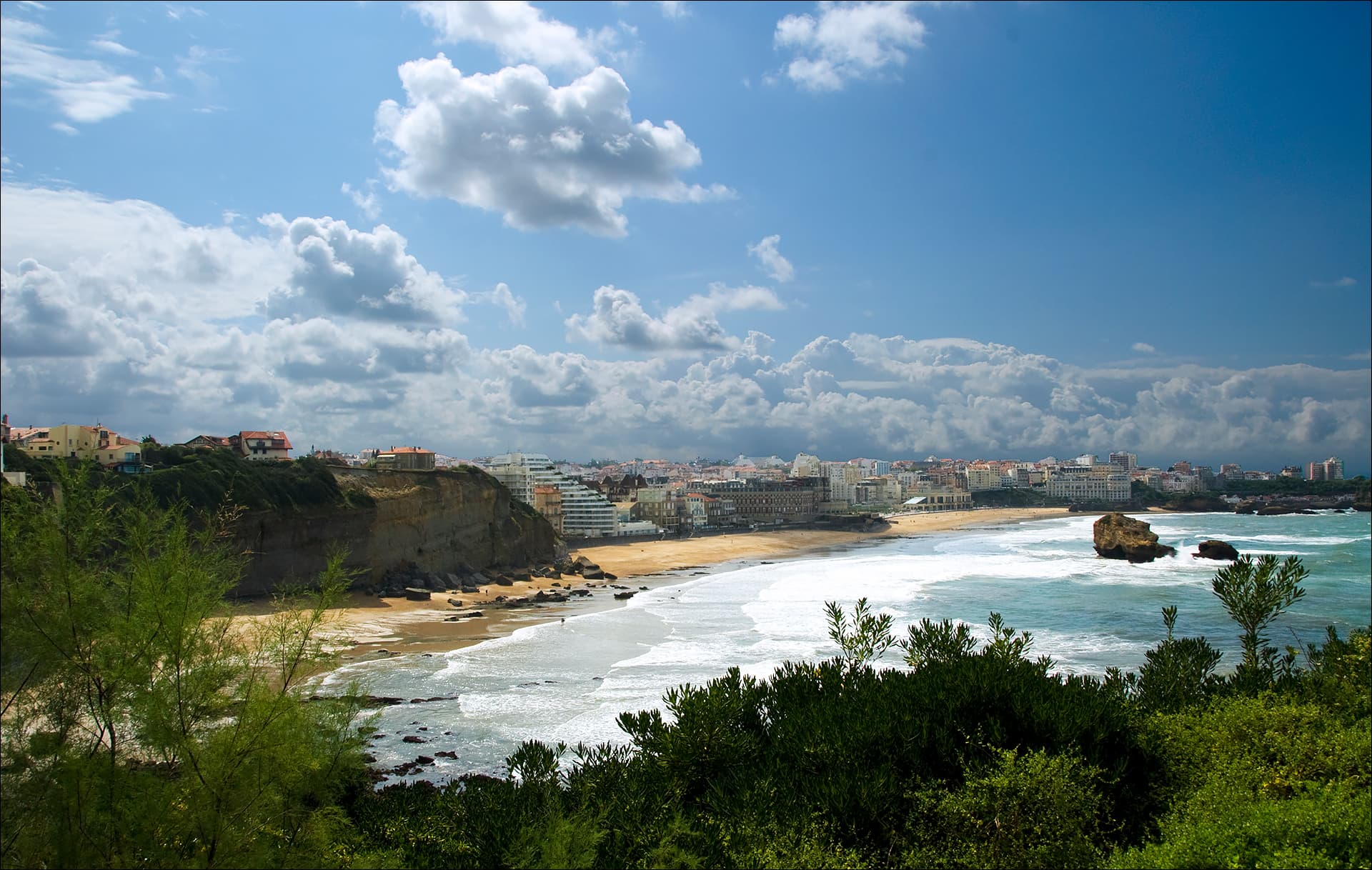 Nicolas G. Mertens. This picture is not in the public domain. If you want to use this picture outside of Wikipedia, please read the Licensing section just below. In particular, "You must give appropriate credit, provide a link to the license, and indicate if changes were made. You may do so in any reasonable manner, but not in any way that suggests the licensor endorses you or your use." Esta imagen no es de dominio público. Si desea utilizar esta imagen fuera de Wikipedia, lea la sección Licencias justo debajo. En particular, "Debe dar el crédito apropiado, proporcionar un enlace a la licencia e indicar si se realizaron cambios. Puede hacerlo de cualquier manera razonable, pero no de ninguna manera que sugiera que el licenciante lo respalda a usted o su uso." / CC BY-SA 4.0, via Wikimedia Commons
“Where imperial elegance meets the wild Atlantic surf.”
Not the postcards. The stories even locals don't know — whispered in your ear, right where they happened.
This grand hotel, originally a summer villa, was purposefully designed to honor its imperial patron in a subtle, architectural detail.
A statue of the Virgin Mary stands atop a rugged rock formation, a landmark with a tale of divine intervention for local seafarers.
One of Biarritz's early grand villas holds a surprising connection to a fashion icon.
Discover every secret of Biarritz
Every address, every reveal in full — in your ear, right where it happened.
You pick your stops. You walk. The voice reveals what the others miss.
No tours available yet. Check back soon — we're preparing them.
Biarritz, a city on France's southwestern Atlantic coast, less than 35 kilometers from the Spanish border, offers a unique blend of Basque culture, imperial history, and a spirited surfing scene. Once a modest whaling village, it transformed into a luxurious seaside destination, attracting European royalty and aristocrats in the 19th century. Today, its allure continues, drawing visitors with its dramatic coastline, elegant architecture, and world-class waves.
The city's dual identity is palpable, where the grandeur of Belle Époque palaces coexists with the relaxed atmosphere of a surfing capital. From its bustling markets showcasing Basque culinary traditions to its historic landmarks and lively beaches, Biarritz presents a captivating experience for those seeking both refinement and adventure.
Biarritz's story begins long before its imperial fame, as a community of whale fishermen. The earliest mention of the city, then called Bearids, appears in 1186. For centuries, its economy was based on whaling, with locals renowned as courageous navigators. The town's coat of arms still depicts a whale below a rowing boat with five sailors, a nod to its maritime heritage.
The 18th century brought a shift as whale populations declined in coastal waters, coinciding with a growing medical interest in the therapeutic benefits of sea bathing. This marked the initial transformation of Biarritz from a rugged port to a health retreat. In 1808, Napoleon himself bathed in the Basque Country's coastal waters, further breaking down prejudices against sea bathing.
The true turning point arrived in 1854 when Empress Eugénie, wife of Napoleon III, fell in love with Biarritz and chose it as her summer residence. Napoleon III commissioned the Villa Eugénie, a grand palace overlooking the Grande Plage, which would later become the iconic Hôtel du Palais. This imperial endorsement rapidly transformed Biarritz into a fashionable destination, attracting European royalty and aristocrats, including Queen Victoria, King Edward VII, and Alfonso XIII of Spain. The city quickly developed, with grand villas, hotels, casinos, and entertainment venues emerging to cater to its elite visitors.
The Belle Époque era further solidified Biarritz's reputation as a social hub, drawing Russian aristocrats and wealthy Americans, facilitated by new rail connections. The city's architectural landscape evolved, showcasing a mix of styles from Second Empire eclecticism to Belle Époque grandeur and later, Art Deco, as seen in the Municipal Casino. World War I brought an end to this golden age, but Biarritz reinvented itself. In 1915, Gabrielle Chanel opened her first couture house here, adding to its allure as a center of fashion and high society. The 1950s ushered in another significant change: the birth of European surfing. American film director Peter Viertel, while working on a film, introduced surfing to the local beaches, establishing Biarritz as a premier surfing destination.
Begin your exploration at the Grande Plage, Biarritz's main beach, framed by the elegant Hôtel du Palais and the Art Deco Casino Barrière. Stroll along the promenade to the Rocher de la Vierge (Rock of the Virgin), an intriguing promontory accessible by a footbridge designed by Gustave Eiffel's workshop, offering expansive views of the coastline. Nearby, the Port des Pêcheurs is a charming old fishing harbor with its traditional 'crampottes' – whitewashed fishermen's cottages, some now housing restaurants.
Ascend to the Phare de Biarritz (Lighthouse) on Pointe Saint-Martin for a 360-degree vista of the Basque coast and the Pyrenees. Delve into Biarritz's past at the Musée de la Mer (Biarritz Aquarium), housed in a 1933 Art Deco building, focusing on local marine life and the town's whaling heritage. For a taste of local culture and gastronomy, visit Les Halles de Biarritz, the bustling covered market, offering Basque specialties and lively tasting bars. Don't miss the neo-Gothic Église Sainte-Eugénie, overlooking the old fishing port, known for its stained-glass windows and its crypt which hosts art exhibitions. For surf enthusiasts, the Côte des Basques beach is considered the birthplace of surfing in Europe and remains a popular spot for all levels.
Biarritz enjoys a temperate oceanic climate with mild winters and pleasant summers. The best time to visit is between May and September for beach activities and warmer temperatures, with average summer temperatures around 20°C. May and June offer blooming flowers and comfortable temperatures, while September and October provide a good balance of consistent surf swells and reasonable weather, with fewer crowds. While summer is peak tourist season, leading to higher hotel rates and crowded attractions, Biarritz can be enjoyed year-round, with the off-season offering a quieter, more local experience.
Biarritz city center is quite walkable, covering about 2 square kilometers, with many landmarks and beaches easily accessible on foot. For longer distances, the Chronoplus public transportation system offers extensive bus routes covering Biarritz and surrounding towns like Bayonne and Anglet. During summer, some city center bus lines operate for free. The Biarritz train station is located about 3 km from the city center and is served by high-speed trains. Buses and taxis are available from the station to reach your accommodation. Biarritz Pays Basque Airport (BIQ) is just 3 km from the city, with buses running every 20 minutes to the center. While cycling is an option, be aware that the city's hilly terrain can be challenging. If you plan to rent one of the iconic striped beach tents on the Grande Plage, be prepared for a booking process that may involve several email exchanges.