The Zytglogge Clock Tower
This iconic clock tower is more than a mere timekeeper; it stages an intricate performance many visitors miss if they don't know the precise moment.
Full story unlocks in the tour
 Flooffy / CC BY 2.0, via Wikimedia Commons
“Where medieval forms meet modern currents, embraced by a turquoise river.”
Not the postcards. The stories even locals don't know — whispered in your ear, right where they happened.
This iconic clock tower is more than a mere timekeeper; it stages an intricate performance many visitors miss if they don't know the precise moment.
Bern offers one of Europe's longest covered shopping promenades, a feature that provides a distinct advantage beyond mere retail opportunities.
The Aare River, a striking turquoise ribbon curving around the Old Town, isn't just for picturesque views; it's an integral part of Bernese culture with a surprising summer activity.
Discover every secret of Berne
Every address, every reveal in full — in your ear, right where it happened.
You pick your stops. You walk. The voice reveals what the others miss.
No tours available yet. Check back soon — we're preparing them.
Bern, the capital of Switzerland, presents a distinctive blend of medieval allure and contemporary vitality. This compact city, sometimes overlooked in favor of its larger Swiss counterparts, is cradled by the emerald-green Aare River, which forms a natural loop around its historic core. Its Old Town, a UNESCO World Heritage site since 1983, stands as a testament to centuries of careful preservation, featuring sandstone facades, ornate fountains, and kilometers of covered arcades.
Walking through Bern feels like stepping back in time, yet with all the comforts of a modern European capital. The city's appeal lies in its unhurried pace and its harmonious integration of history and daily life. From the iconic Zytglogge clock tower to the Parliament Building, Bern offers a range of experiences within a remarkably walkable area. It's a place where every stone seems to hold a story, inviting visitors to uncover its particular character.
Bern's story begins in 1191 when Duke Berthold V of Zähringen established the city as a military outpost on a peninsula within a bend of the Aare River. The natural defenses provided by the river and the readily available timber from surrounding forests made it an ideal location. Legend suggests the Duke named the city after the first animal he encountered on a hunt: a bear, or "Bär" in German, which has since become Bern's enduring symbol.
Following the death of Berthold V in 1218, Bern gained immediacy from Emperor Frederick II, becoming a free imperial city of the Holy Roman Empire. This marked a pivotal moment, allowing Bern to pursue a policy of territorial expansion and solidify its position as a powerful city-state. In 1353, Bern joined the Swiss Confederation, becoming one of its eight early cantons and a prominent actor in Swiss history.
A devastating fire in 1405 destroyed much of the city, which was subsequently rebuilt using local gray-green sandstone, establishing the distinctive architectural style that defines Old Bern today. This rebuilding effort, coupled with minimal structural changes over the centuries, has resulted in one of Europe's best-preserved medieval city centers. Bern's influence continued to grow, and by the 18th century, it governed 52 territories. The city's patrician government was briefly swept away by the French in 1798 but partially revived in 1815, before ultimately ending in 1831.
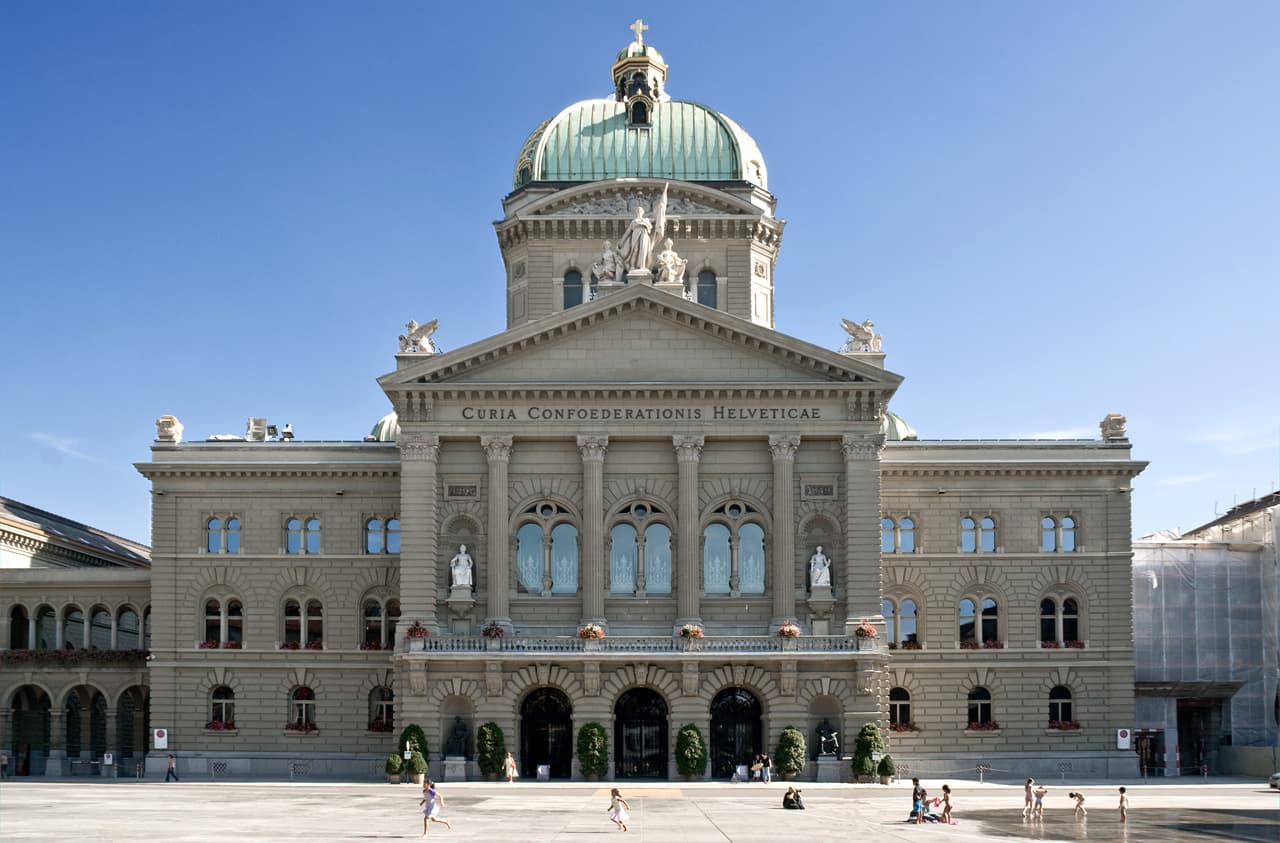
In 1848, Bern became the political capital of the Swiss Confederation, a role it maintains to this day. The Federal Palace (Bundeshaus), completed in 1902, now houses the Swiss federal parliament and government offices. Bern's historical journey, from a strategic military post to a leading city-state and ultimately the federal capital, has profoundly shaped its character and left an indelible mark on its architecture and culture.
Begin your exploration in Bern's Old Town, a UNESCO World Heritage site, best experienced on foot. Walk along the main streets of Spitalgasse, Marktgasse, Kramgasse, and Gerechtigkeitsgasse, observing the many sculptures and carvings on the buildings. Look for the more than 100 ornate fountains scattered throughout the city, particularly impressive ones along Kramgasse.
Visit the Zytglogge, Bern's medieval clock tower, which once served as a guard tower and prison. Be sure to time your visit to catch its mechanical puppet show, which performs a few minutes before each hour. The Bern Minster, a Gothic cathedral with Switzerland's highest spire, offers expansive views over the Aare River and the city.
Just outside the Old Town, visit the BearPark, a spacious enclosure housing a family of brown bears, the city's living symbols. For a different perspective, take the funicular up Gurten, Bern's local mountain, for broad views of the city and the distant Alps. History enthusiasts will appreciate the Bern Historical Museum, one of Switzerland's largest cultural history museums, which also houses the Einstein Museum, dedicated to Albert Einstein who lived in Bern from 1903 to 1905.
The best time to visit Bern for warm-weather activities is from late June to late August, when temperatures range from 18°C to 28°C, ideal for swimming in the Aare River and enjoying outdoor cafes. This is also peak tourist season, with lively festivals. For a more relaxed experience with fewer crowds, consider spring (March to May) or autumn (September to November). Spring offers blooming gardens and comfortable temperatures between 5°C and 15°C, while autumn brings colorful foliage and temperatures around 8°C to 17°C. Winter (December to February) offers a festive atmosphere with potential for snow, though many bears at the BearPark will be hibernating.
Bern is a highly walkable city, especially its compact Old Town, making it easy to explore on foot. Public transportation, including trams and buses, is efficient and reliable. If you stay overnight in Bern, you'll often receive a free Bern Ticket, providing complimentary travel on public transport within zones 100 and 101. Taxis and ridesharing services like Uber are available but generally more expensive than public transport. Parking in the city center is limited and costly, so using park-and-ride options and public transport is recommended if arriving by car.
Switzerland has four national languages: German, French, Italian, and Romansch, with German being the most common in Bern. Swiss water is safe to drink, and numerous public drinking fountains are available throughout the city. While public toilets are generally free, some at larger train stations may require a small fee. The local currency is the Swiss Franc (CHF).