Place Pélissière
The famed literary character of Cyrano de Bergerac is inseparable from this town, yet he never actually resided there.
Full story unlocks in the tour
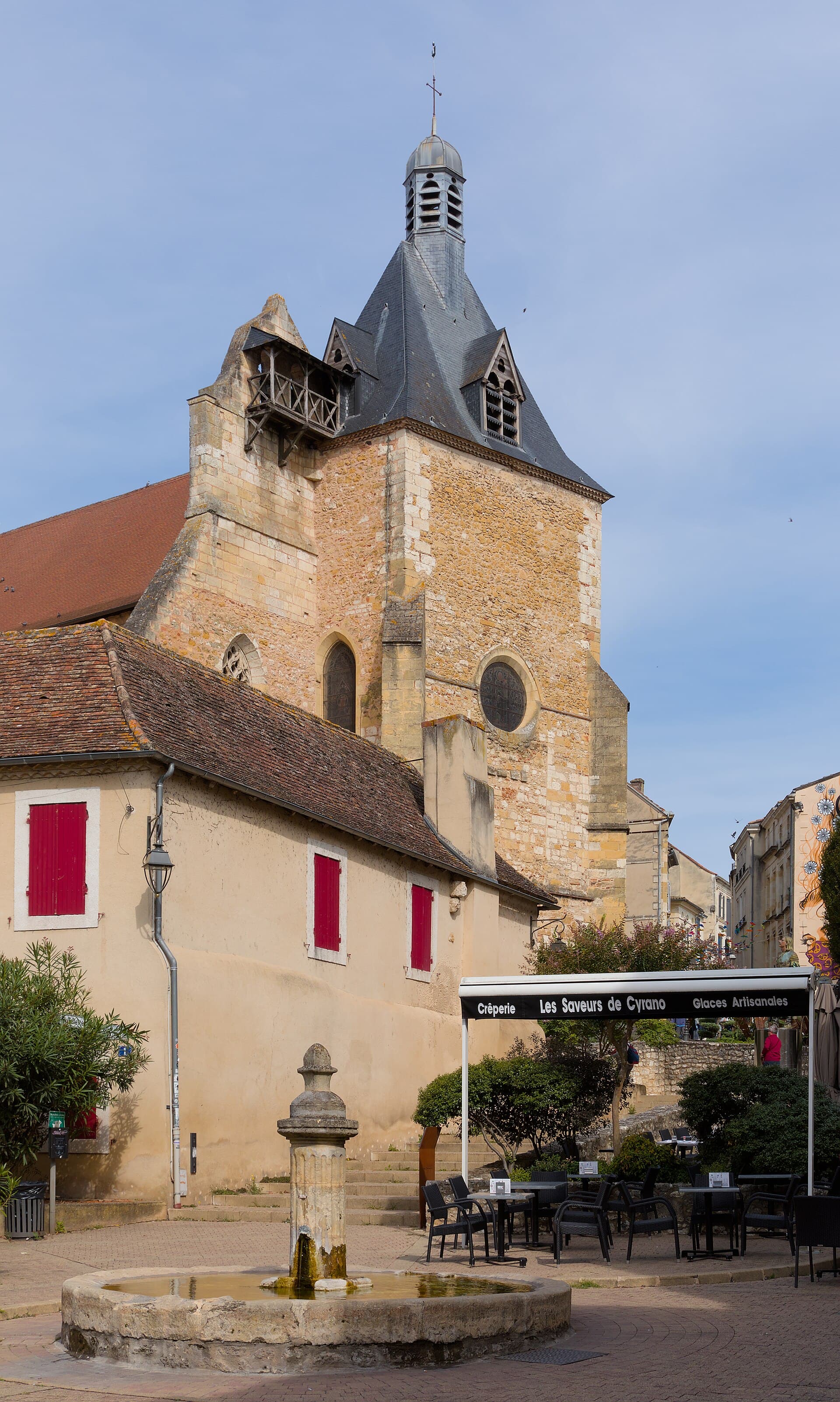 Benjamin Smith / CC BY-SA 4.0, via Wikimedia Commons
“Where the Dordogne flows, and Cyrano's spirit lingers.”
Not the postcards. The stories even locals don't know — whispered in your ear, right where they happened.
The famed literary character of Cyrano de Bergerac is inseparable from this town, yet he never actually resided there.
For centuries, Bergerac held a singular and vital position along the Dordogne River.
Bergerac safeguards a museum dedicated to a plant with a surprisingly deep local narrative, despite its modern-day reputation.
Discover every secret of Bergerac
Every address, every reveal in full — in your ear, right where it happened.
You pick your stops. You walk. The voice reveals what the others miss.
No tours available yet. Check back soon — we're preparing them.
Bergerac, a picturesque town in southwestern France's Dordogne department, stretches along the banks of the Dordogne River. It is recognized for its scenic beauty and world-renowned wine production, offering a tranquil escape into the heart of the Périgord region. With its timber-framed buildings, relaxed riverside atmosphere, and vineyards extending in every direction, Bergerac is a captivating destination for those seeking French culture, gastronomy, and countryside charm.
The town's allure extends beyond its visual appeal, inviting visitors to wander through its medieval lanes, explore artisan boutiques, and savor local flavors. Bergerac serves as a gateway to the landscapes of the Dordogne Valley, making it an ideal base for exploring the wider region.
As a designated 'City of Art and History,' Bergerac blends its historical heritage with a lively present, evident in its bustling markets and cultural events. The town's connection to the literary character Cyrano de Bergerac, though fictional in residence, adds a playful touch to its identity, with statues commemorating the swashbuckling hero found throughout the town.
The story of Bergerac dates back to deep antiquity, but it truly began to flourish as a significant settlement in the 11th century with the construction of a castle on the right bank of the Dordogne River. This fortress was built to control the valley and its crucial river crossing. By the 12th century, Bergerac had established itself as an important fortified point and a popular stopover for travelers, pilgrims, and traders.
A pivotal moment arrived in the early 13th century with the construction of the first bridge across the Dordogne, transforming Bergerac into a strategic trading hub. This river trade was instrumental in the town's prosperity, facilitating the transport of goods, especially wine, downstream to Bordeaux and the Atlantic coast using traditional flat-bottomed boats called 'gabares.' In 1322, King Charles IV granted Bergerac city status, solidifying its administrative rights.
The 14th century brought challenges with the Hundred Years' War, during which Bergerac was intermittently held by the English from 1345 until 1450. Despite these conflicts, the town eventually returned to French Crown control and maintained its independence, allowing for renewed growth.
During the 16th and 17th centuries, Bergerac became a stronghold of Protestantism, playing a notable role in the French Wars of Religion. The Peace of Bergerac in 1577, an attempt to ease tensions between Catholics and Huguenots, was signed here. However, these turbulent years left a lasting imprint, with fortifications destroyed after the town was subdued by a royal army in 1621. From the 18th century onward, Bergerac's fortunes became increasingly tied to viticulture, developing its own distinctive wine region that produces internationally recognized reds, whites, and sweet wines. The phylloxera epidemic in the late 19th century devastated vineyards, but the industry recovered through replanting. The early 20th century also saw the introduction of tobacco growing, making Bergerac an important center for the tobacco industry in France. In 2013, Bergerac received the status of 'City of Art and History.'
Begin your exploration in the Old Town (Vieux Bergerac), a maze of narrow lanes lined with half-timbered houses, quaint cafés, and artisan boutiques. Place Pélissière is a lively square at its heart, featuring a statue of Cyrano de Bergerac. Do not miss Rue Saint Clar, known as one of the prettiest streets in town.
No visit is complete without acknowledging the town's literary connection; seek out the two Cyrano de Bergerac Statues, popular photo opportunities that symbolize the town's playful pride.
For wine enthusiasts, the Maison des Vins de Bergerac (House of Bergerac Wines) is an essential stop. Housed in the 17th-century Cloître des Récollets, it offers free discovery and tasting of no fewer than 13 local appellations. You can also embark on Bergerac Wine Tours to nearby vineyards like Château de Tiregand or Château de Monbazillac, sampling regional wines often paired with local delicacies.
Just 6 km south of Bergerac, the 16th-century Château de Monbazillac offers striking architecture, dramatic views of the Dordogne Valley, and a chance to sample the region's signature dessert wine. The Musée du Tabac (Tobacco Museum), situated in the Maison de Peyrarède, presents 3,000 years of tobacco history, a plant once widely cultivated in the area.
Enjoy Dordogne River Activities, such as a relaxing trip on a traditional 'gabarre' (flat-bottomed boat), offering a unique perspective of the town and its natural surroundings. The Saint-Jacques Church is another historical site, serving as a stopover on one of the routes of the Camino de Santiago. For a unique family outing, the Miniature Port of Bergerac allows you to navigate miniature electric boats on a small pond.
The most pleasant times to visit Bergerac are during spring (April to June) and autumn (September to October). During these shoulder seasons, the weather is mild, crowds are fewer, and the scenery is beautiful. Temperatures in September, for instance, typically range from 55-79°F (13-26°C), offering pleasantly warm and breezy conditions.
Summer (July and August) is livelier with night markets and festivals, but it can be quite warm, with average highs around 80°F (27°C) in July and August. Winter is quieter, with reduced hours for many attractions, but it offers a peaceful experience and the opportunity to enjoy the local truffle harvest from December to February.
Bergerac is well-connected by air, rail, and road. Bergerac Dordogne Périgord Airport is a few kilometers from the town center, with seasonal flights from various cities. By train, Bergerac is on the line between Bordeaux and Sarlat-la-Canéda. Driving is also a good option for exploring the surrounding wine country.
Parking is generally easy, with several public car parks around the town center, including near Quai Cyrano and Place de la Myrpe. Some offer free short-term parking. While Bergerac is walkable, especially the old town, a car is recommended for day trips to nearby villages and attractions.
Bergerac's main market days are Wednesday and Saturday in Place Gambetta and Place de la République, offering fresh produce, local delicacies, and crafts. While English speakers can be found, learning a few basic French phrases is advisable, as fewer people speak English compared to larger French cities.