Bryggen's narrow alleyways
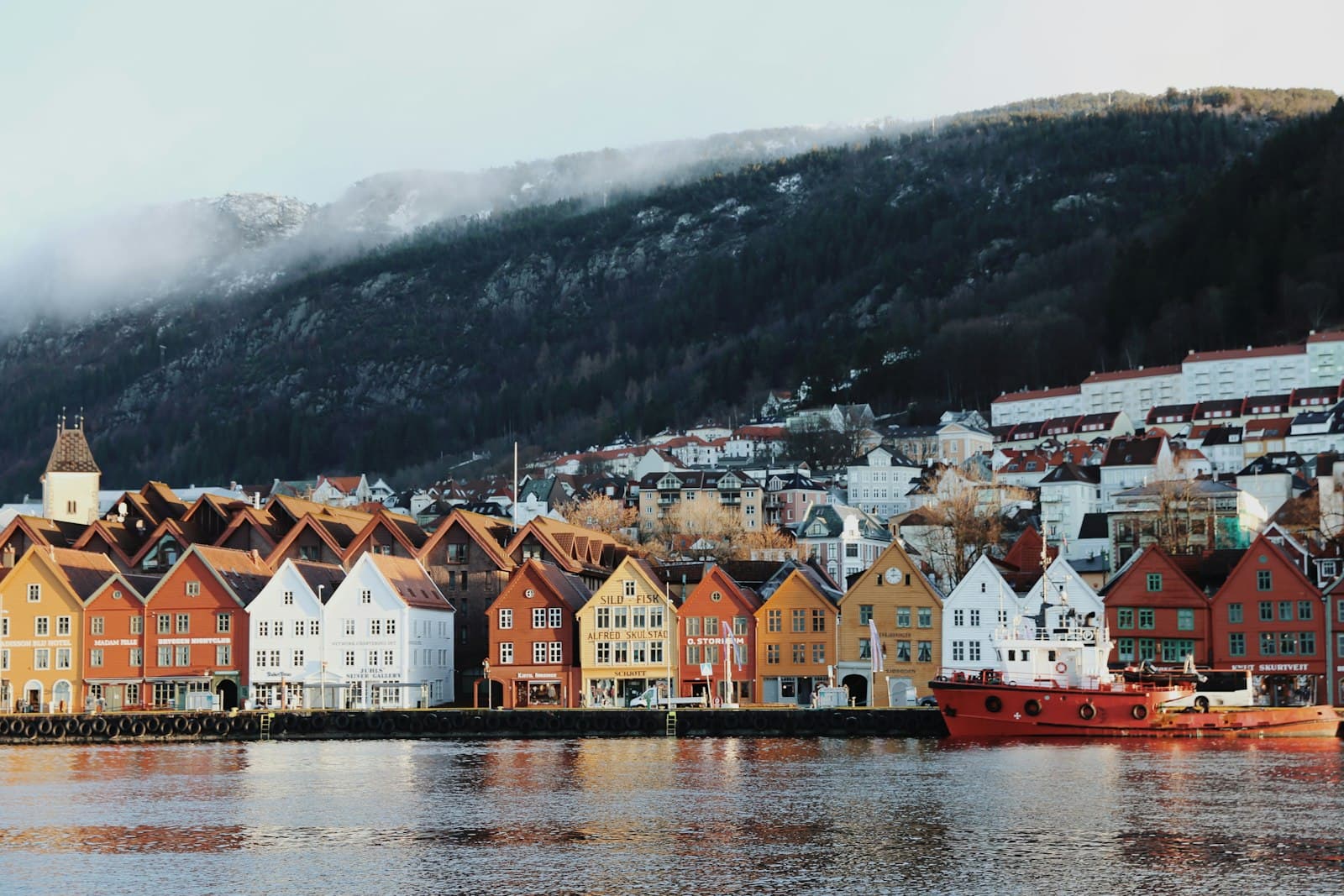
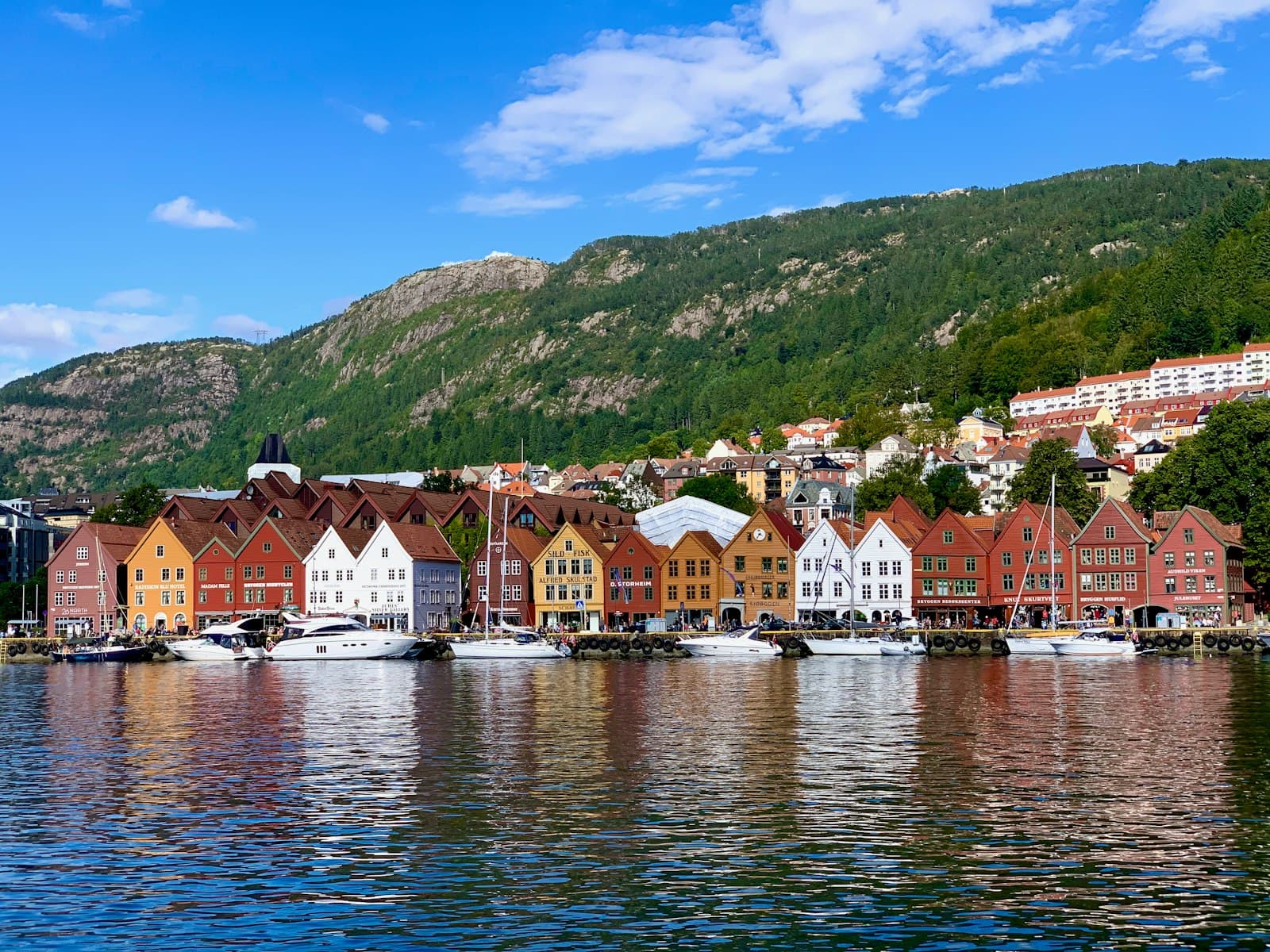
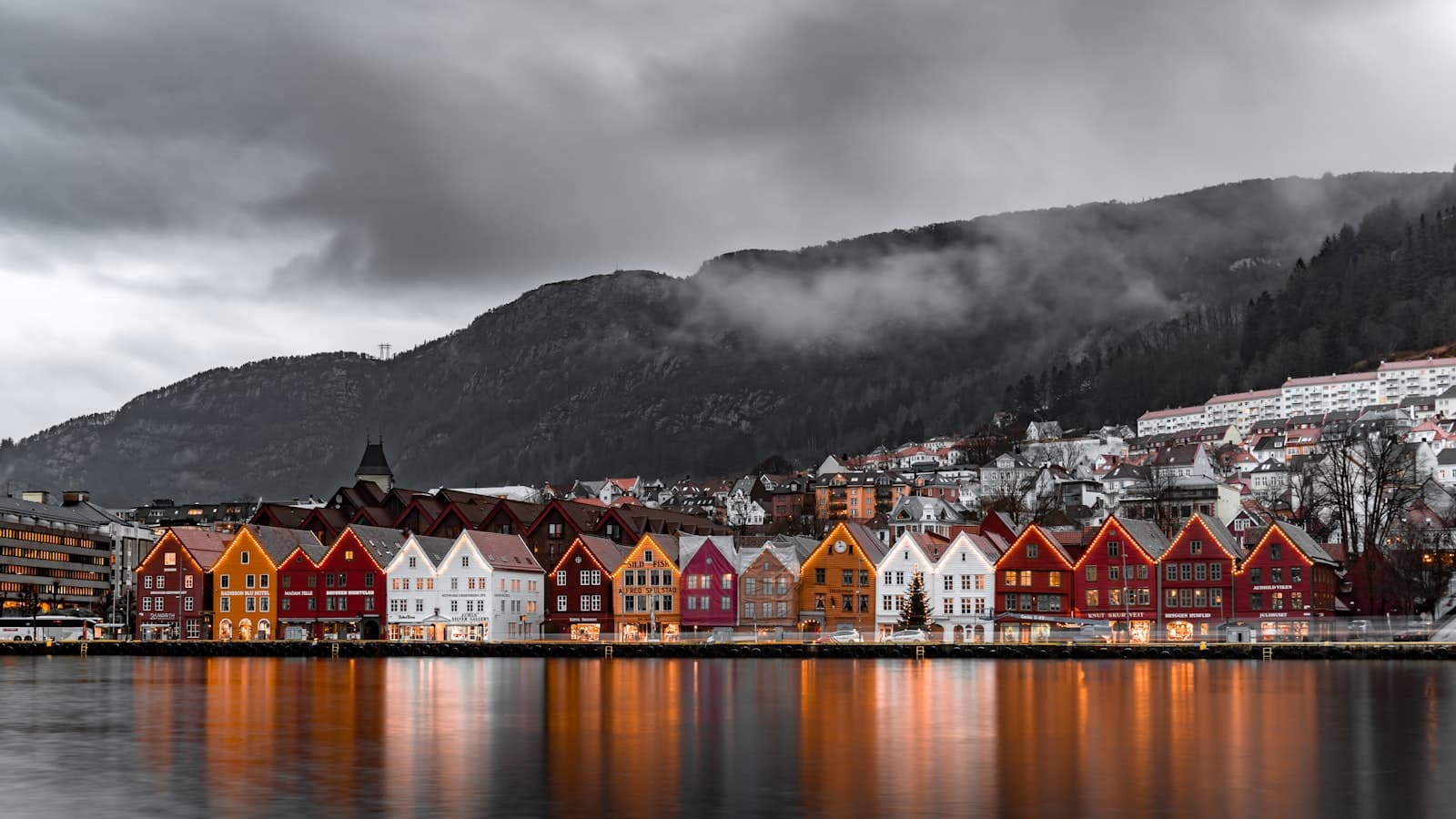
The iconic wooden houses of Bryggen appear charming, yet their original design held a clever, unstated purpose beyond mere aesthetics.
Full story unlocks in the tour
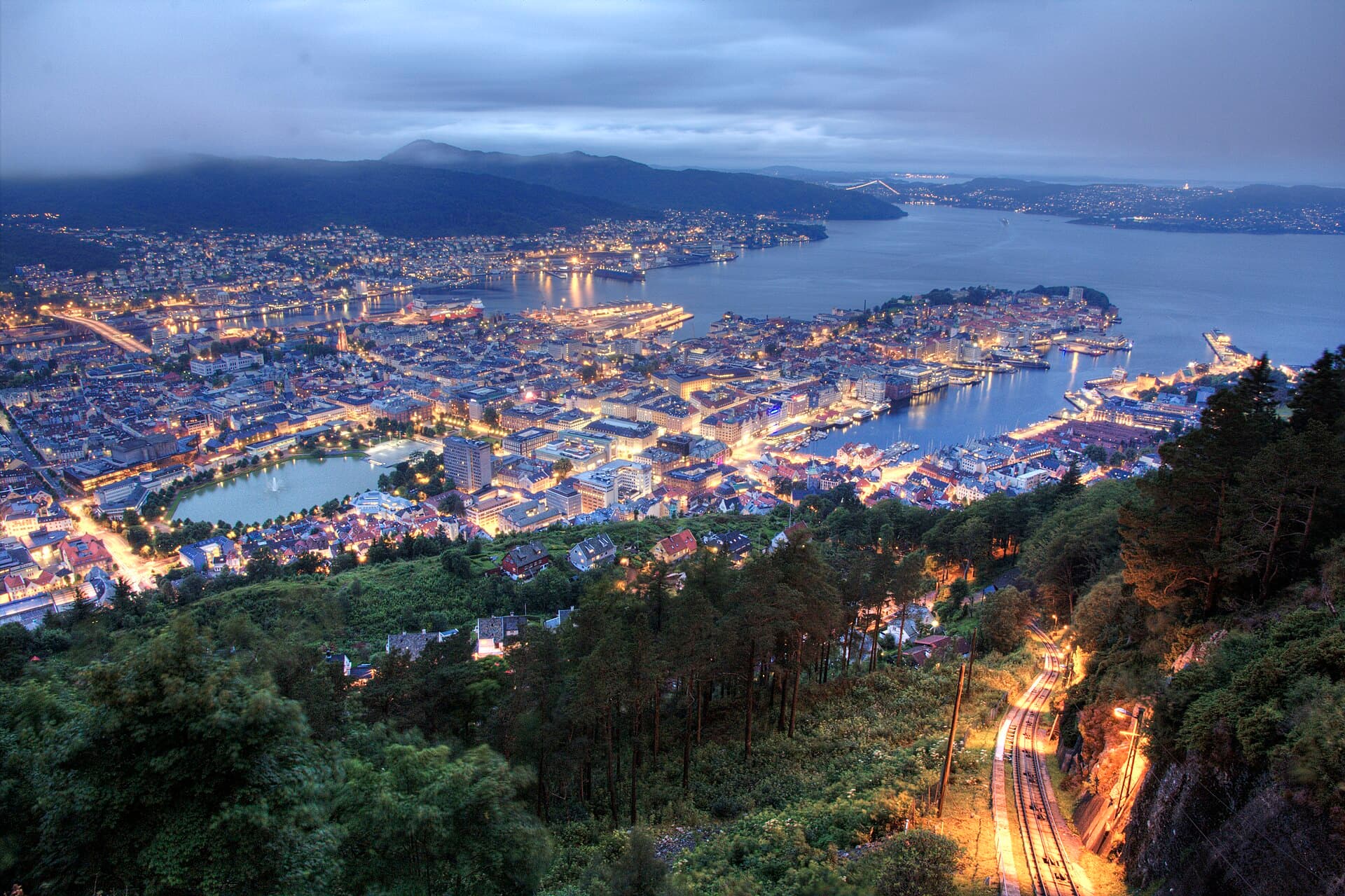 TomasEE / CC BY 3.0, via Wikimedia Commons
“Where colorful gables meet deep fjords and ancient trade routes.”
Not the postcards. The stories even locals don't know — whispered in your ear, right where they happened.
The iconic wooden houses of Bryggen appear charming, yet their original design held a clever, unstated purpose beyond mere aesthetics.
The cheerful red and blue carriages ascending Mount Fløyen are more than just a ride with a vista; they carry a subtle, knowing nod to Norwegian identity.
This bustling market has been a commercial heart since the 1200s, but its current location isn't where its story began.
Discover every secret of Bergen
Every address, every reveal in full — in your ear, right where it happened.
You pick your stops. You walk. The voice reveals what the others miss.
No tours available yet. Check back soon — we're preparing them.
Bergen, Norway's second-largest city, is a place where urban life converges with dramatic, untamed beauty. Framed by seven mountains and situated between two of Norway's most profound fjords, the city offers a singular blend of city exploration and outdoor adventure. Its colorful wooden wharf, Bryggen, a UNESCO World Heritage site, recounts a powerful mercantile past, while the surrounding landscape beckons with walking paths and fjord voyages.
Known as the 'Gateway to the Fjords,' Bergen is a city that embraces its often-wet weather with a practical philosophy: 'There's no such thing as bad weather, only bad clothing.' This spirit of resilience and deep appreciation for nature defines the Bergen experience, inviting visitors to wander its winding lanes, immerse themselves in its cultural scene, and gaze upon its wide vistas, come rain or shine.
## From Royal Seat to Hanseatic Powerhouse Bergen's narrative stretches back over a thousand years, with archaeological traces pointing to a trading settlement as early as the 1020s. However, King Olav III, known as Olav the Peaceful, is officially credited with establishing the city in 1070, naming it Bjørgvin, which translates to 'the green meadow among the mountains.' Its strategic position on Norway's west coast, within a sheltered bay, made it an ideal natural harbor.
By the 12th and 13th centuries, Bergen had ascended to prominence, serving as the capital of the Norwegian Kingdom from 1217 to 1299. During this era, it was home to kings and bishops, solidifying its standing as the country's most pivotal city. The construction of significant structures like the Bergenhus Fortress, dating from the 1240s, further underscored its importance.
The city's economic prosperity was largely built upon the trade of dried cod, or stockfish, from Northern Norway—a commodity in fervent demand across Europe. This trade was significantly bolstered by the arrival of the Hanseatic League in the 14th century. Bergen became one of the four principal offices of this powerful commercial alliance of German merchants, who monopolized trade and established their distinct quarter on the Bryggen wharf. This German influence shaped Bergen's appearance and economic life for centuries, rendering it a truly international city in the Middle Ages.
## Challenges and Enduring Legacy Bergen's dominance was not without its trials. The Black Death arrived in Norway via a foreign ship in Bergen's harbor in 1349, claiming a third of Norway's population and profoundly impacting the city. Despite this, Bergen retained its monopoly on trade with northern Norway until 1789 and remained Norway's largest city until the 1830s, when it was surpassed by Christiania (now Oslo). Fires also repeatedly ravaged the wooden buildings of Bryggen throughout its history, with a major conflagration in 1702 leaving the area in ashes. However, the buildings were consistently rebuilt to their original architectural style, preserving the medieval appearance that earned Bryggen its UNESCO World Heritage status as Norway's first such site.
Today, Bergen continues to celebrate its deep maritime heritage and historical weight, while also embracing its role as a modern cultural center and a portal to the Norwegian fjords.
Begin your exploration at Bryggen, the iconic UNESCO-listed wharf. Wander through its narrow, uneven wooden passages and explore the historic buildings, many of which now house shops, galleries, and museums like the Hanseatic Museum. The architecture here offers a tangible link to Bergen's powerful trading past.
For sweeping city and fjord views, take the Fløibanen Funicular up Mount Fløyen. The ride itself is a swift ascent to 320 meters above sea level, where you'll discover walking paths, a restaurant, and ample opportunities for photographs. Alternatively, for the highest of Bergen's seven mountains, consider the Mount Ulriken Cable Car, offering dramatic views and hiking paths along the mountain ridge.
No visit to Bergen is complete without experiencing the Fish Market (Fisketorget). Operating since the 1200s, it’s a lively center where you can find fresh seafood, local produce, and a variety of prepared dishes. While the outdoor market is seasonal, the indoor Mathallen offers year-round culinary experiences.
Delve deeper into Bergen's art and culture at the KODE Art Museums, a collection of four museums showcasing everything from Edvard Munch's early works to contemporary Norwegian art, and decorative arts. For those who relish history, the Bergenhus Fortress, one of Norway's oldest and best-preserved stone fortresses, stands guard at the harbor entrance and offers a glimpse into the city's royal past.
Bergen offers a particular allure year-round, but the ideal time hinges on your priorities. For milder weather and long, bright days, late spring through summer (May to August) is preferable, with average daytime temperatures around 14-19°C (57-66°F). This is the peak period for fjord voyages, mountain walks, and outdoor cafes. May also brings Norway's Constitution Day celebrations on the 17th.
If you prefer fewer crowds and gentler prices, consider the shoulder months of May and September. Autumn (September to December) ushers in cooler temperatures, ranging from just below zero to 13°C (55°F), and a dramatic display of fall colors, though prepare for frequent rain. Winter (October through April) offers a contemplative atmosphere, with shorter days, potential for snow, and a focus on indoor cultural attractions and cozy eateries.
Bergen's city center is compact and largely walkable, making it easy to explore most attractions on foot. However, for longer distances or to conserve time, the public transport system, Skyss, including buses and the Bybanen (light rail), operates efficiently. The Bergen Light Rail Line 1 connects Bergen Airport Flesland (BGO) directly to the city center (Byparken) in about 45 minutes, offering an economical transfer option. Alternatively, the Flybussen airport bus is a swifter, though more expensive, option, taking 20-30 minutes.
Layered clothing is essential for Bergen's famously changeable weather, regardless of the season. Always pack a waterproof jacket, comfortable waterproof shoes, and consider a warm sweater, even in summer. An umbrella is also a practical companion. The Norwegian Krone (NOK) is the local currency.