Tomb of Baqet III (BH15)
Imagine stepping into a tomb and discovering an ancient sports arena etched into the walls.
Full story unlocks in the tour
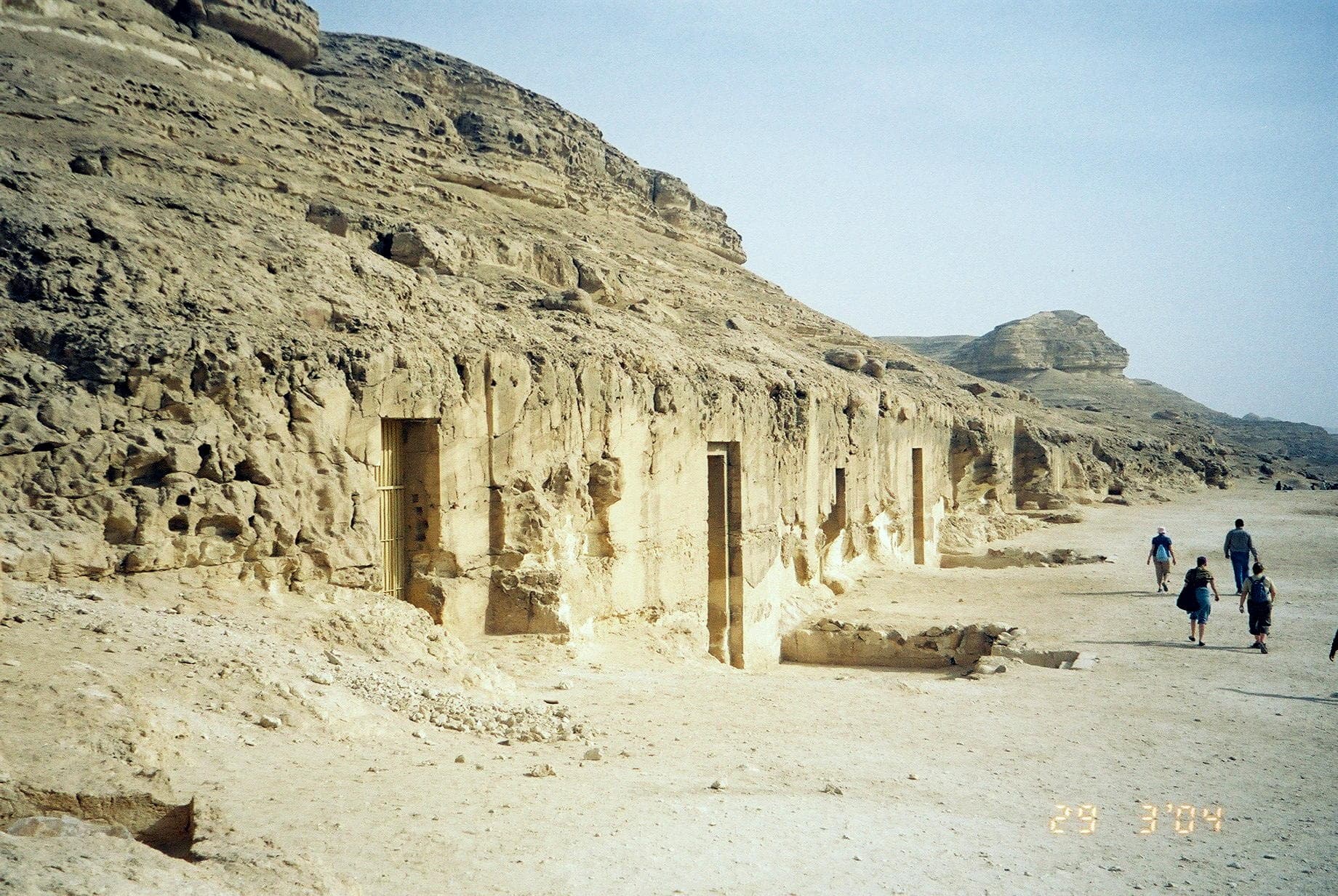 Markh at English Wikipedia / Public domain, via Wikimedia Commons
“Where everyday life became eternal art.”
Not the postcards. The stories even locals don't know — whispered in your ear, right where they happened.
Imagine stepping into a tomb and discovering an ancient sports arena etched into the walls.
Beyond the customary funerary scenes, one tomb here records an unexpected encounter that hints at a wider world.
Unlike most ancient Egyptian burial sites, the tombs at Beni Hassan face an unusual direction.
Discover every secret of Beni Hassan
Every address, every reveal in full — in your ear, right where it happened.
You pick your stops. You walk. The voice reveals what the others miss.
No tours available yet. Check back soon — we're preparing them.
Beni Hassan, an ancient Egyptian cemetery approximately 20 kilometers south of modern-day Minya, offers a unique window into the Middle Kingdom (c. 2055–1650 BCE). Unlike the grand pyramids and sprawling temple complexes built for pharaohs, the rock-cut tombs at Beni Hassan were crafted for provincial governors and noble families. This necropolis brings visitors face-to-face with the life, culture, and artistry of people who lived nearly 4,000 years ago, providing a more human and vivid narrative than many royal monuments.
Carved directly into limestone cliffs overlooking the Nile Valley, the tombs are celebrated for their intricate murals. These paintings illustrate daily Egyptian life, athletic contests, military training, religious rituals, and even scenes of international diplomacy. Beni Hassan stands as a chronicle of culture, politics, and personal devotion, revealing how Egyptian society functioned beyond royal circles during a time when regional rulers held significant sway.
The Beni Hassan tombs primarily date from Egypt's Middle Kingdom, specifically the 11th and 12th dynasties (around 2055–1650 BCE). This era was a formative period when Egypt transitioned from fragmented regional powers to a more centralized, yet still decentralized, system of governance. Provincial rulers, known as nomarchs, controlled vast estates and wielded immense influence over local politics. These powerful governors commissioned the elaborate rock-cut tombs to immortalize their legacy and demonstrate their wealth and significance through local administration, trade, and military control.
Unlike the colossal pyramids of the Old Kingdom, which served as resting places for pharaohs, the provincial elites at Beni Hassan sought burial places carved directly into rock cliffs. These tombs often overlooked their lands, symbolizing eternal guardianship. The architectural design of the Beni Hassan tombs reflects both practicality and ingenuity, with chambers carved into the limestone cliffs featuring porticoes, square-pillared halls, and inner sanctuaries. Notably, the presence of fluted, sixteen-sided columns has led early archaeologists to observe a strong resemblance to the later Greek Doric order, earning them the moniker 'Proto-Doric' columns.
The walls of Beni Hassan's tombs are adorned with polychromes that depict various aspects of ancient life. These are not purely religious decorations; they also represent secular and everyday activities. Scenes of wrestling, agriculture, weaving, hunting, fishing, and military training offer insights into the nuanced social hierarchy, professions, and even sports of the Middle Kingdom. These depictions serve as vital records of education and technical knowledge, distinguishing Beni Hassan as a necropolis deeply connected to life rather than solely focused on death. The tombs also carry deep cultural and religious meaning, revealing how ordinary elites sought to partake in the same cycle of rebirth promised to pharaohs, suggesting a democratization of afterlife privileges.
The Beni Hassan necropolis contains more than 300 tombs, though only a handful are richly decorated and accessible to the public. The four most notable and well-preserved tombs open to visitors are those of Amenemhat (Tomb 2), Khnumhotep II (Tomb 3), Baqet III (Tomb 15), and Khety (Tomb 17).
In the Tomb of Amenemhat (BH2), you can find inscriptions detailing his loyalty and service to the pharaoh, providing insight into the political relationship between nomarchs and the central state.
Khnumhotep II's Tomb (BH3) is renowned for its detailed murals of daily life, including a famous caravan scene depicting Asiatic traders—a rare visual record of Egypt's international interactions.
Baqet III's Tomb (BH15) is particularly famous for its extensive depictions of wrestling techniques, showcasing almost 400 pairs of wrestlers in various holds and throws, considered one of the earliest and most comprehensive accounts of organized combat sports.
Khety's Tomb (BH17) features scenes of hunting, agriculture, and fishing, offering a broad picture of provincial life during the Middle Kingdom. These tombs, carved directly into the limestone cliffs, also offer wide views of the Nile Valley, providing a serene archaeological experience away from more crowded sites.
The best time to visit Beni Hassan is between November and March. During these months, Egypt's climate is milder, making the climb up the cliff paths to the tombs more comfortable. Summers can be intensely hot, which can make exploring the site challenging. Visiting during the cooler months also often means fewer visitors compared to Egypt's more famous monuments, allowing for a more intimate connection with the ancient site.
Beni Hassan is located about 20 kilometers south of the city of Minya, and roughly 250 kilometers south of Cairo. It is typically accessed via road trips or Nile cruises, and due to its location off the main tourist trail, regular group tours are rare, making it feel like a personal discovery. Guides are recommended to help interpret the intricate wall art and inscriptions. Comfortable, sturdy shoes are essential for navigating the steep paths up the cliffs. Always carry water and some cash for local transport or tips. Modest clothing is advised to respect cultural expectations. The site is generally open from 8:00 am to 4:00 pm, with closing time shifting to 3:00 pm during Ramadan. Foreign adult admission is 200 EGP, and students pay 100 EGP.