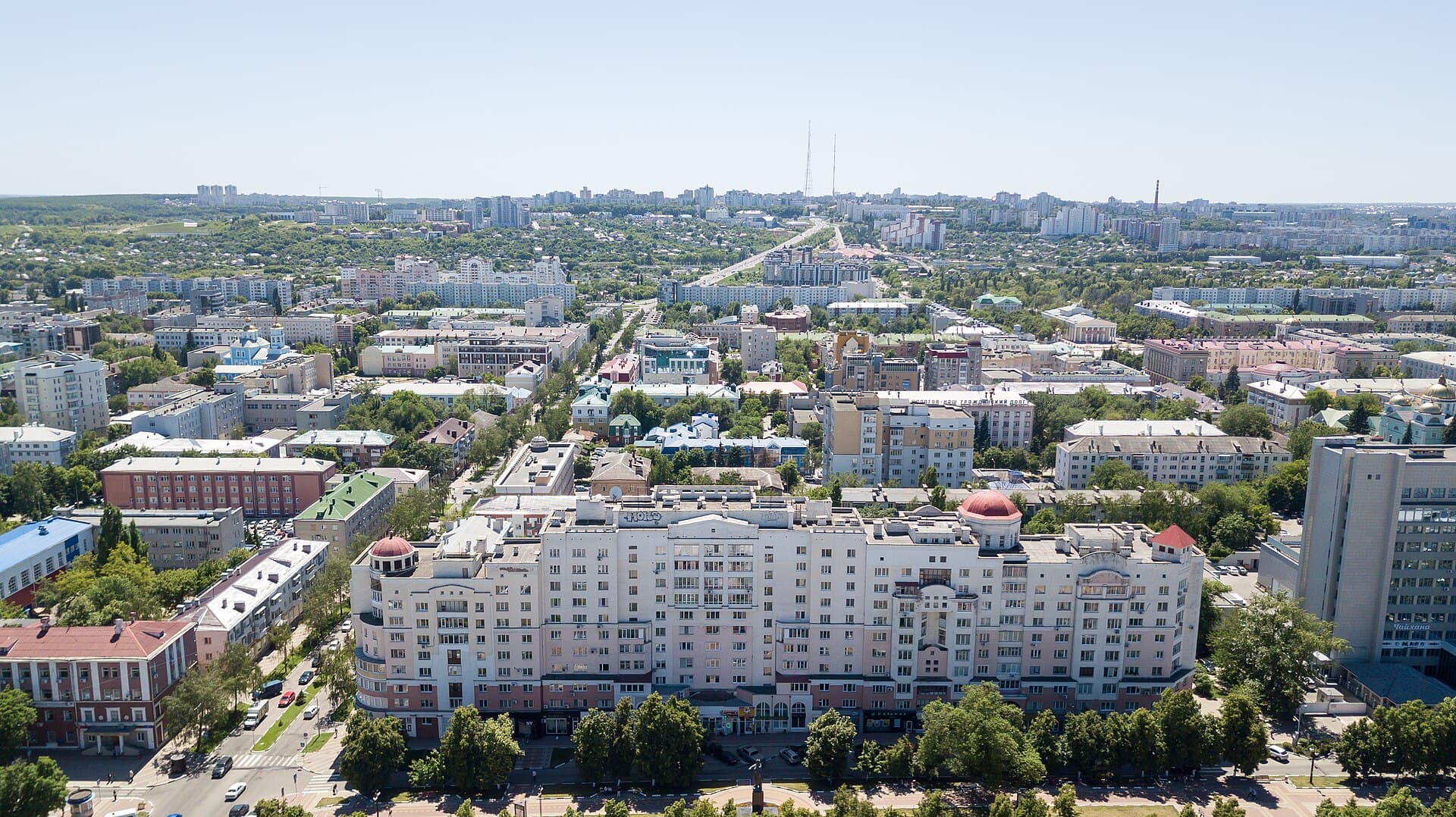
Belgorod, RussiaPetr Magera from Russia / CC BY-SA 2.0, via Wikimedia Commons
RU

Belgorod

Where chalk cliffs meet compelling history.

The secrets of Belgorod

Belgorod, as no one tells it.

Not the postcards. The stories even locals don't know — whispered in your ear, right where they happened.

3 secrets below. Many more wait inside the tour.
The original Belgorod fortress

Belgorod, meaning "White City," draws its name from a striking geological feature. The city's initial defensive structure was not merely built near these white cliffs; it was integrated into them.

Full story unlocks in the tour
Belgorod's "First Salute"

The city holds a distinct place in World War II history, earning a special designation that resonates with triumph.

Full story unlocks in the tour
Belgorod's underground monastery

Beyond the city's visible landmarks, a spiritual sanctuary exists, carved into the earth, a testament to centuries of devotion.

Full story unlocks in the tour
The full tour

Discover every secret of Belgorod

Every address, every reveal in full — in your ear, right where it happened.

Get the key to Belgorod

You pick your stops. You walk. The voice reveals what the others miss.

Choose your time

How long do you have in Belgorod?

No tours available yet. Check back soon — we're preparing them.

About Belgorod

The story of Belgorod

Belgorod, frequently called the "White City" due to its abundant chalk deposits, is a city in western Russia, approximately 40 kilometers (25 miles) north of the Ukrainian border. Resting on the Seversky Donets River, it serves as the administrative center of the Belgorod Oblast. This city, with a population of around 315,178 as of 2026, presents a fusion of historical importance, particularly concerning World War II, and a contemporary, verdant urban setting.

While Belgorod has contended with difficulties owing to its proximity to the Ukrainian border in recent years, local authorities have implemented measures to ensure public safety. The city is recognized for its parks, cultural institutions, and a welcoming atmosphere, making it a destination for those interested in Russian history and local culture.

History

## From Fortress to Frontier Belgorod's origins can be traced to a settlement present as early as the 10th century. However, the city was officially founded in 1596 as a defensive fort by Tsar Feodor Ioannovich. Its purpose was to safeguard Russia's southern borders from incursions by Crimean Tatars. The strategic location on the high bank of the Seversky Donets River, atop a chalk mountain, provided natural protection.

In the mid-17th century, Belgorod became the central point of the extensive Belgorod Defensive Line, an 800-kilometer system of fortifications designed to secure the southern frontier. This era cemented its role as a military nexus. By 1727, as its military significance diminished due to expanding borders, Belgorod transformed into a major administrative center, becoming the capital of the expansive Belgorod Governorate, which encompassed territories of modern-day Kursk and Oryol regions.

## War and Rebirth The 19th century brought industrial expansion to Belgorod, particularly with the construction of the Kursk-Kharkov-Azov railway in 1869, reshaping it into an important transport and economic hub. However, the 20th century introduced immense challenges. Contested during World War I and the Russian Civil War, Belgorod even served briefly as the temporary Soviet Ukrainian capital in 1918–1919.

The city endured extensive destruction during World War II, occupied by Nazi forces twice. Its liberation on August 5, 1943, following the Battle of Kursk—which included the largest tank battle in history near Prokhorovka—was a pivotal moment. This event prompted Moscow's first wartime salute in Belgorod's honor, earning it the designation "City of the First Salute." Post-war, Belgorod was rebuilt, and in 1954, it became the administrative center of the newly formed Belgorod Oblast, rapidly developing into a regional industrial and cultural hub. In recognition of its wartime heroism, Belgorod was awarded the honorary title of "City of Military Glory" in 2007.
What to see

Begin your exploration at Cathedral Square, the city's central plaza, notable for its distinct pavement design featuring a sun motif and a copper map of the Belgorod region. Museums and public buildings encircle the square. From there, visit the Monument to Vladimir the Great on Kharkov Mountain, an impressive 22-meter statue offering sweeping city views.

For a thorough immersion in local history, the "Battle of Kursk. Belgorod direction" Museum-Diorama is essential, commemorating the pivotal WWII battle with military equipment and an immersive diorama. The Belgorod State Art Museum holds over 4,000 works from the 18th to 20th centuries, including pieces by local artists, within an Art Nouveau building. The Museum of History and Local Lore provides further insights into the region's past.

Those interested in religious architecture will appreciate the 19th-century Transfiguration Cathedral in Russian provincial classicism style, and the 18th-century Smolensky Cathedral, a valuable architectural monument in the Moscow Baroque style. For a more contemporary spiritual site, the Temple of Faith, Hope, Love and their mother Sophia stands out with its 17 domes. For a tranquil respite, Park Pobedy (Victory Park) offers abundant greenery and walking paths.

When to visit

Belgorod experiences a temperate continental climate with distinct seasons. The most agreeable time for warm-weather activities and exploring outdoor attractions is from mid-June to late August, when temperatures average between 22-26°C (72-79°F). Spring (April to May) and early autumn (September to October) offer milder temperatures, blooming gardens, and beautiful foliage, respectively, with fewer visitors. Winters (November to March) are cold with snow, with average January temperatures around -4.2°C (24.4°F), and are best avoided unless you are interested in winter sports.

Practical

Belgorod is accessible by air, rail, and road. While Belgorod International Airport is currently not serving civil flights, travelers can fly into Moscow or other major hubs and continue their journey by train or bus. Rail travel is a popular and convenient option, with regular services from Moscow's Kursky Station taking approximately 7-8 hours. Buses also connect Belgorod with many cities in Central Russia, offering a more budget-friendly alternative. The local currency is the Russian Ruble (RUB). ATMs are widely available, and credit/debit cards are accepted in most places. While Belgorod is generally considered safe, especially during the day, it's advisable to exercise standard precautions, particularly in less crowded areas or late at night. Due to its proximity to the Ukrainian border, military activity and security measures can be heightened; it's recommended to stay informed of local advisories. Basic Russian phrases can be helpful as English is not widely spoken.

Good to know
What is the currency used in Belgorod?
The official currency in Belgorod, and throughout Russia, is the Russian Ruble (RUB).
What is the best way to get to Belgorod?
Currently, the most reliable ways to reach Belgorod are by train or bus from Moscow or other major Russian cities, as the local airport is temporarily not serving civil flights.
Is Belgorod safe for tourists?
Belgorod is generally considered safe for travelers, with friendly locals and low crime rates. However, due to its proximity to the Ukrainian border, it's advisable to stay informed about local security advisories and exercise caution, especially in less crowded areas or at night.
What is Belgorod known for?
Belgorod is widely recognized for its pivotal role in World War II, particularly the Battle of Kursk, and holds the honorary title of "City of the First Salute." It is also known for its white chalk mountains, which inspired its name.
What language is spoken in Belgorod?
The official and primary language spoken in Belgorod is Russian. While some people may understand basic English, it is not widely spoken, so learning a few Russian phrases can be beneficial.
What is the climate like in Belgorod?
Belgorod has a temperate continental climate, characterized by cold, snowy winters and warm, sometimes hot, summers. Spring and autumn are transitional seasons with variable temperatures.
Belgorod
From€9.00
No booking · activate anytime · 12h to walk it
Get the key to Belgorod