Ver-o-Peso Market
Among the bustling stalls of the Ver-o-Peso Market, a unique currency of flavor once held sway, beyond mere reals and centavos.
Full story unlocks in the tour
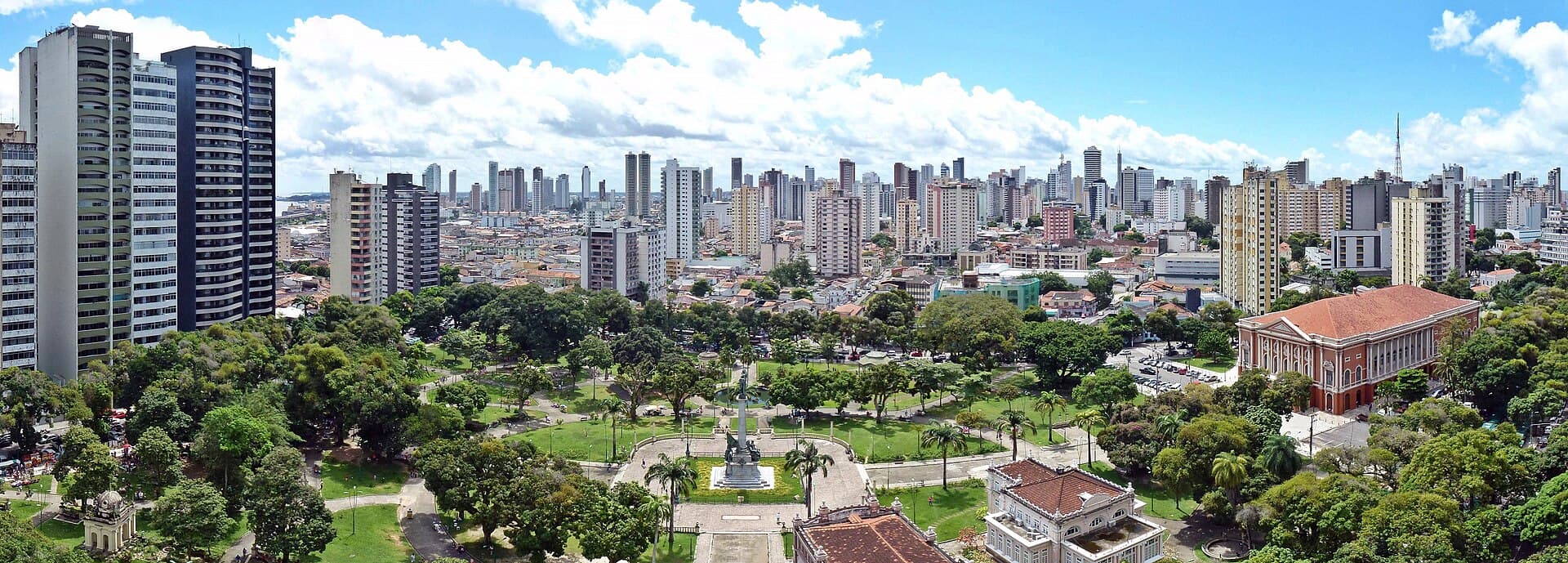 Burn86 / CC BY-SA 3.0, via Wikimedia Commons
“Where the Amazon meets the Atlantic, a city of mangoes and resilient history.”
Not the postcards. The stories even locals don't know — whispered in your ear, right where they happened.
Among the bustling stalls of the Ver-o-Peso Market, a unique currency of flavor once held sway, beyond mere reals and centavos.
The opulent Theatro da Paz, built during the Amazon's rubber boom, holds a secret in its very foundations that speaks to the era's dramatic shifts in fortune.
The lively Estação das Docas, a modern hub of gastronomy and culture, conceals a relic from a forgotten past that still stands guard over Guajará Bay.
Discover every secret of Belém
Every address, every reveal in full — in your ear, right where it happened.
You pick your stops. You walk. The voice reveals what the others miss.
No tours available yet. Check back soon — we're preparing them.
Belém, the capital of Pará state in northern Brazil, is a city where the Amazon River delta meets the Atlantic Ocean, creating a unique blend of riverine culture and colonial heritage. Founded in 1616 by the Portuguese, it was the first European colony on the Amazon. Often called 'Belém do Pará' to distinguish it from other places named Belém, the city is also known as the 'City of Mango Trees' due to the abundance of these fruit-bearing trees that line its streets.
Serving as a crucial gateway to the Amazon, Belém is a dynamic urban center that has preserved its past while embracing modernity. Its identity is deeply intertwined with the Guajará Bay and the Guamá River, with many significant sites situated along the waterfront. The city offers a range of experiences, from historic markets and grand theaters to tropical islands and a distinctive Amazonian-influenced cuisine.
Belém's history began on January 12, 1616, when Portuguese captain Francisco Caldeira Castelo Branco established the fortified settlement of Feliz Lusitânia on Guajará Bay. This strategic outpost, later known as Forte do Presépio, was crucial for asserting Portuguese control over the Amazon River mouth and fending off French, Dutch, and English incursions. The fort's construction marked the genesis of what would become a vital link between the Amazon and Europe.
Initially, Belém's economy revolved around the extraction and export of 'drogas do sertão'—wild cocoa, vanilla, cinnamon, cloves, and medicinal herbs. Religious orders, particularly the Jesuits, played a significant role in shaping the early culture, establishing schools and churches, and organizing the collection of forest resources. In 1655, Belém was granted city status, and in 1772, it became the capital of Pará state.
The 19th and early 20th centuries ushered in Belém's 'Golden Age' with the Amazon rubber boom. The city transformed into a prosperous and cosmopolitan center, attracting immigrants and undergoing extensive urban modernization with European-style architecture. Iconic landmarks such as the Theatro da Paz and the Ver-o-Peso Market were constructed during this period, reflecting the immense wealth generated by the rubber industry. However, the rubber era eventually declined after 1912, but Belém maintained its position as the main commercial center and entrepôt for the Amazon basin.
Today, Belém continues to be an important port for Amazon River craft and a significant educational and cultural hub in northern Brazil. The city's colonial character endures in its tree-lined squares, historic churches, and traditional blue tiles, coexisting with modern buildings and skyscrapers. Belém's history is a testament to its resilience and its enduring connection to the Amazon.
Begin your exploration at the Ver-o-Peso Market, one of Latin America's largest open-air markets. Here, a spectrum of Amazonian products awaits, from exotic fruits and fresh seafood to medicinal herbs and local handicrafts. Nearby, the Forte do Presépio (Castle Fort) stands as the city's birthplace, offering wide views of Guajará Bay and housing a museum on indigenous communities and Portuguese colonization.
Just a short walk away, the Estação das Docas complex transforms old port warehouses into a lively cultural and gastronomic destination, perfect for enjoying local cuisine and a sunset over the bay. For a touch of Belle Époque grandeur, visit the Theatro da Paz, a neoclassical opera house built during the rubber boom, known for its opulent interiors and guided tours. Immerse yourself in nature at Mangal das Garças, a zoobotanical park with diverse bird species, flamingos, and butterflies, offering a peaceful escape along the Guamá River.
Consider a boat trip to Combu Island, an environmentally protected area known for its cocoa and açaí production, where you can visit chocolate factories and riverside restaurants. For a deeper dive into Amazonian natural history, the Museu Paraense Emílio Goeldi is Brazil's first zoobotanical park and the Amazon's oldest scientific institution. Finally, don't miss the impressive Basílica de Nossa Senhora de Nazaré, a significant pilgrimage site, especially during the annual Círio de Nazaré festival.
Belém experiences an equatorial climate, meaning it is hot and humid year-round, with frequent afternoon rains. The best time to visit is generally during the drier months, from June to November. While rain is still possible, it tends to be less intense than in other periods. The city's most famous event, the Círio de Nazaré, a massive religious procession honoring the Virgin Mary, takes place on the second Sunday of October, attracting millions of pilgrims. If you plan to attend, book accommodations well in advance.
Belém is served by Belém International Airport (Val de Cans), with direct flights from major Brazilian cities and some international destinations. The city's public transportation includes buses, but taxis and ride-sharing apps are readily available. For exploring the islands, boat trips are a common and enjoyable mode of transport.
Regarding currency, the Brazilian Real (BRL) is used. The standard voltage in Belém is 110V. While many locals are friendly, it's always wise to be aware of your surroundings, especially in crowded areas like markets. Two to three days is often recommended for a comprehensive visit to Belém, allowing time to experience its key attractions and unique atmosphere.