Tel Be'er Sheva National Park
The archaeological site of Tel Be'er Sheva holds a secret that challenges a familiar biblical narrative.
Full story unlocks in the tour
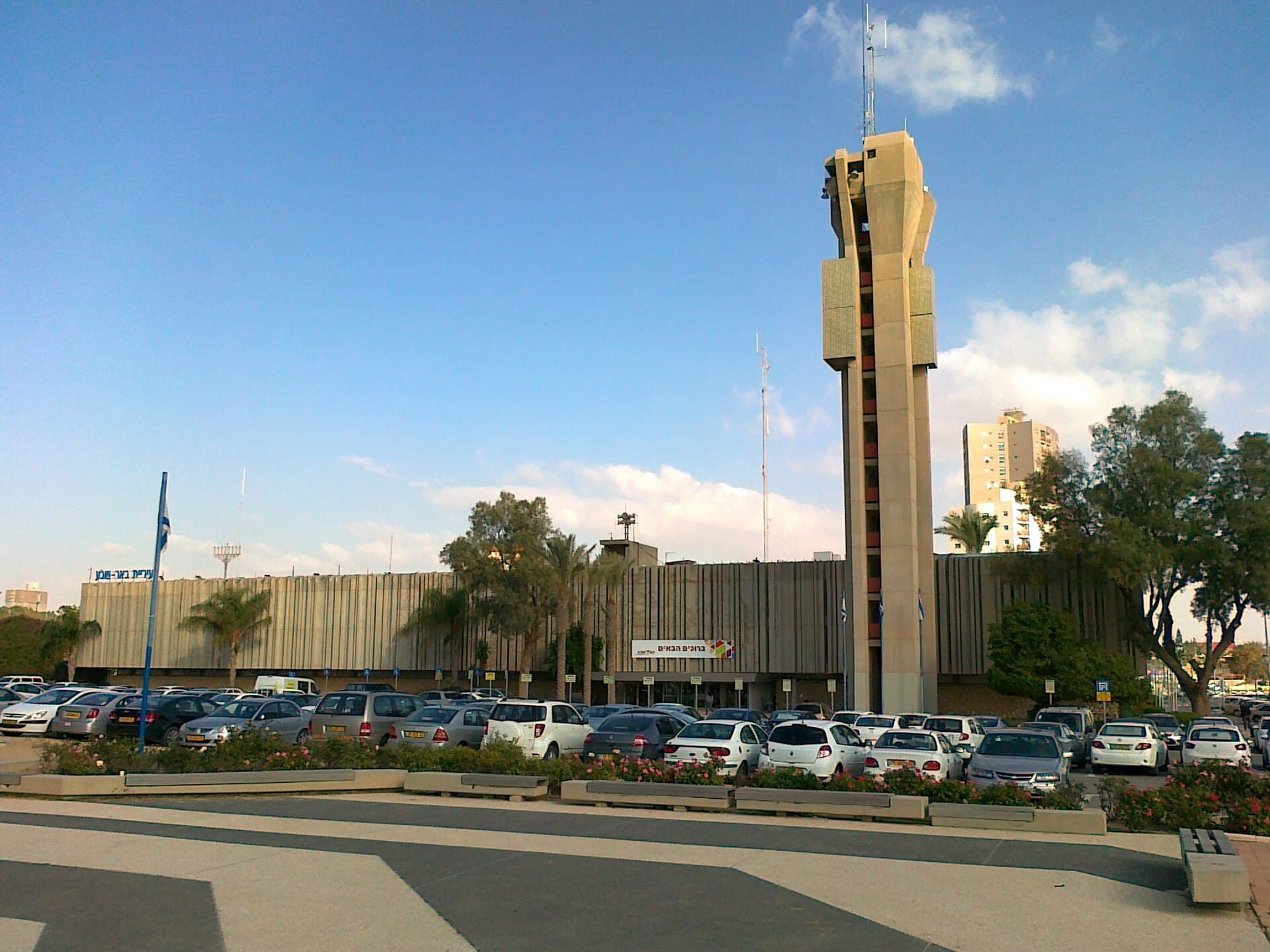 BASWIM / CC BY 3.0, via Wikimedia Commons
“Where ancient wells meet a desert future.”
Not the postcards. The stories even locals don't know — whispered in your ear, right where they happened.
The archaeological site of Tel Be'er Sheva holds a secret that challenges a familiar biblical narrative.
The Bedouin Market, a weekly tradition since 1905, has a specific window for its most authentic exchanges.
This historic railway station played a surprising role in the exploits of a legendary figure from World War I.
Discover every secret of Beersheba
Every address, every reveal in full — in your ear, right where it happened.
You pick your stops. You walk. The voice reveals what the others miss.
No tours available yet. Check back soon — we're preparing them.
Beersheba, also spelled Be'er Sheva, stands as the largest city in the Negev desert of southern Israel, often referred to as the "Capital of the Negev." Located approximately 115 kilometers (71 miles) southeast of Tel Aviv and 120 kilometers (75 miles) southwest of Jerusalem, it serves as a vital gateway to the expansive desert region. The city's history stretches back to the fourth millennium BCE, with human habitation near present-day Beersheba dating to the Chalcolithic period.
While often overlooked by travelers favoring Jerusalem or Haifa, Beersheba offers a singular blend of biblical heritage, Ottoman architecture, and a burgeoning modern identity. It's a city where ancient narratives of Abraham and Isaac intertwine with the carefully planned streets of an Ottoman town and the innovative spirit of a growing high-tech hub. From its biblical origins as a place of covenants and wells to its strategic importance through various empires, Beersheba provides a compelling journey through millennia of human history and cultural exchange.
Today, Beersheba is Israel's eighth-most populous city, with a population of over 220,000, and is experiencing rapid growth, drawing a younger demographic due to institutions like Ben-Gurion University of the Negev. This influx has contributed to an energetic atmosphere with new cafes, restaurants, and a developing high-tech scene, making it an intriguing destination for those seeking an authentic Israeli experience beyond the well-trodden tourist paths.
Beersheba's story begins in the Chalcolithic period, with the earliest human settlements appearing on the banks of the riverbed. Around 2000 BCE, the patriarchs Abraham and Isaac arrived, digging wells and forming alliances with Abimelech, the Philistine king of Gerar. The city's name itself, Beersheba, is thought to derive from these events, meaning either "Well of the Oath" or "Well of the Seven," referencing the covenant made or the seven ewe-lambs exchanged.
Biblically, Beersheba marked the southern boundary of ancient Israel, famously referenced in the phrase "from Dan to Beersheba" to describe the entire kingdom. It was a significant location where Isaac built an altar and Jacob had his dream of a stairway to heaven. The city was later assigned to the Tribe of Judah and then Simeon, serving as a royal city during the monarchic era before its destruction by the Assyrians. After the Babylonian conquest, the town was abandoned but later resettled by Israelites returning from Babylon.
For centuries, Beersheba remained a modest watering place, primarily serving the nomadic Bedouin tribes of the Negev. Its modern form began to take shape in the early 20th century under Ottoman rule. Beersheba is the only city in the region that was planned by the Ottomans, who made it an administrative center. This period saw the construction of distinctive Ottoman architecture, evident in areas like the Old Turkish Town and the Turkish Railway Station. The Ottomans lost control of Beersheba in October 1917 to the ANZAC troops of the British Empire in what was the last cavalry battle ever fought. The city then became part of the State of Israel in October 1948, following its capture by the Negev brigade of the Palmach. Since then, Beersheba has rapidly grown, drawing new immigrants and developing into the administrative, cultural, and industrial heart of the Negev.
Begin your exploration in the Old Turkish Town, also known as the Old City, where the Ottoman influence is most visible. Wander through streets laid out in a grid pattern, observing the early 20th-century Ottoman buildings. Here, you'll find the Negev Museum of Art, housed in the former governor's residence, showcasing contemporary and early Israeli art. Nearby stands the Old Turkish Railway Station Museum, a renovated heritage site that played a role in World War I.
A visit to Beersheba is incomplete without experiencing the Bedouin Market, held every Thursday since 1905. This colorful marketplace offers authentic wares, glassware, traditional food, and hand-woven rugs from local Bedouins. For a deeper dive into the city's ancient roots, head to Tel Be'er Sheva National Park, a UNESCO World Heritage Site located a short distance northeast of the modern city. This archaeological site reveals the ruins of an ancient walled city, complete with gates, buildings, and a sophisticated water system, including a massive, ancient well. The Abraham's Well International Visitors' Center near the riverbed offers a technological presentation on the story of Abraham and the city. Seek out the Monument to the Negev Brigade, a striking concrete sculpture commemorating the Palmach brigade that secured the Negev in 1948, offering sweeping views of the Beersheba Valley.
Beersheba experiences a desert climate, characterized by hot, dry summers and mild winters. The ideal times to visit are during spring (March to May) and autumn (September to November). During these transitional seasons, average daytime temperatures range from a comfortable 19-29°C (66-84°F), with lower humidity and minimal rainfall, creating excellent conditions for outdoor activities and city exploration. Summers (June to September) are long and hot, with average temperatures often exceeding 30°C (86°F) and virtually no rain. Winters (December to February) are mild, with average daytime temperatures around 13-19°C (55-66°F) and the most significant rainfall of the year.
Beersheba is easily accessible by public bus and train from major Israeli cities like Tel Aviv and Jerusalem. If you plan to explore the broader Negev Desert, renting a car is recommended. Within the city, getting around is convenient on foot, by bus, or by taxi. The tap water in Beersheba is safe to drink. When greeting Orthodox Jewish and devout Muslim men, it is customary to speak greetings and nod rather than shaking hands with women. Most entertainment venues are closed on Memorial Day for Fallen Israeli Soldiers, and nearly everything, except emergency services, closes on Yom Kippur (Day of Atonement). For those interested in local shopping, the Municipal Market (Shuk Ironi) offers fresh produce, nuts, and oriental sweets.