Hospices de Beaune
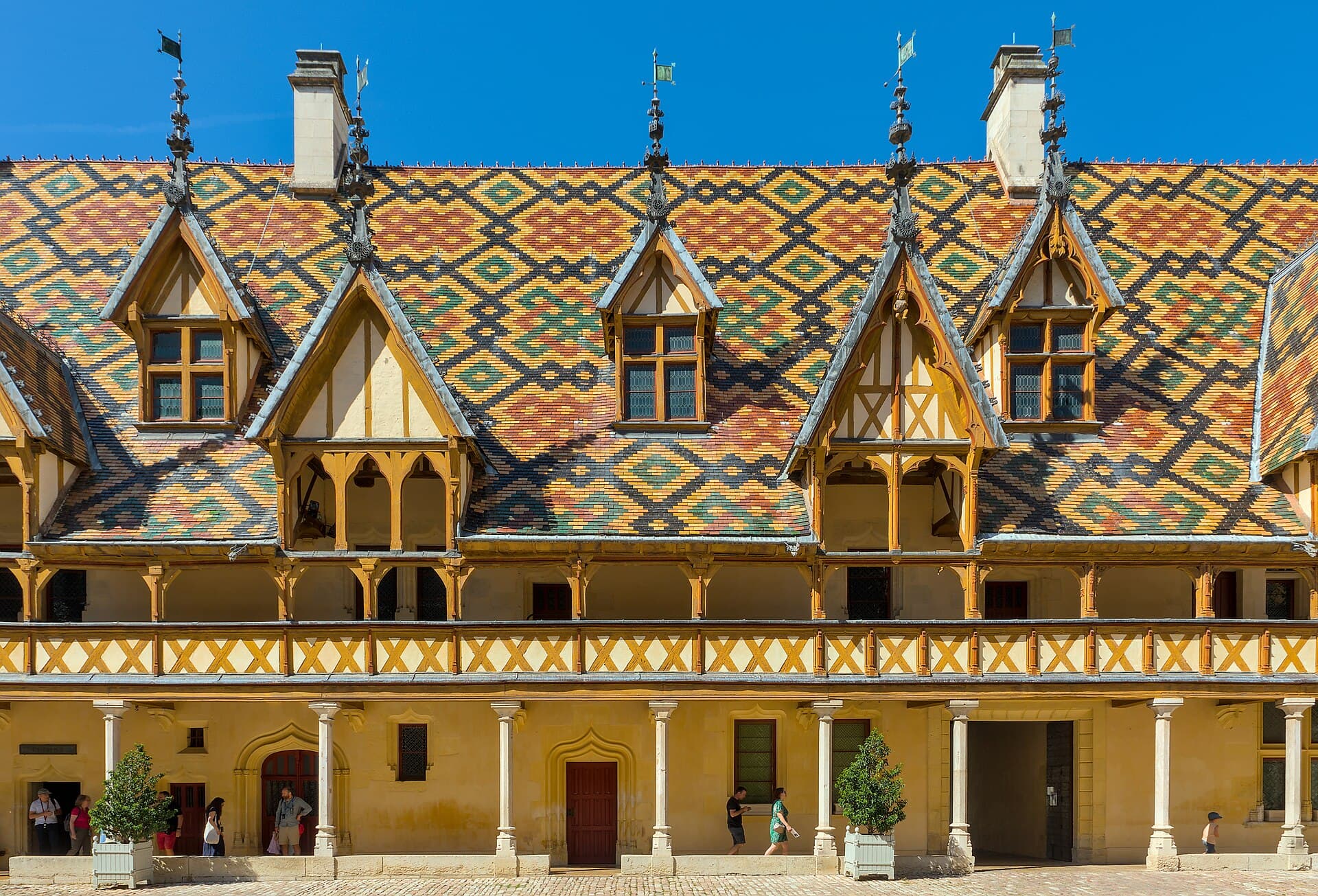
The striking, patterned roof of the Hospices de Beaune is a familiar sight, yet few realize the unexpected path that led it to become a significant proprietor of Burgundy's vineyards.
Full story unlocks in the tour
 Benjamin Smith / CC BY-SA 4.0, via Wikimedia Commons
“Where ancient stones meet the heart of Burgundy's vineyards.”
Not the postcards. The stories even locals don't know — whispered in your ear, right where they happened.
The striking, patterned roof of the Hospices de Beaune is a familiar sight, yet few realize the unexpected path that led it to become a significant proprietor of Burgundy's vineyards.
Strolling the venerable ramparts of Beaune means walking upon layers of history, literally resting on a much older foundation.
Beneath Beaune's inviting streets lies a subterranean world of wine, a network so vast it once served a very different purpose of evasion.
Discover every secret of Beaune
Every address, every reveal in full — in your ear, right where it happened.
You pick your stops. You walk. The voice reveals what the others miss.
No tours available yet. Check back soon — we're preparing them.
Beaune, a walled city at the core of Burgundy's Côte d'Or, is a place where time-honored stories and the essence of wine intertwine with every stone and vine. Often referred to as Burgundy's wine center, this ancient town offers a tangible connection to centuries of winemaking tradition. Its compact historic core, embraced by well-preserved ramparts, invites leisurely exploration on foot, revealing architectural wonders and a lively atmosphere.
Beyond its viticultural prominence, Beaune presents a captivating blend of medieval and Renaissance influences. The city's heritage is deeply connected to the influential Dukes of Burgundy, who once made it a focal point of their domain. Today, Beaune draws visitors from across the globe, eager to experience its distinctive character, from its iconic tiled roofs to its globally celebrated wine auction.
To wander through Beaune is to step into a living chronicle, where Roman origins, medieval fortifications, and the enduring legacy of wine production create a unique sense of place. It's a city that rewards unhurried discovery, offering new sights around every corner, whether a secluded courtyard, a historic wine merchant, or a local café.
## From Roman Outpost to Wine Center Beaune's narrative begins long before its medieval ascendance. The Romans established a fort here in the 300s, constructing protective castrum walls that would later form the foundation for the city's medieval ramparts. This early settlement, known as 'Belena' after a local spring, was already a wine-growing region by the 13th century.
During the Middle Ages, Beaune ascended to become a significant center of power and prosperity, serving as the capital for the Dukes of Burgundy. This era saw the construction of many of the city's enduring architectural landmarks. The affluence derived from the developing wine trade fueled this expansion, enabling the erection of impressive walls and elegant buildings that define Beaune's character today.
A pivotal moment in Beaune's history arrived in 1443 with the establishment of the Hospices de Beaune, also known as the Hôtel-Dieu. Founded by Nicolas Rolin, Chancellor to Duke Philip the Good, and his wife Guigone de Salins, this charitable hospital was created to care for the poor and ill in the aftermath of the Hundred Years' War and a period of famine. The Hospices, with its distinctive polychrome tiled roof, became an iconic symbol of the city and a testament to its humanist values.
Over the centuries, the Hospices de Beaune's mission expanded. Through generous donations of vineyards, it evolved into one of Burgundy's largest vineyard proprietors. This unique blend of philanthropy and viticulture culminated in the establishment of the annual Hospices de Beaune Wine Auction, a globally recognized charity event that continues to attract international buyers and celebrate Burgundy's wine heritage every November.
Beaune's strategic location in the heart of the Côte d'Or vineyards solidified its role as a central hub for Burgundy's wine culture. Its ancient ramparts, many of which remain intact, have been converted into wine cellars, reflecting the city's deep connection to its most important commodity. In 2015, the "Climats" of Burgundy, including Beaune's vineyards, were inscribed on the UNESCO World Heritage List, recognizing the unique terroir-based viticulture of the region.
Begin your exploration at the Hospices de Beaune (Hôtel-Dieu), an architectural wonder with its striking Gothic design and distinctive, geometric patterned roof of glazed tiles. Inside, discover the medieval hospital wards, kitchens, and the celebrated 15th-century Beaune Altarpiece by Rogier van der Weyden.
Walk the Ramparts of Beaune, a 1.5-mile (2.5-kilometer) promenade encircling the old town. These ancient fortifications, built between the 12th and 17th centuries, offer views of tiled rooftops, private gardens, and even some of the substantial 16th-century towers, which are up to seven meters thick. Information panels with QR codes provide historical context along the way.
Visit the Collégiale Notre-Dame, a Romanesque basilica dating from the 12th century, with later Gothic additions. It houses an extraordinary set of 15th-century tapestries depicting the life of the Virgin Mary.
Delve into Burgundy's viticultural past at the Musée du Vin de Bourgogne (Burgundy Wine Museum), located in the former palace of the Dukes of Burgundy. The museum provides a comprehensive history of winemaking in the region, from ancient times to the present.
Explore Beaune's subterranean world by touring a wine cellar. Many major négociant houses, such as Maison Joseph Drouhin, Bouchard Père et Fils, and Patriarche Père et Fils, offer tours and tastings in their historic underground cellars, some of which stretch for kilometers.
Do not overlook the Fallot Mustard Mill, Burgundy's last independent, family-run mustard business. Discover the history of Burgundy mustard and its traditional production methods.
Beaune is an engaging destination throughout much of the year, though the fall (September-November) offers a particularly immersive experience during the grape harvest and the renowned Hospices de Beaune Wine Auction in November. Spring (April-June) brings pleasant weather and blooming vineyards. Summer (July-August) is lively with outdoor activities and the 'Trail of Light' evening projections on key monuments. While appealing, winters can be quieter with some attractions having reduced hours.
Beaune's historic center is compact and best explored on foot. The city is well-connected by train, with direct services to Dijon, Lyon, and Paris. For those arriving by car, Beaune is accessible via the A6 Paris-Lyon motorway. Consider purchasing a Beaune City Pass for potential savings on attractions. Local cuisine features Boeuf Bourguignon and Coq au Vin, alongside regional cheeses and pastries. The main market takes place on Saturdays in the central square, offering local produce, cheeses, and baked goods, with a smaller market on Wednesdays.