The main square (Parque Principal Barichara)
The central square isn't just a place to relax; it's a stage where local life unfolds, sometimes with surprising props.
Full story unlocks in the tour
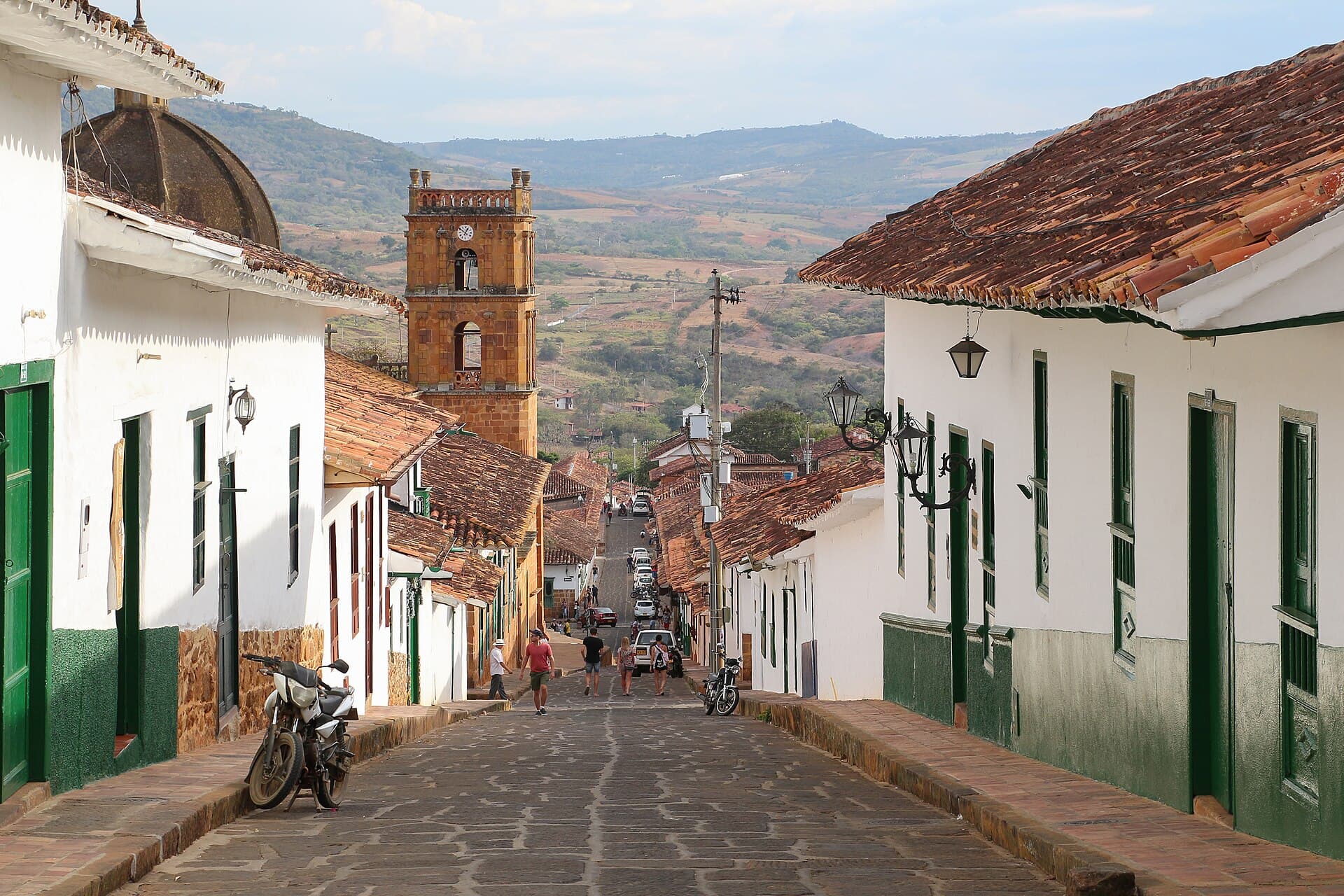 Bernard Gagnon / CC BY-SA 4.0, via Wikimedia Commons
“Where time slows, and stories linger in sun-warmed stone.”
Not the postcards. The stories even locals don't know — whispered in your ear, right where they happened.
The central square isn't just a place to relax; it's a stage where local life unfolds, sometimes with surprising props.
Beneath the impressive facade of the main cathedral, there's a subtle detail that speaks to a much older history than its 18th-century construction.
Hiking the historic Camino Real between Barichara and Guane offers more than just scenic views and a glimpse into colonial transport.
Discover every secret of Barichara
Every address, every reveal in full — in your ear, right where it happened.
You pick your stops. You walk. The voice reveals what the others miss.
No tours available yet. Check back soon — we're preparing them.
Barichara, a town in Colombia's Santander department, has been officially recognized as the nation's most beautiful village since 1975. Its carefully preserved colonial architecture, with thoroughfares paved in yellowish limestone and structures crafted from local sillar stone, creates an atmosphere where time seems to stand still. The town's unique character even inspired elements of the animated Disney film Encanto.
At an elevation of 1,300 meters (4,265 feet), Barichara offers a warm, temperate climate that cools invitingly in the evenings. Visitors are encouraged to embrace a slower pace, stroll its quiet lanes, and immerse themselves in a place where the past feels ever-present.
The history of Barichara extends to pre-Columbian times, with the Indigenous Guane people inhabiting the region. Their enduring legacy is still visible in parts of the Camino Real, an ancient road they constructed, which later became a crucial trade route.
Barichara's formal story began in the early 18th century. According to local legend, in 1702, a peasant discovered an image of the Virgin Mary carved into a limestone rock. This alleged divine apparition led to the construction of a chapel and, subsequently, the first homes around the site. The village was officially established in 1705 by the Spaniard Juan de San Martín, coinciding with the building of the Church of Santa Bárbara. The parish, initially named Vare-Florence, then Vara-echada, eventually became Barichara, a Guane word meaning "Place to Rest."
During the colonial era, Barichara flourished as an agricultural and commercial center due to its fertile land and its strategic position on a trade route between Bogotá and Santa Fe de Antioquia. The town's distinctive colonial architecture, characterized by white adobe houses with clay-tiled roofs and stone-paved thoroughfares, is a direct testament to this prosperous period. In 1978, Barichara was declared a National Monument of Colombia, a recognition of its historical and architectural importance and its remarkable preservation of 18th-century construction and ambiance. In 2010, it was further designated a Pueblo Patrimonio (heritage town), one of only 11 municipalities nationwide to receive this distinction.
Barichara maintains a strong artisan tradition, particularly in stonework, a skill passed down through centuries due to the abundance of local raw materials. You can also find artisans specializing in ceramics, textiles, and paper. The town's cultural heritage is also evident in its ancestral cuisine, which includes unique regional specialties.
Today, Barichara continues to captivate visitors with its tranquil beauty and preserved heritage, offering a glimpse into Colombia's enduring past while embracing its role as a cherished tourist destination.
The heart of Barichara is its main square, Parque Principal Barichara, a lively gathering spot framed by the Parish Church of the Immaculate Conception. This grand yellow sandstone church, constructed between 1803 and 1878, features a carved stone facade, magnificent tile flooring, and a gold-leaf altar.
Beyond the main square, wander the stone-paved thoroughfares to admire the consistent architecture of white-washed adobe houses with red clay roofs. Seek out the chapels of San Antonio and Santa Bárbara, both well-maintained and offering glimpses into the town's religious history.
For sweeping vistas, head to Mirador Salto de Mico or other viewpoints along the edge of town. These spots offer expansive views of the Suarez River canyon and the surrounding green landscapes. The Camino Real hike to the nearby village of Guane is a popular activity, an easy downhill trek on a stone-paved path, leading to a smaller colonial town with its own archaeological museum.
Do not overlook the Cementerio Central, considered one of Colombia's most beautiful cemeteries, known for its distinct grilles and windows. The Casa de la Cultura Emili Pradilla Gonzalez, a cultural house and small museum, is also worth a visit. For a unique local experience, explore the artisan workshops where crafts like stone carving, paper making, and textiles are created.
The most pleasant time to visit Barichara for outdoor activities and clear skies is during the dry season, which extends from mid-December to late February and mid-June to late August. During these months, daytime temperatures typically range from 23–27°C (73–81°F), with evenings cooling to 14–17°C (57–63°F), creating comfortable conditions for exploration. While the region can be visited year-round, April and May generally experience the most rain, which can make the Camino Real hike slippery and less inviting. To avoid larger crowds, consider visiting on weekdays and outside of major holiday periods like Christmas, New Year's, and Easter.
Barichara is accessible by bus, typically requiring a transfer in San Gil, approximately 40 minutes away. From Bogotá, the journey can take around 7-9 hours by bus, or a flight to Bucaramanga (about an hour) followed by a 3-hour bus ride. Once in Barichara, the town is compact and best explored on foot due to its hilly, stone-paved thoroughfares. Comfortable walking shoes are essential. Tuk-tuks are available for shorter distances or if you prefer not to walk.
ATMs are present in Barichara, but it's advisable to carry some cash, especially on busy weekends, as they can sometimes run low. Sunscreen and a hat are recommended due to the warm climate and strong sun. Internet coverage in town is generally reliable. For accommodation, options range from hostels to colonial posadas and boutique hotels, many with inviting courtyard gardens and canyon views.