Plaça de Sant Felip Neri, Barri Gòtic
The pockmarks scarring this quiet church wall aren't bullet holes from a firing squad — and for decades a dictator made sure you'd believe the wrong story about who died here.
Full story unlocks in the tour
 M McBey / CC BY 2.0, via Wikimedia Commons
“Stone that dreamed it could grow like a forest.”
Not the postcards. The stories even locals don't know — whispered in your ear, right where they happened.
The pockmarks scarring this quiet church wall aren't bullet holes from a firing squad — and for decades a dictator made sure you'd believe the wrong story about who died here.
This breathtaking 'medieval' bridge in the Gothic Quarter is younger than the Empire State Building — and the architect carved a tiny dagger-pierced skull into it as a quiet act of revenge.
Beneath this old iron market lie the streets of a neighbourhood that was deliberately flattened as collective punishment — and the rubble was left exactly where it fell.
Discover every secret of Barcelona
Every address, every reveal in full — in your ear, right where it happened.
You pick your stops. You walk. The voice reveals what the others miss.
No tours available yet. Check back soon — we're preparing them.
On 10 June 2026, Pope Leo XIV blessed the Tower of Jesus Christ, and after 144 years the Sagrada Família finally became the tallest church on earth. Barcelona is like that: a place where the unfinished is the main event. The Romans laid out a colony here around 10 BC and called it Barcino. Twenty centuries later the city still argues with itself, in Catalan, about what it wants to be. You can walk Roman walls in the morning and a melting Gaudí façade by lunch. Come hungry, come curious, and watch your bag on La Rambla.
Barcelona began as Roman. Around 10 BC the emperor Augustus founded a colony with the full mouthful of a name, Iulia Augusta Faventia Paterna Barcino, on a low hill near the sea. Its people made wine, traded across the Mediterranean, and built the walls whose stones you can still touch in the Barri Gòtic. Rome faded, and by the Middle Ages the city had become the seat of the Counts of Barcelona.
That title mattered. When the County of Barcelona united with the Kingdom of Aragon, Barcelona became the political and commercial centre of the Crown of Aragon, sending ships and ambitions the length of the Mediterranean. The Gothic churches and merchant halls of the old town are the residue of that wealth.
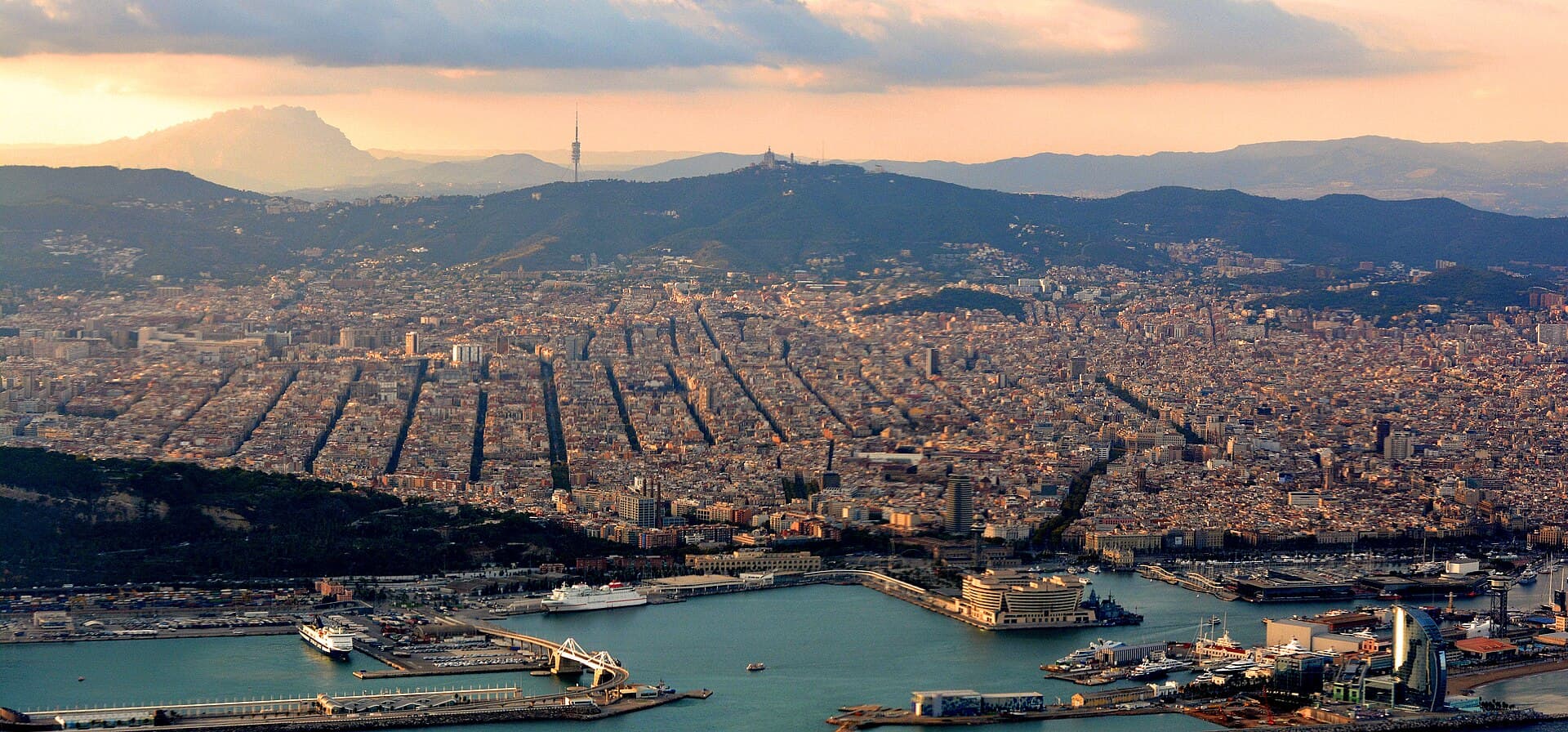
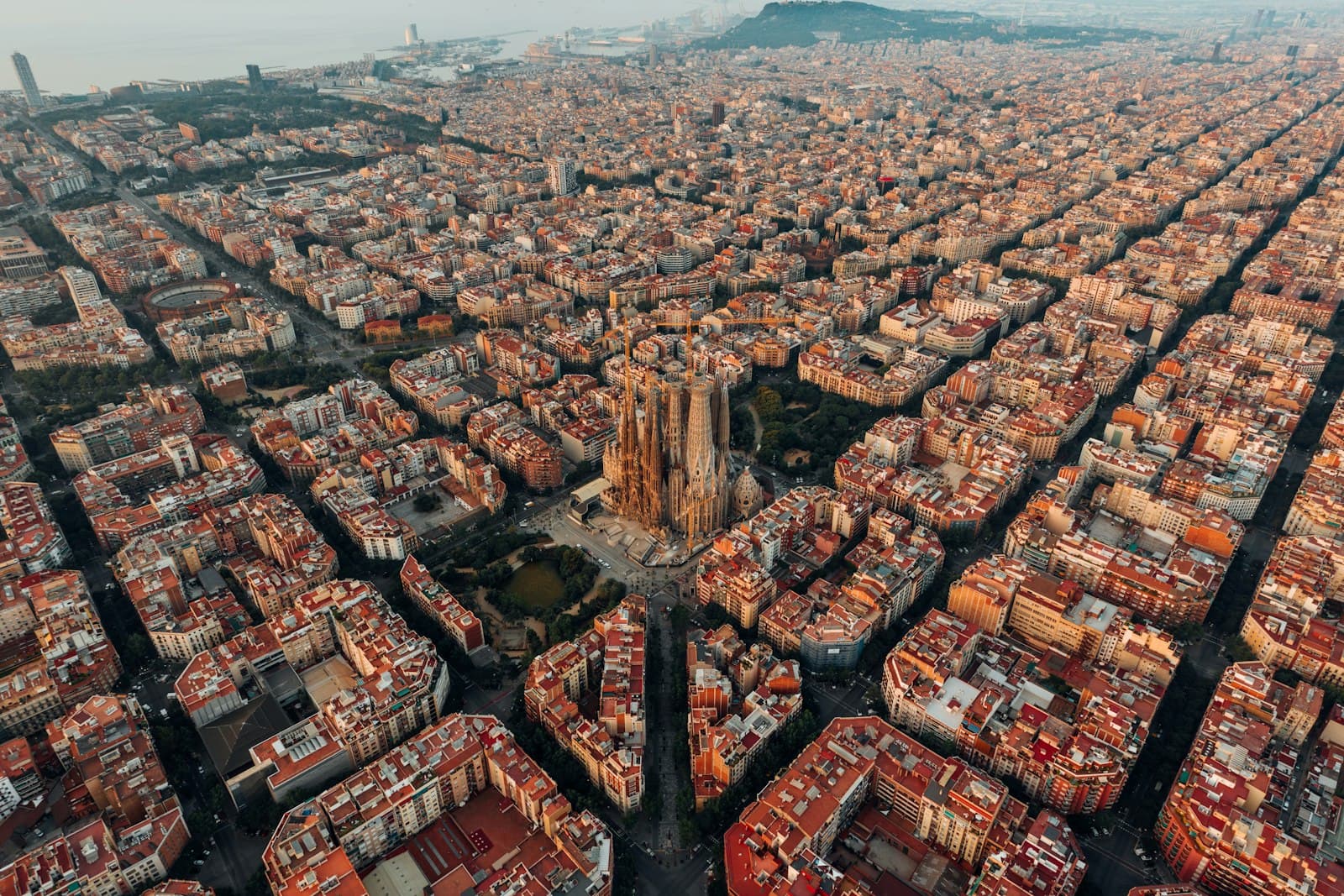
By the 19th century the medieval city was choking inside its walls. In 1859 the engineer Ildefons Cerdà drew a radical answer: the Eixample, a grid of blocks each 113 by 113 metres, with the corners sliced off at 45 degrees so light and carriages could move freely. The chamfered corner, the chaflán, is now the most quietly recognisable thing about Barcelona's streets. Cerdà wanted gardens inside every block and strict limits on building height. Private money diluted the dream, but the bones held.
The Sagrada Família tells the rest of the story. Construction started on 19 March 1882; Antoni Gaudí took charge the following year and gave the next four decades of his life to it, until a tram killed him in 1926. Roughly 15 to 25 percent was built when he died. In July 1936 anarchists set fire to the crypt and destroyed much of his original plans, and the Spanish Civil War stalled everything.
The modern city arrived with a deadline. In 1986 Barcelona won the right to host the 1992 Olympic Games, and used them to tear open its industrial coastline, build the Vila Olímpica, and finally turn the city to face the sea it had spent centuries ignoring.
Start with Gaudí, because everyone does and they are right. The Sagrada Família (begun 1882, still going) now tops out at 172.5 metres after the central Tower of Jesus Christ was finished in early 2026, making it the tallest church in the world. Gaudí kept it half a metre below Montjuïc hill on purpose: human work, he reasoned, should not outreach God's.
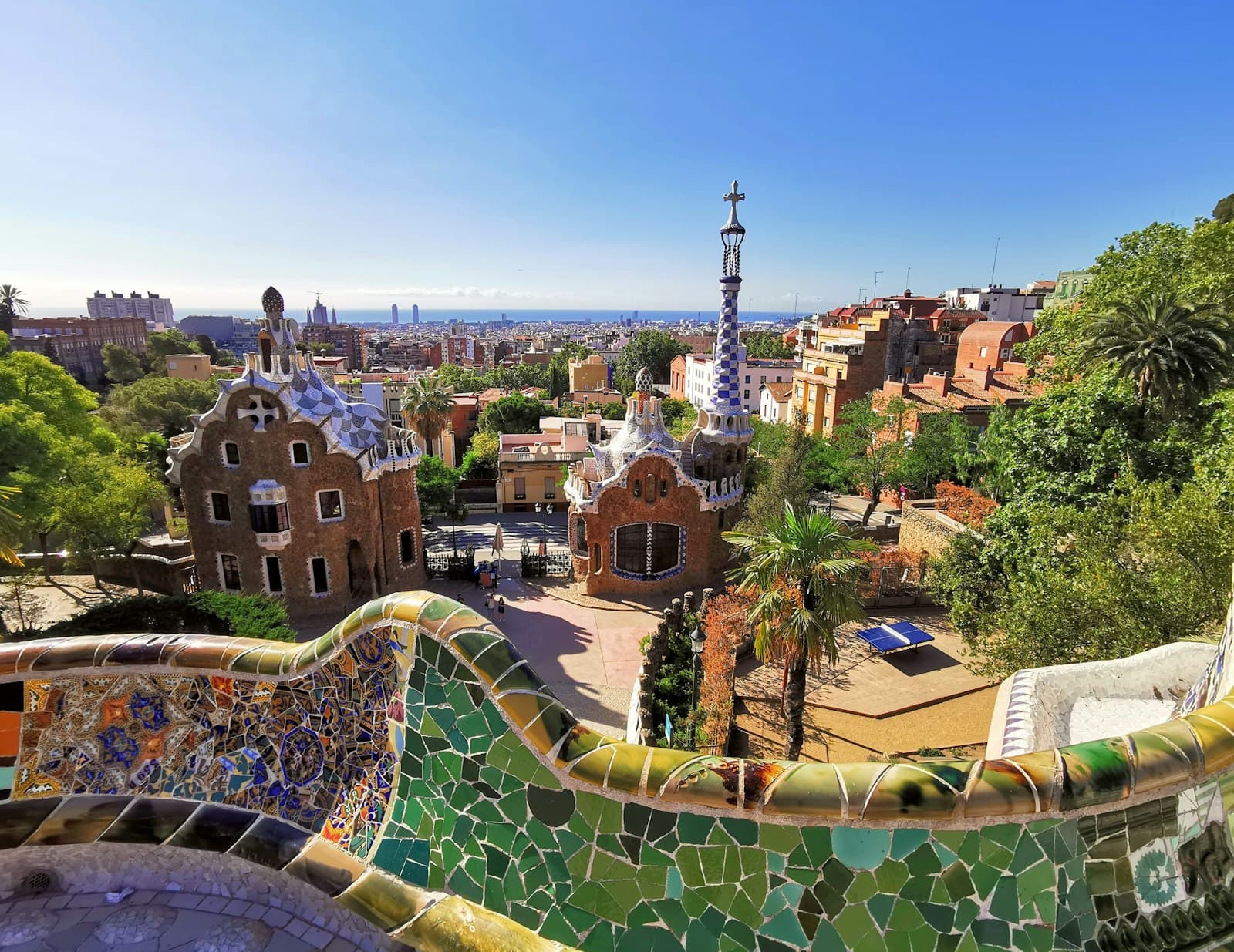
Then the rest of his orbit:
Walk the Barri Gòtic, one of the best-preserved medieval quarters in Europe, where Roman columns and ruins sit a few metres below street level. The Museu d'Història de Barcelona lets you stand inside the Roman city itself.
For art, the Museu Picasso opened on 9 March 1963 in a run of Gothic palaces on Carrer Montcada. It was the first museum dedicated to Picasso and the only one founded in his lifetime, at his own suggestion, given his ties to the city. The collection is strongest on his early years here, which is exactly the part most people skip elsewhere.
Eat your way through La Boqueria, the great market off La Rambla that officially opened in 1840 and now runs to hundreds of stalls. Go early, before the tour groups thicken the aisles.
Finish on Montjuïc. The Magic Fountain, built by engineer Carles Buïgas for the 1929 International Exposition, still throws light and water shows on summer evenings. The hill also holds the Olympic ring from 1992 and long views back over the grid.
Aim for the shoulder seasons. Late April through June, and September into October, give you warm days around 18 to 25°C, lighter crowds, and hotel rates well below peak. July and August are the trap: temperatures sit around 28 to 29°C, August humidity turns oppressive, and the whole Mediterranean seems to arrive at once. There is also a human cost worth knowing. In summer 2025 thousands of residents marched against overtourism, some spraying tourists with water pistols, and the regional tourist tax was raised. None of this is aimed at the respectful visitor, but it is a real reason to come in the quieter months, spend locally, and tread lightly.
Get into the city cheaply. The Aerobús runs from both airport terminals to Plaça de Catalunya in about 35 minutes for roughly €6.75, every 5 to 10 minutes. Inside the city, the metro and buses are excellent; a T-casual card gives 10 single journeys for about €13, though note it does not cover metro trips to the airport, which need a separate ticket. The metro runs from 5am to midnight on weekdays, later on Fridays, and all night Saturday.
Most shops keep long lunch breaks and stay open into the evening; many smaller places close Sundays. Tipping is modest, not American: round up or leave a euro or two for good service. Spanish and Catalan are both official, and a little Catalan goes a long way. Finally, the unglamorous truth: La Rambla and the metro are pickpocket country. Keep your bag zipped and in front of you, and you will be fine.