Rio Miel (Honey River)
Local lore suggests a simple dip in this river ensures a return to Baracoa’s embrace.
Full story unlocks in the tour
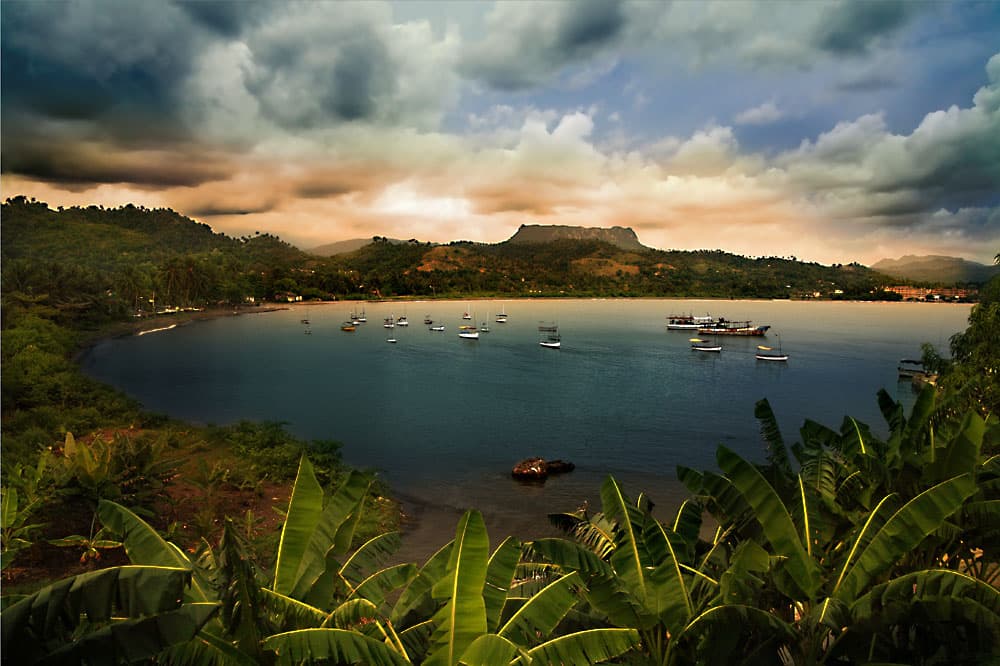 Paul Postiaux / CC BY-SA 3.0, via Wikimedia Commons
“Where the rainforest meets the sea, and time yields its hurried pace.”
Not the postcards. The stories even locals don't know — whispered in your ear, right where they happened.
Local lore suggests a simple dip in this river ensures a return to Baracoa’s embrace.
This ancient wooden cross, revered for centuries, holds a surprising secret about its origins.
The distinctive flat-topped mountain, a sentinel over the landscape, once perplexed Christopher Columbus.
Discover every secret of Baracoa
Every address, every reveal in full — in your ear, right where it happened.
You pick your stops. You walk. The voice reveals what the others miss.
No tours available yet. Check back soon — we're preparing them.
Baracoa, Cuba's "First City," is a place where the currents of history, the verdure of nature, and a singular culture converge on the island's far eastern tip. Separated for centuries by a formidable mountain range until the construction of a road in the 1960s, Baracoa maintains a distinct, unhurried atmosphere. Its name, thought to derive from the indigenous Taíno language, means "the presence of the sea," a fitting description for a town embraced by the Bahía de Miel (Bay of Honey) and a network of 29 rivers.
This coastal settlement, a National Monument of Cuba, offers a different rhythm than the country's larger cities. Here, brightly painted houses line active streets, and the scent of cocoa often drifts through the air. Baracoa is a destination for those seeking an authentic Cuban experience, far from the more developed tourist centers, where the natural environment plays a central role in daily life.
## The First City and Its Seclusion Baracoa holds the distinction of being the oldest Spanish settlement in Cuba, founded by Diego Velázquez in 1511 under the name "Our Lady of the Assumption of Baracoa." Christopher Columbus himself visited the area in 1492, noting its beauty. From 1518 to 1522, Baracoa even served as Cuba's first capital.
However, its remote location, surrounded by the Sierra del Purial mountains, proved to be a hindrance for the Spanish, leading Velázquez to relocate his residence to Santiago de Cuba. This geographical seclusion meant that Baracoa remained largely cut off from the rest of the island for centuries, accessible primarily by sea until the 1960s. The construction of the Viaducto de la Farola, a remarkable feat of Cuban engineering with 11 bridges winding through the mountains, finally connected Baracoa by road. This prolonged separation contributed to Baracoa's unique cultural identity and the preservation of its indigenous heritage.
## Indigenous Roots and Colonial Defenses The original inhabitants of Baracoa were the Taíno people, and while many were impacted by European diseases, some descendants still live in the region, particularly the Yateras community along the Río Toa. Their influence is still felt in local traditions and legends. To protect the early colonial settlement from pirate attacks, three fortresses were built in the 18th and 19th centuries: El Castillo de Santa Bárbara, Fuerte de la Punta, and Fuerte Matachín. These fortifications now serve new purposes, with El Castillo converted into a hotel, Fuerte de la Punta operating as a restaurant, and Fuerte Matachín housing the Municipal Museum.
## Chocolate Capital Baracoa is also recognized as Cuba's chocolate capital, a legacy that began in the early 19th century when French refugees from the Haitian Revolution settled in the eastern mountains, bringing with them advanced cacao cultivation techniques. The region's humid microclimate, fertile volcanic soils, and protective mountains create ideal conditions for growing high-quality cacao. Today, Baracoa produces 75% of all Cuban cacao, and the island's only chocolate factory, inaugurated by Che Guevara in 1963, continues to operate here, processing all national cacao.
Baracoa's appeal lies in its blend of natural splendor and historical sites. Begin at Parque Independencia, the central square, where you'll find the Catedral Nuestra Señora de la Asunción and the famed Cruz de la Parra. Explore the city's colonial past by visiting the three historic fortresses: El Castillo de Santa Bárbara (now a hotel with bay views), Fuerte de la Punta (a restaurant), and Fuerte Matachín (housing the Municipal Museum). The Museo Arqueológico de Baracoa, located inside a cave, offers insights into the Taíno culture.
Beyond the city, the natural world calls. Trek to the summit of El Yunque, the flat-topped mountain that is a symbol of Baracoa, offering wide views of the surrounding rainforest and coastline. Explore the Parque Nacional Alejandro de Humboldt, a UNESCO World Heritage Site known for its exceptional biodiversity, offering guided tours on land and water. Take a trip along the Viaducto de la Farola, an impressive road that winds through the mountains, providing dramatic scenery. Do not miss the opportunity to visit a local cocoa farm to learn about chocolate production and sample local treats at the Casa del Cacao. For a refreshing dip, seek out waterfalls like El Saltadero or the natural pools of the Río Duaba and Río Miel.
The most pleasant time to visit Baracoa for warm, sunny weather and low humidity is from December to May. During these months, rainfall is generally lower, making it ideal for outdoor activities like hiking and exploring cocoa plantations. The clearest skies are often seen in February. The wet season runs from June to November, with the heaviest rains from late July and the possibility of hurricanes between August and November. While the wet season brings lush landscapes, humidity is at its highest. If you're interested in cultural events, consider visiting during Baracoa Culture Week in the last week of March or the Baracoan Carnivals in early April.
Baracoa is located in the easternmost part of Cuba, within the Guantánamo province. While it was historically isolated, the Viaducto de la Farola now connects it by road, though the journey can be long. Many travelers opt for Viazul buses or private taxis. Accommodations in Baracoa largely consist of casas particulares (private homes offering rooms), providing a more authentic and often more affordable experience than hotels. It's advisable to book these in advance, especially during peak season. The local currency is the Cuban Peso (CUP), though some tourist-oriented businesses may accept other currencies. Drinking tap water is generally not recommended; bottled water is widely available. The local cuisine is a highlight, with specialties often featuring coconut milk, cacao, and fresh seafood. Be sure to try cucuruchos, a sweet treat of coconut, honey, and fruit wrapped in a palm frond.