Wat Pariwat
You might expect to find traditional Buddhist iconography in a Thai temple, but one Bangkok wat features some unexpected pop culture figures.
Full story unlocks in the tour
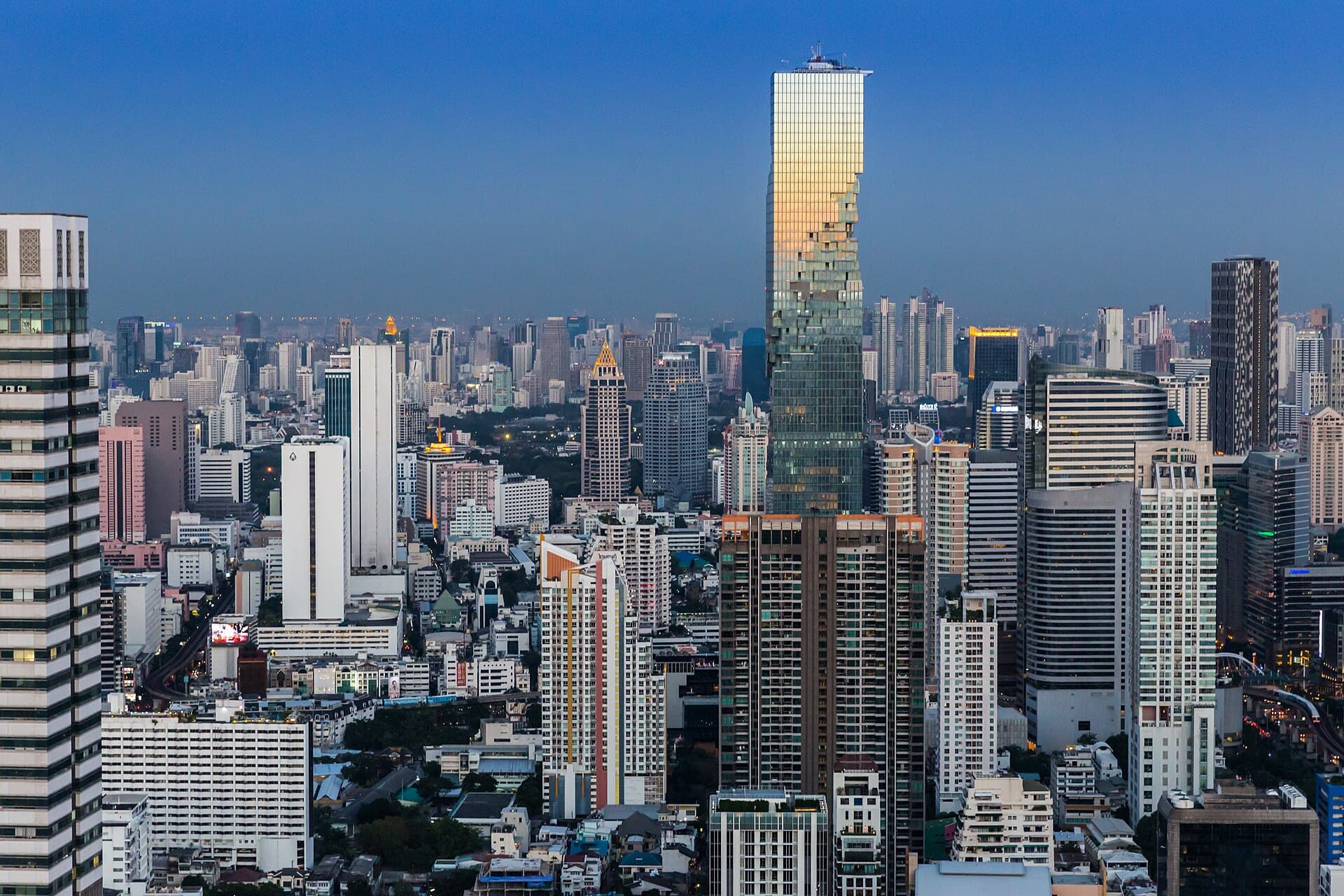 Ninara from Helsinki, Finland / CC BY 2.0, via Wikimedia Commons
“Bangkok: Where ancient traditions meet a dazzling, relentless present.”
Not the postcards. The stories even locals don't know — whispered in your ear, right where they happened.
You might expect to find traditional Buddhist iconography in a Thai temple, but one Bangkok wat features some unexpected pop culture figures.
Rising dramatically above the Chao Phraya River, this colossal skyscraper stands as a silent, concrete testament to a boom that went bust.
Escape the urban sprawl of Bangkok without leaving the city, to a place where skyscrapers vanish and bicycle paths wind through a landscape of green.
Discover every secret of Bangkok
Every address, every reveal in full — in your ear, right where it happened.
You pick your stops. You walk. The voice reveals what the others miss.
No tours available yet. Check back soon — we're preparing them.
Bangkok, known to locals as Krung Thep, or "City of Angels," is a metropolis that pulses with an electrifying energy. It's a city of striking contrasts, where ancient temples with glittering spires stand alongside futuristic skyscrapers and bustling markets. The scent of street food mingles with the exhaust of tuk-tuks, and the serene calm of a Buddhist temple is never far from the dynamic chaos of a night market.
This sprawling capital, situated on the Chao Phraya River, has evolved from a 15th-century trading post into a global hub, yet it retains a distinct cultural identity. Visitors can navigate its intricate network of canals, explore ornate palaces, or simply immerse themselves in the rhythm of daily life. Bangkok is a city that demands to be experienced with all senses, offering a journey through history, spirituality, and relentless urban dynamism.
The history of Bangkok stretches back to at least the early 15th century, when it was a small village on the west bank of the Chao Phraya River, under the influence of the Ayutthaya Kingdom. Its strategic location near the mouth of the river led to its gradual increase in importance, serving as a customs outpost with forts on both sides of the waterway. In 1688, Bangkok was the site of a significant siege that resulted in the expulsion of the French from Siam.
A pivotal moment arrived in 1767 when Ayutthaya, the former capital, fell to the Burmese. King Taksin the Great established a new capital at Thonburi, on the west bank of the Chao Phraya River. However, his reign was short-lived, and in 1782, King Rama I, the founder of the Chakri Dynasty, moved the capital across the river to its present location, establishing what is now Bangkok. This marked the beginning of the Rattanakosin Kingdom, and the new capital was officially named Krung Thep Maha Nakhon. Under Rama I, the magnificent Grand Palace and Wat Pho temple were constructed, laying the foundation for the city's iconic architecture.
Throughout the 19th century, Bangkok became the center of Siam's modernization, as the country skillfully navigated pressures from Western colonial powers, notably the British and French, and managed to avoid colonization. King Chulalongkorn (Rama V), ruling from 1868 to 1910, was instrumental in implementing reforms and modernizing infrastructure, replacing many canals with roads and introducing railways and electricity. The 20th century saw Bangkok at the heart of Thailand's political struggles, including the abolition of absolute monarchy in 1932 and numerous coups and uprisings. Despite being subjected to Allied bombing during World War II, the city experienced rapid growth in the post-war period, fueled by US aid and government investment. Bangkok's role as a US military R&R destination further boosted its tourism industry. In 1972, the city in its current form was created with the merger of Phra Nakhon and Thonburi provinces, forming the Bangkok Metropolitan Administration (BMA). Today, Bangkok continues to be a dynamic hub where historical landmarks coexist with modern development, reflecting its enduring resilience and cultural richness.
Begin your exploration at the Grand Palace, a sprawling complex of over 100 royal buildings that served as the official residence of the King of Thailand until 1925. Within its walls lies Wat Phra Kaew, home to the revered Emerald Buddha. A short walk away is Wat Pho, famous for its colossal 46-meter-long Reclining Buddha, adorned in gold leaf. This temple is also considered the birthplace of traditional Thai massage.
Cross the Chao Phraya River by ferry to visit Wat Arun, the Temple of Dawn, with its distinctive towering spires decorated with colorful porcelain. For a different perspective, take a longtail boat tour through Bangkok's khlongs (canals), offering a glimpse into traditional riverside life and earning Bangkok the moniker "Venice of the East."
Immerse yourself in the sensory overload of Chinatown (Yaowarat Road), especially in the evening, when neon signs illuminate a bustling street food paradise. For panoramic city views, ascend to one of Bangkok's many rooftop bars, such as Sky Bar at Lebua or Vertigo and Moon Bar. For a quieter escape, Lumphini Park offers a green oasis in the city center, where you can spot monitor lizards. For unique shopping, the Chatuchak Weekend Market is a massive outdoor market offering everything from clothing to antiques.
The most comfortable time to visit Bangkok is during the cool, dry season, which runs from November to February. During these months, temperatures are milder, humidity is lower, and rainfall is minimal, making it ideal for sightseeing and outdoor activities. Evenings can be particularly pleasant, with temperatures dropping to around 22°C. This period also coincides with major festivals like Loy Krathong in November and Chinese New Year in late January or early February.
Conversely, March to May is the hot season, with temperatures soaring and high humidity. The rainy or monsoon season typically runs from June to October, bringing increased rainfall, though showers are often brief and predictable. September is generally the wettest month. While the hot and rainy seasons offer fewer crowds and potentially better hotel rates, the cooler months provide the most enjoyable climate for exploring the city.
Getting around Bangkok is an experience in itself. The BTS Skytrain and MRT subway are efficient for navigating the city's notorious traffic. For a more traditional (and often exhilarating) ride, try a tuk-tuk, but be prepared to negotiate the fare. Official taxis are plentiful and easily identifiable by their bright colors (green and yellow, orange, or hot pink); always ensure the driver uses the meter. The Chao Phraya Express Boat and various longtail boats offer a scenic way to travel along the river and access many key attractions.
When visiting temples and religious sites, a strict dress code applies. Both men and women must cover their shoulders and knees. For women, this means no sleeveless tops, short skirts, or shorts above the knee; for men, long pants and shirts with sleeves are required. Scarves are generally not accepted as adequate shoulder coverings at stricter sites like the Grand Palace. Lightweight, breathable fabrics are recommended due to the tropical climate, and slip-on shoes are convenient as you'll need to remove them before entering temple buildings.
The local currency is the Thai Baht (THB). While many larger establishments accept credit cards, cash is essential for street food vendors and smaller markets. Tipping is not mandatory but appreciated for good service. Be aware of common scams, particularly around major tourist attractions where unlicensed guides or taxi drivers may offer inflated prices. Always confirm prices beforehand and use reputable services. Basic Thai phrases, like sawasdee (hello) and khop khun (thank you), are always well-received.