Fairmont Banff Springs Hotel
This grand hotel, often called the 'Castle in the Rockies,' has more than just grand views. Some guests report encounters with a particularly helpful former employee.
Full story unlocks in the tour
 Ethan Sahagun / CC BY-SA 4.0, via Wikimedia Commons
“Where the mountains meet the mythical.”
Not the postcards. The stories even locals don't know — whispered in your ear, right where they happened.
This grand hotel, often called the 'Castle in the Rockies,' has more than just grand views. Some guests report encounters with a particularly helpful former employee.
There's a room in the Fairmont Banff Springs Hotel that has been permanently sealed off, whispered to be the site of unsettling occurrences.
Before it became the birthplace of Canada's national parks, the Cave and Basin hot springs held a secret that fueled a legal battle.
Discover every secret of Banff
Every address, every reveal in full — in your ear, right where it happened.
You pick your stops. You walk. The voice reveals what the others miss.
No tours available yet. Check back soon — we're preparing them.
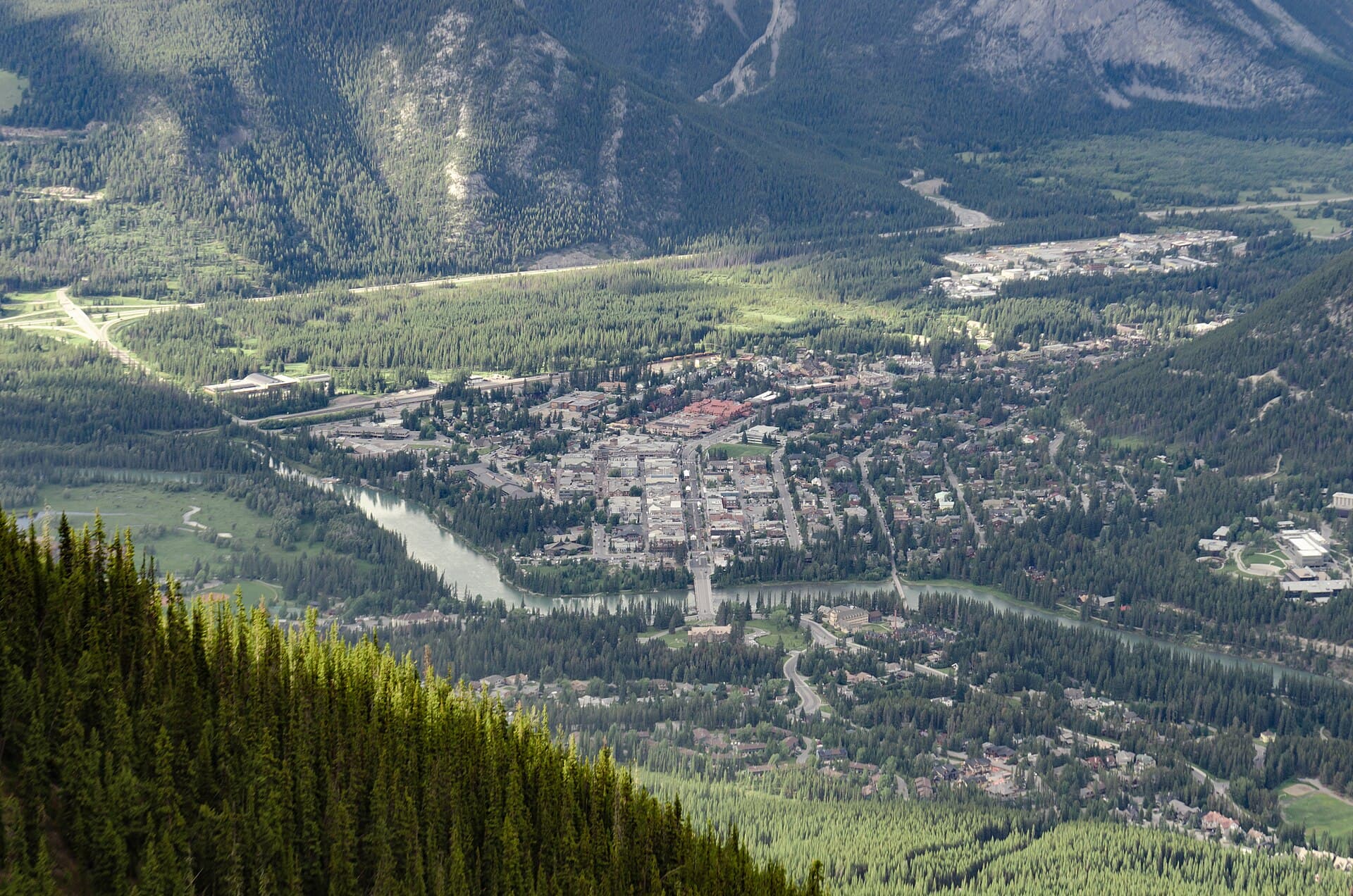
Banff, a resort town in Alberta, Canada, is cradled within the expansive Banff National Park. Situated in Alberta's Rockies along the Trans-Canada Highway, it lies approximately 126 km west of Calgary. With an elevation of 1,400 to 1,630 meters (4,590 to 5,350 feet) above sea level, the town of Banff is one of the highest in Canada.
The town serves as a central point for visitors exploring the surrounding national park, which was declared a UNESCO World Heritage site in 1985. The park encompasses 6,641 square kilometers (2,564 square miles) of rugged mountains, glaciers, forests, rivers, and alpine meadows. Banff is a destination for outdoor sports, offering opportunities for hiking, biking, scrambling, and skiing.
The area now known as Banff has been inhabited by First Nations for at least 10,000 years, serving as a wintering village, trading post, and a sacred place for gathering medicines and seeking healing in the natural hot springs. The Nakoda and Blackfoot peoples, among others, have lived in and around the present-day location of Banff.
The modern town of Banff was established in the 1880s, following the construction of the transcontinental Canadian Pacific Railway through the Bow Valley. In 1883, three Canadian Pacific Railway workers—Frank McCabe and brothers Tom and William McCardell—discovered a series of natural hot springs on Sulphur Mountain. Recognizing the tourism potential, the Canadian government created a federal reserve of 26 square kilometers (10 square miles) around the Cave and Basin hot springs in 1885. This marked the beginning of Canada's National Park system.
In 1887, the reserve was expanded to 673 square kilometers (260 square miles) and named "Rocky Mountain Park," later becoming Banff National Park. The townsite of Banff was developed near the railway station to serve tourists, and in 1884, George Stephen, president of the Canadian Pacific Railway, named the area Banff after his birthplace in Banffshire, Scotland. The Canadian Pacific Railway played a significant role in promoting Banff as an international resort, building grand hotels like the Banff Springs Hotel, which opened in 1888.
Banff was the first municipality to incorporate within a Canadian national park in 1990, having been administered by the national parks system until then. The park's history also includes a darker chapter: from 1915 to 1917, an internment camp was set up in Dominion Park (now Banff National Park) at Banff and Castle Mountain, primarily imprisoning Ukrainian immigrants who were used as forced labor to build park infrastructure.
Today, Banff National Park is recognized globally for its natural beauty, diverse plant and animal life, and ongoing geological processes. The vivid blue-green color of lakes like Lake Louise, Moraine Lake, and Peyto Lake comes from glacial rock flour deposited by melting glaciers.
Banff offers a range of attractions and activities, from natural wonders to historical sites. A visit to the Cave and Basin National Historic Site is essential to understand the origins of Canada's national park system, where you can explore the historic thermal springs and interpretive exhibits. For expansive views, take the Banff Gondola up Sulphur Mountain, offering sweeping vistas of the Bow Valley. The Banff Upper Hot Springs provides a chance to soak in geothermally heated pools with mountain scenery.
Stroll along Banff Avenue, the town's central street, which has evolved from a few hotels and homesteads to a lively area with shops and restaurants. The Whyte Museum of the Canadian Rockies is a cultural museum focused on the history of the national park and its inhabitants, housing art, artifacts, and heritage homes. For those seeking iconic lake views, Lake Louise and Moraine Lake are renowned for their striking turquoise waters, best accessed by shuttle during peak season. Driving the Icefields Parkway is a scenic journey, offering views of glaciers, lakes, and opportunities for wildlife spotting. Other notable spots include Lake Minnewanka, where boat cruises are available, and the accessible Tunnel Mountain hike for views close to town.
Banff is a year-round destination, with each season offering distinct experiences. Summer, from June to September, is peak season, characterized by warm days, long daylight hours, and ideal conditions for hiking, canoeing, and exploring the turquoise lakes. July and August are the busiest months. Fall, particularly September and early October, brings pleasant weather, fewer crowds, and the vivid golden hues of larch trees. Winter, from November through March, transforms Banff into a snowy landscape, perfect for skiing, snowboarding, ice skating, and winter sightseeing. Shoulder seasons (November and April/May, or October/November and April/May) offer a quieter experience and potentially lower accommodation prices.
A National Park Pass is required for entry into Banff National Park and for stopping at any sites within its boundaries. For visits longer than a week, a Parks Canada Discovery Pass offers unlimited entry to national parks for a year and can be more cost-effective. While a rental car offers flexibility for exploring trailheads and the Icefields Parkway, public transportation via Roam Transit is available for getting around downtown Banff and to popular attractions like the Banff Gondola, Fairmont Banff Springs Hotel, Cave and Basin, and Lake Minnewanka.
Accommodation and popular tours, especially during the peak summer months of July and August, should be booked well in advance—up to a year for iconic hotels or popular guided experiences. Shuttle reservations are often necessary for accessing popular spots like Lake Louise and Moraine Lake during peak season. To avoid crowds, consider visiting during the shoulder seasons or starting your days early. Be prepared for changeable weather by dressing in layers.