Badami Cave Temples, Cave 3
Examine the ceiling of Cave 3, and you will uncover a detail that speaks volumes about ancient Indian artistry and perhaps, a touch of playful defiance.
Full story unlocks in the tour
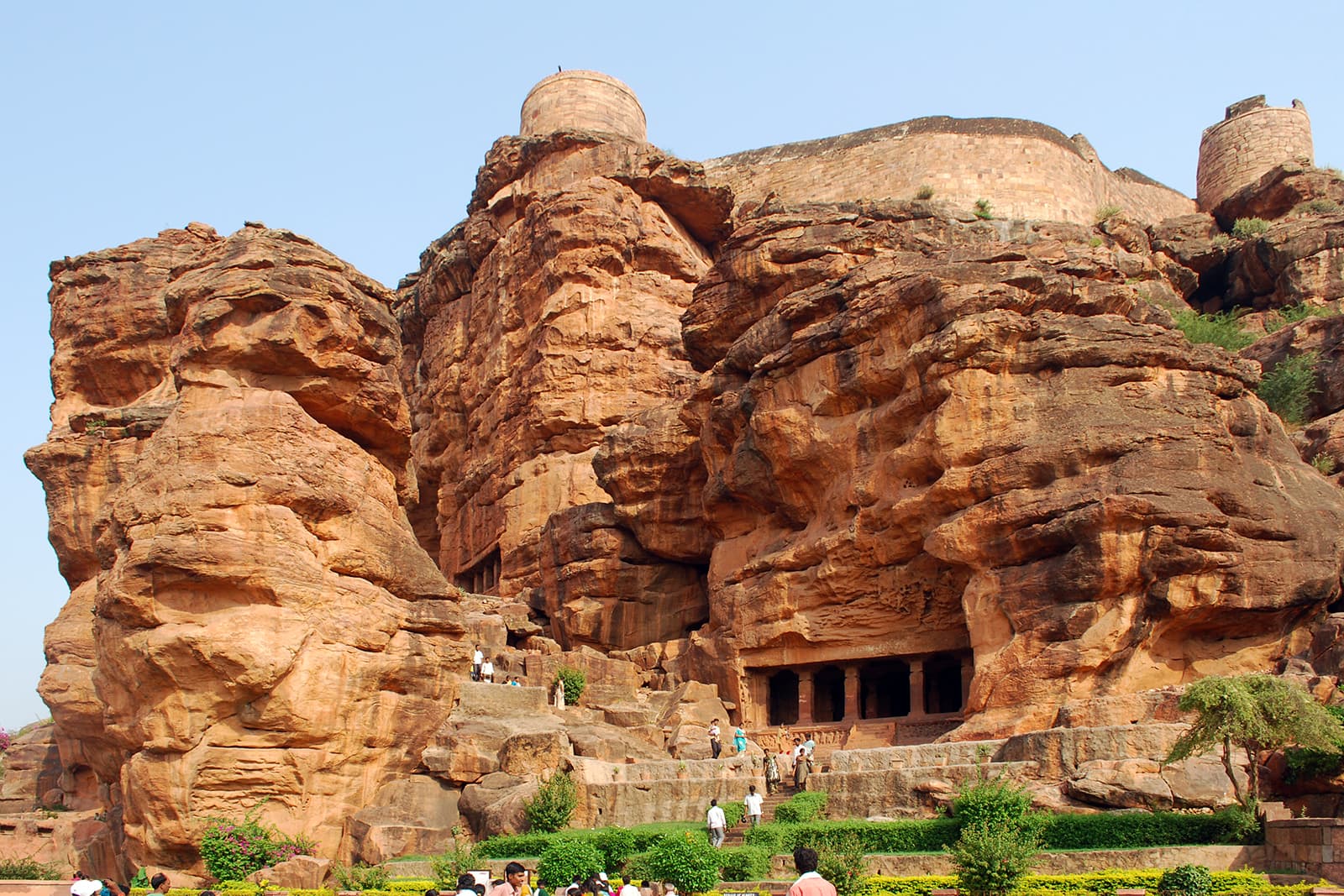 Sanyam Bahga / CC BY-SA 3.0, via Wikimedia Commons
“Where ancient rock-cut temples recount forgotten empires.”
Not the postcards. The stories even locals don't know — whispered in your ear, right where they happened.
Examine the ceiling of Cave 3, and you will uncover a detail that speaks volumes about ancient Indian artistry and perhaps, a touch of playful defiance.
The sacred Agastya Lake, while appearing serene, holds a secret about its unusual color that is not immediately obvious to the casual observer.
As you ascend to the Northern Fort, observe a particular rock formation that locals believe holds a surprising, almost mythical, connection.
Discover every secret of Badami
Every address, every reveal in full — in your ear, right where it happened.
You pick your stops. You walk. The voice reveals what the others miss.
No tours available yet. Check back soon — we're preparing them.
Badami, a town in the Bagalkot district of Karnataka, India, is a place where history is etched into sandstone. The dramatic red sandstone cliffs that define its landscape are not merely geological features; they are canvases and quarries for some of India's most remarkable rock-cut architecture. This ancient capital of the Chalukya dynasty offers a journey back in time, revealing the artistic and religious fervor of a bygone era. The town's name, Badami, is believed to be derived from the Kannada word 'badam,' meaning almond, possibly referring to the color of the sandstone or the shape of the surrounding hills.
Beyond the celebrated cave temples, Badami is a captivating blend of archaeological marvels and natural beauty. The Agastya Lake, a large body of water considered sacred, lies at the foot of the cave temples, its tranquil surface reflecting the ancient structures and the sky. The Bhutanatha Group of Temples, situated on the eastern banks of the lake, further adds to the town's allure, showcasing early Chalukyan architectural styles. Badami is more than just a collection of monuments; it is an experience that unfolds with every step, offering glimpses into a cultural fabric woven over centuries.
## The Rise of the Chalukyas Badami's story is inextricably linked with the Chalukya dynasty, who established their capital here in the 6th century CE. Originally known as Vatapi, it became the seat of power for the Early Western Chalukyas, a period that saw a significant flourishing of art, architecture, and religious thought in the Deccan region.
## Architectural Innovations Under Chalukyan patronage, Badami transformed into a hub of architectural innovation. The most iconic contributions are the four rock-cut cave temples, carved directly into the sandstone cliffs. These caves, dating back to the 6th and 7th centuries, represent a remarkable synthesis of North Indian Nagara and South Indian Dravidian architectural styles. Each cave is dedicated to different deities – three to Hindu gods (Shiva and Vishnu) and one to Jain Tirthankaras – showcasing the religious tolerance of the Chalukya rulers.
## A Flourishing Artistic Hub The Chalukyan period in Badami was a golden age for sculpture and painting. The cave temples are adorned with intricate carvings depicting mythological narratives, divine figures, and scenes from daily life. The detailed sculptures of Vishnu in various avatars, Shiva in his cosmic dance (Nataraja), and the serene figures of Jain saints are testament to the skill of the artisans. Traces of frescoes, particularly in Cave 3, suggest that the temples were once lively with color, further enhancing their visual appeal.
## Fortifications and Later Dynasties Beyond the cave temples, Badami also includes impressive structural temples and fortifications. The Badami Fort, on the northern hill, and the various temples surrounding Agastya Lake, like the Bhutanatha group, demonstrate the evolution of Chalukyan architecture. After the decline of the Early Western Chalukyas, Badami came under the control of various other dynasties, including the Rashtrakutas, Western Chalukyas, Vijayanagara Empire, and later, the Marathas and Tipu Sultan. Each successive ruler left their mark, contributing to the layered historical narrative of the town.
## Inscriptions and Historical Records Numerous inscriptions found in Badami provide valuable insights into the Chalukyan era. These epigraphs record grants, genealogies, and significant events, serving as primary historical documents. One notable inscription in Cave 3 dates back to 578 CE, commissioned by Mangalesha, the brother of Pulakeshin I, and details the dedication of the cave to Vishnu. These inscriptions are crucial for reconstructing the political, social, and religious history of the region.
Begin your exploration at the renowned Badami Cave Temples, a set of four rock-cut caves carved into the red sandstone cliff. Cave 1 is dedicated to Shiva, featuring a striking 18-armed Nataraja. Caves 2 and 3 are dedicated to Vishnu, with Cave 3 being the largest and most ornately carved, showcasing a magnificent Trivikrama sculpture and remnants of ceiling frescoes. Cave 4 is a Jain temple, distinguished by figures of Tirthankaras.
Below the caves lies the serene Agastya Lake, a sacred water body fringed by temples. A walk along its banks offers picturesque views of the cave temples reflected in the water, especially during sunrise or sunset.
On the eastern side of Agastya Lake, you will find the Bhutanatha Group of Temples, an ensemble of structural temples with distinct architectural styles, primarily dedicated to Bhutanatha (an aspect of Shiva). These temples offer a different perspective on Chalukyan craftsmanship compared to the rock-cut caves.
Ascend to the Badami Fort on the northern hill for expansive views of the town and its surrounding landscape. The fort houses ancient granaries, a treasury, and a watchtower, providing a glimpse into the defensive strategies of the Chalukyas.
For a deeper dive into the region's past, visit the Archaeological Museum Badami, located at the foothills of the northern fort. It houses a collection of sculptures, inscriptions, and artifacts discovered from Badami and nearby sites, offering valuable context to the historical monuments.
The best time to visit Badami is during the winter months, from October to March. The weather during this period is pleasantly cool and dry, making it ideal for exploring the cave temples and other outdoor sites comfortably. Temperatures range from approximately 15°C to 30°C (59°F to 86°F). The monsoon season, from July to September, brings lush greenery but can make climbing slippery. Summers, from April to June, are very hot, with temperatures often exceeding 40°C (104°F), making sightseeing challenging.
Badami is well-connected by road and rail. The nearest airport is Hubballi (HBX), about 100 kilometers away, with limited flights. Bengaluru (BLR) and Goa (GOI) are larger international airports, requiring a longer onward journey by train or bus. Badami has its own railway station (BDM) with connections to major cities in Karnataka.
Within Badami, auto-rickshaws are readily available for local transport between sites. Many of the key attractions, like the cave temples and Agastya Lake, are within walking distance of each other. Comfortable walking shoes are essential due to the uneven terrain and steps at the cave temples and fort. It is advisable to carry water, especially during warmer months.
Accommodation options in Badami range from budget guesthouses to mid-range hotels. While there are no luxury resorts within the town itself, nearby towns might offer more upscale choices. Local eateries serve South Indian cuisine, with an emphasis on local Karnataka dishes.