Oscar Niemeyer International Cultural Centre
The architect behind this striking cultural center never actually set foot in Avilés.
Full story unlocks in the tour
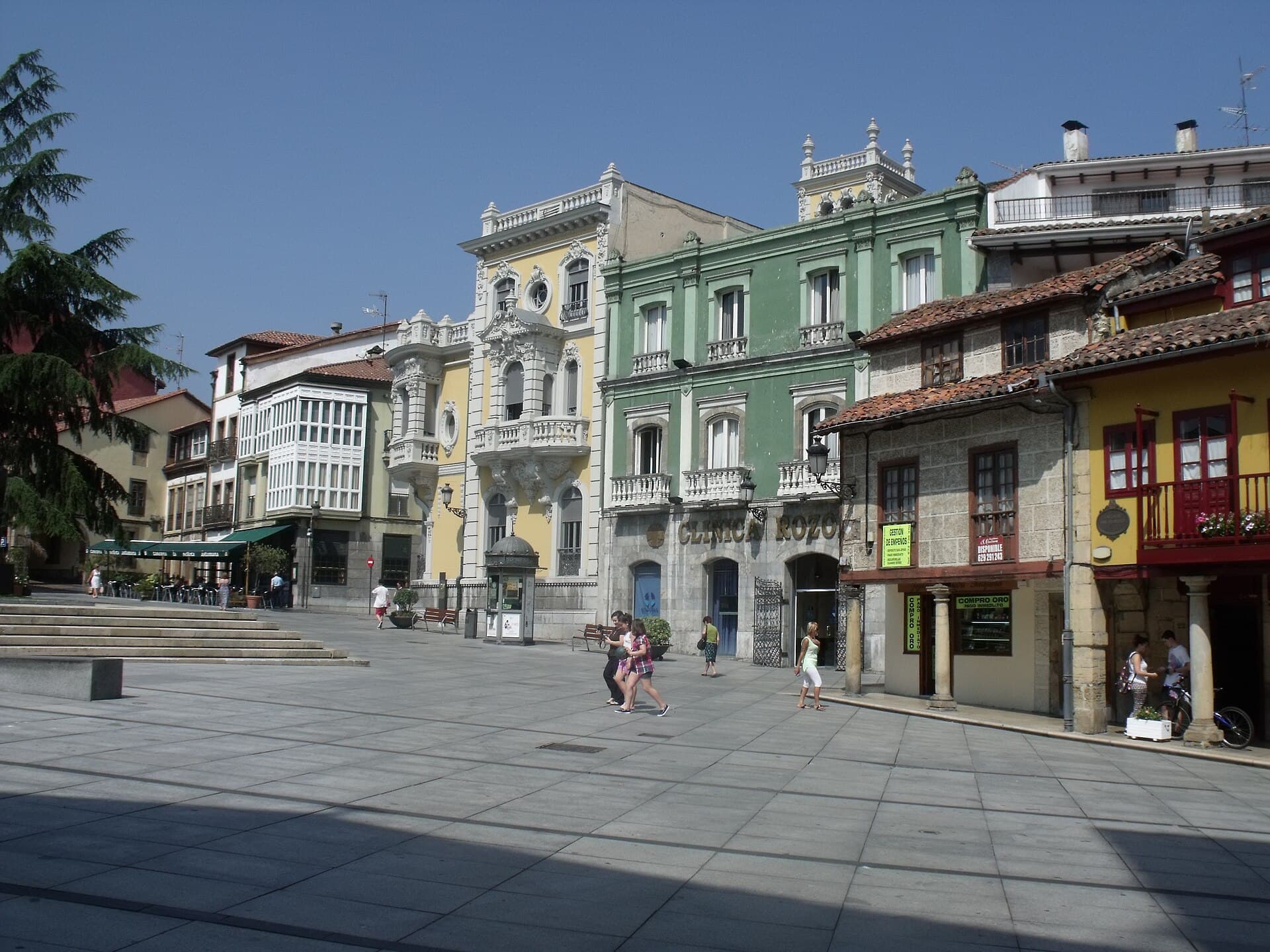 B25es / CC BY-SA 3.0, via Wikimedia Commons
“Avilés: Where steel forged a new kind of beauty.”
Not the postcards. The stories even locals don't know — whispered in your ear, right where they happened.
The architect behind this striking cultural center never actually set foot in Avilés.
Beneath the elegant arcades of Calle Galiana, a peculiar tradition once dictated the flow of conversation.
The serene Parque del Muelle holds a secret from its industrial past, revealed in plain sight.
Discover every secret of Avilés
Every address, every reveal in full — in your ear, right where it happened.
You pick your stops. You walk. The voice reveals what the others miss.
No tours available yet. Check back soon — we're preparing them.
Avilés, a city in Asturias, Spain, offers a compelling narrative of transformation. Once a formidable industrial port, it has reinvented itself, blending its robust maritime and industrial inheritance with a burgeoning contemporary arts scene. The city center, with its arcaded streets and historic buildings, provides a charming contrast to the sleek, futuristic architecture of the Oscar Niemeyer International Cultural Centre, a beacon of its modern aspirations.
Walking through Avilés reveals layers of its past. From the medieval layout of its oldest quarters to the grand mansions built during its industrial boom, the city tells a story of constant evolution. The Ría de Avilés, once dominated by heavy industry, is now undergoing a significant ecological and urban regeneration, opening up new promenades and green spaces. This blend of old and new, grit and grace, makes Avilés a unique destination in northern Spain, inviting visitors to explore its unexpected character.
## From Roman Port to Industrial Powerhouse Avilés possesses a long and varied history, with evidence of Roman settlements indicating its early importance as a port. During the Middle Ages, it flourished as a key trading hub in the Cantabrian Sea, benefiting from royal privileges that fostered its growth. The city's strategic location made it a vital link for maritime commerce, connecting Asturias with other parts of Spain and Europe.
## The Golden Age of Commerce The 16th and 17th centuries marked a 'Golden Age' for Avilés, characterized by significant urban development and economic prosperity. Many of the elegant arcaded streets and stately homes seen today in the old town date from this period, reflecting the wealth accumulated through trade. The city's port continued to be its lifeblood, facilitating the export of local goods and the import of exotic commodities.
## Industrial Revolution and Transformation The 19th and 20th centuries brought about a dramatic shift with the Industrial Revolution. Avilés became a major industrial center, particularly known for its steel production and shipbuilding. The establishment of large factories like ENSIDESA (Empresa Nacional Siderúrgica, S.A.) transformed the landscape and the city's identity, attracting a large workforce and leading to rapid urban expansion. This period, while bringing economic growth, also presented environmental challenges and a distinct industrial character to the city.
## Post-Industrial Renaissance In recent decades, Avilés has embarked on an ambitious journey of post-industrial regeneration. With the decline of heavy industry, the city has focused on reclaiming its waterfront, investing in cultural infrastructure, and promoting tourism. The most prominent symbol of this transformation is the Oscar Niemeyer International Cultural Centre, which has become an emblem of the city's forward-looking vision and its commitment to culture and innovation. This ongoing revitalization seeks to balance its industrial legacy with a new identity as a cultural and service-oriented city.
Begin your exploration in the Casco Histórico (Old Town), where you can wander through arcaded streets like Calle Galiana and Calle de la Cámara, admiring the medieval and Baroque architecture. Do not overlook the Church of Santo Tomás de Canterbury, a beautiful example of Gothic and Romanesque styles.
Walk to the Oscar Niemeyer International Cultural Centre, a striking complex of white, red, and yellow buildings that stands in stark contrast to the historic city. Explore its exhibition spaces, auditorium, and the panoramic views from its tower.
Stroll along the Ría de Avilés, where former industrial areas are being transformed into green spaces and promenades. Visit Parque del Muelle, a pleasant park with a bandstand and a pond that was once part of the old port.
Discover the Palacio de Ferrera, a magnificent 17th-century palace now operating as a five-star hotel, showcasing grand Asturian Baroque architecture.
The best time to visit Avilés is during the spring (April to June) or early autumn (September to October). The weather is generally mild and pleasant, ideal for walking and exploring the city's outdoor attractions. Summers can be warm, and while generally not as crowded as coastal tourist towns, July and August see more visitors. Winters are cooler and can be rainy, though the city's cultural venues offer year-round appeal.
Avilés is easily accessible. Asturias Airport (OVD) is just 15 kilometers away, with regular bus services connecting to the city center. The city is also well-connected by train and bus to other major Spanish cities. Once in Avilés, the historic center is compact and best explored on foot. Public buses serve the wider city area. Accommodation options range from charming boutique hotels in the old town to modern hotels near the Niemeyer Centre. Dining in Avilés offers a taste of Asturian cuisine, known for its seafood, 'fabada' (bean stew), and 'sidra' (cider). Gratuities are not mandatory but appreciated for good service.