Chez Galip Hair Museum
A cave in Avanos holds a peculiar collection, not of pottery, but of something far more personal.
Full story unlocks in the tour
 Ludovic Courtès / CC BY-SA 3.0, via Wikimedia Commons
“Where the Red River flows through ancient hands.”
Not the postcards. The stories even locals don't know — whispered in your ear, right where they happened.
A cave in Avanos holds a peculiar collection, not of pottery, but of something far more personal.
The clay of Avanos isn't just for making pots; it's said to have a unique connection to the town's bachelors.
Observe the older homes in Avanos, and you might notice a curious architectural detail related to the region's distinctive geography.
Discover every secret of Avanos
Every address, every reveal in full — in your ear, right where it happened.
You pick your stops. You walk. The voice reveals what the others miss.
No tours available yet. Check back soon — we're preparing them.
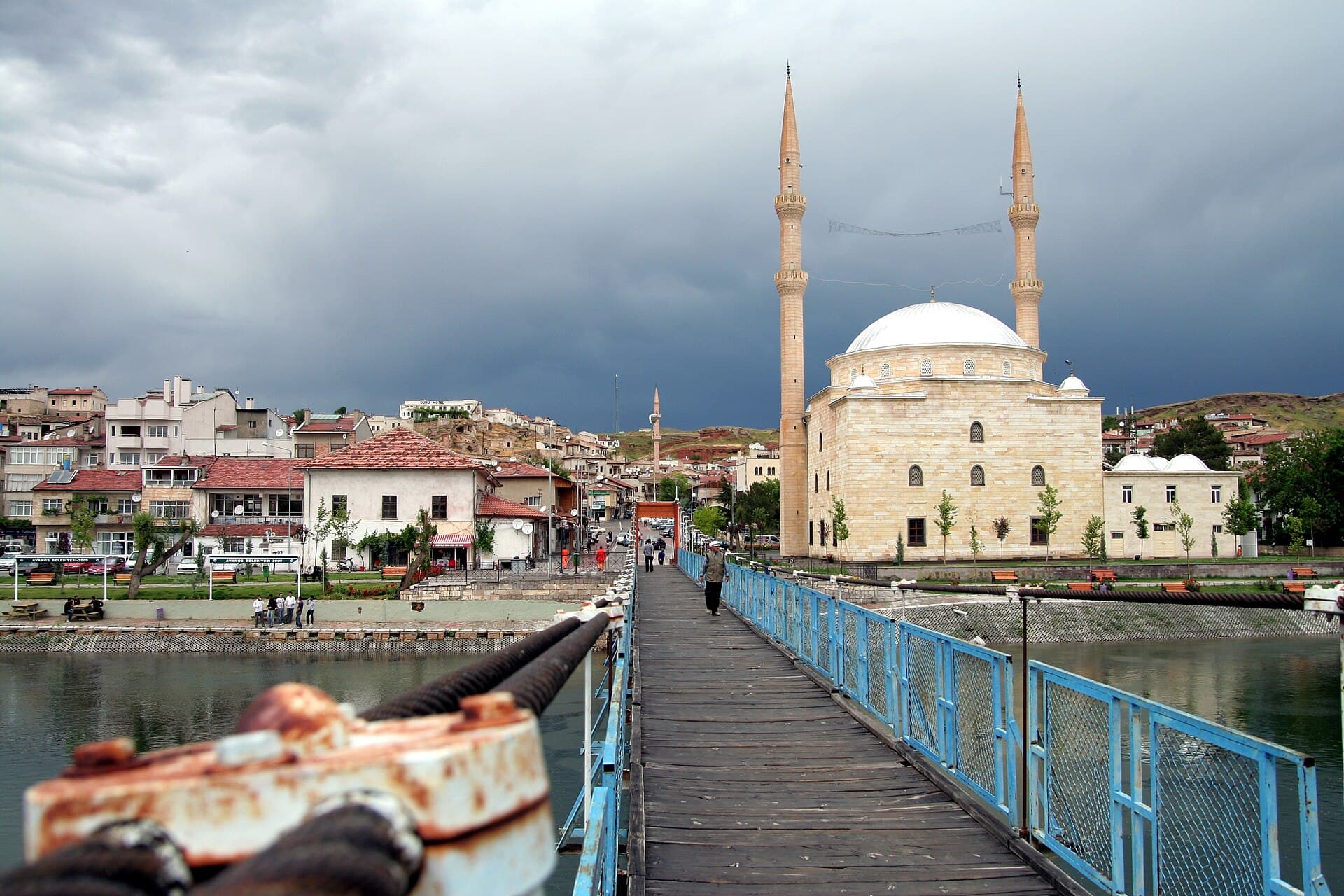
Avanos, a town in Turkey's Cappadocia region, is bisected by the Kızılırmak, or Red River, the longest river in Turkey. This river has shaped Avanos's identity for millennia, providing the distinctive red clay that is the lifeblood of its celebrated pottery tradition. Unlike the fantastical 'fairy chimney' landscapes of Göreme or Uçhisar, Avanos offers a more grounded, artisan experience, where the rhythm of daily life is set by the potter's wheel and the flow of the river.
The town's allure lies in its unpretentious atmosphere, where visitors can wander through narrow streets, observe master potters at work, and even try their hand at the craft. The Red River itself is more than just a source of clay; it's a scenic backdrop for leisurely walks and a symbol of the continuous flow of tradition through generations of Avanos artisans. The bridges spanning the Kızılırmak connect not just two sides of a town, but also the past and present of a craft that remains deeply embedded in the local culture.
The history of Avanos is inextricably linked to the Kızılırmak River and its abundant deposits of red clay. Archaeological evidence suggests human settlement in the area dates back to the Hittites, around 2000 BC, who were among the first to harness the river's clay for pottery. The Hittites established sophisticated ceramic workshops, and their techniques laid the groundwork for the pottery traditions that continue to flourish in Avanos today.
During the Roman and Byzantine periods, Avanos continued to be a significant center for ceramics, with its pottery finding markets across the vast empires. The town's strategic location along trade routes further cemented its role as a hub for craftsmanship. The Seljuks and later the Ottomans also recognized the value of Avanos's artisans, fostering the continuation of the pottery industry.
The name 'Avanos' itself is believed to derive from the ancient Greek 'Venessa,' or 'Evenos,' reflecting the town's long and diverse cultural heritage. Throughout its history, despite various rulers and influences, the core identity of Avanos as a pottery town has remained constant. The knowledge and skills of pottery have been passed down through families, often from father to son, preserving ancient methods while also adapting to new styles and demands. This unbroken chain of craftsmanship is a testament to the enduring legacy of the Red River and the people of Avanos.
In more recent centuries, Avanos has faced the challenges of modernization and mass production, yet it has largely managed to retain its authentic character. While some workshops cater to the tourist market, many still produce functional and artistic pieces using traditional kick wheels and wood-fired kilns. The town has also made efforts to preserve its historical architecture, with many old stone houses being restored.
The establishment of institutions like the Avanos Hair Museum, while quirky, also speaks to the town's unique approach to cultural preservation and storytelling. Today, Avanos stands as a living museum of pottery, where the past is not just remembered but actively practiced, ensuring that the ancient craft continues to shape its present and future.
Begin your exploration at the Kızılırmak River, perhaps with a stroll across the pedestrian-only Suspension Bridge, offering perspectives of the river and the town. Many pottery workshops line the riverbanks, and you can often observe artisans at work, shaping clay on traditional kick wheels. Consider a hands-on experience at one of the many pottery studios, where instructors guide you through the process of creating your own ceramic piece.
For a deeper dive into the craft, visit the Güre Culture and Art Center, which showcases a range of local pottery and often hosts exhibitions. The nearby Chez Galip Hair Museum offers a truly unique, if slightly bizarre, collection of hair samples from thousands of women. Explore the older parts of Avanos to see traditional cave dwellings and stone houses that blend seamlessly into the rock formations. Do not overlook the Avanos Open Air Museum, which provides insights into the region's history and geology.
The best times to visit Avanos are during the spring (April to May) and autumn (September to October). During these months, the weather is mild and pleasant, ideal for exploring the town on foot and enjoying outdoor activities. Summers (June to August) can be very hot, while winters (November to March) are cold and can bring snow, making some outdoor activities less comfortable.
Avanos is easily accessible by road, with frequent bus services connecting it to major cities and other towns in Cappadocia. The nearest airport is Nevşehir Kapadokya Airport (NAV), about a 30-minute drive away, or Kayseri Erkilet Airport (ASR), roughly an hour's drive. Taxis and shared shuttles are available from both airports. Within Avanos, the town center is walkable, and local dolmuş (shared minibuses) can take you to nearby villages. Accommodation options range from boutique cave hotels to guesthouses.