Atami Geigi Kenban Kaburenjo Theater
Atami's geisha culture, with roots stretching back over 150 years, once saw more than a thousand geisha active in the city.
Full story unlocks in the tour
 Suicasmo / CC BY-SA 4.0, via Wikimedia Commons
“Where volcanic warmth meets coastal charm, a timeless Japanese escape.”
Not the postcards. The stories even locals don't know — whispered in your ear, right where they happened.
Atami's geisha culture, with roots stretching back over 150 years, once saw more than a thousand geisha active in the city.
The city's name, 'Atami,' translates directly to 'hot sea,' a nod to its most celebrated natural feature.
Atami Castle, a prominent landmark, might appear to be a relic of feudal Japan.
Discover every secret of Atami
Every address, every reveal in full — in your ear, right where it happened.
You pick your stops. You walk. The voice reveals what the others miss.
No tours available yet. Check back soon — we're preparing them.
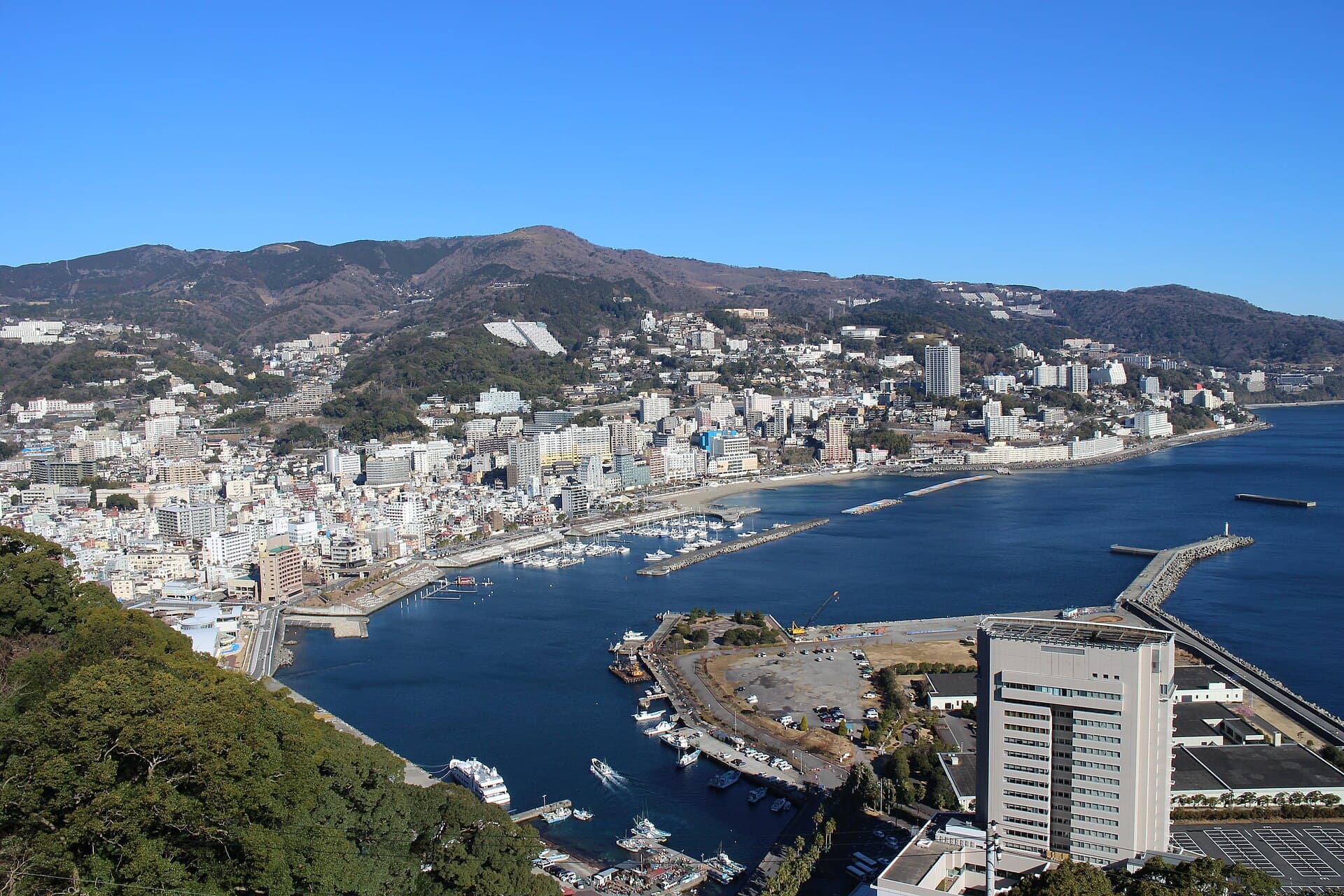
Atami, a coastal city in Shizuoka Prefecture, is a celebrated hot spring resort less than an hour from Tokyo by bullet train. Its name, meaning "hot sea," directly references the abundant thermal waters that have drawn visitors for centuries. Situated on the Izu Peninsula, Atami's distinctive bowl-shaped topography features mountains embracing the urban area and coastline, creating a landscape of slopes and expansive vistas. From mountaintops, visitors can observe islands dotting the sea, while the coast reveals resort hotels and traditional ryokan tracing the hillsides.
Beyond its therapeutic onsen, Atami intertwines natural splendor with a rich cultural heritage. The city presents a diverse array of attractions, from historic shrines and art museums to lively shopping streets and seasonal festivals. Once a favored retreat during Japan's economic bubble era, Atami has experienced a recent resurgence, attracting both domestic and international visitors seeking relaxation, traditional Japanese hospitality, and fresh seafood.
## From Ancient Springs to Shogunate Retreats Atami's history as a hot spring resort dates back to the 8th century, with some historical chronicles mentioning its healing waters as early as the Nara period (710–794 AD). Early communities were drawn to the area, believing the hot springs to be manifestations of deities. The Izusan Shrine, one of Japan's oldest Shinto shrines, further solidified the area's spiritual significance.
During the Kamakura period (1185–1333), Atami became a retreat for the samurai class. Minamoto Yoritomo, Japan's first shogun, was a notable visitor, and it was here he met Hōjō Masako, who would become his wife. The Izusan Shrine even became the designated prayer spot for the Imperial Clan. Later, during the Edo period (1601–1868), Atami served as a crucial rest stop along the Tōkaidō route, connecting Kyoto to Edo (modern-day Tokyo). Shogun Tokugawa Ieyasu, who founded the Tokugawa shogunate, was so fond of Atami's waters that he ordered them to be transported to his castle in Edo.
## The Rise and Fall of a Modern Resort In the Meiji era (1868–1912), Atami experienced rapid industrialization with the construction of a train line to Tokyo in 1896, significantly boosting tourism. Hot springs became central to Japanese leisure and healing rituals, and Atami's geisha culture also emerged as a major source of entertainment. After World War II, Atami fully embraced its role as a spa town, becoming a popular destination for honeymoons, vacations, and company retreats. The opening of the Tokaido Shinkansen (bullet train) in 1964 reduced travel time from Tokyo to just 45 minutes, leading to a surge in tourism, with over 5 million visitors in 1970. This period saw extensive development, including large hotels and apartment blocks along the coastline, creating a unique high-rise landscape.
However, the collapse of Japan's economic bubble in the early 1990s brought a sharp decline in Atami's fortunes. Tourism suffered dramatically, businesses closed, and the city faced economic hardship. Many of the developments from the bubble era remained, creating a sense of a city frozen in time.
## A Resurgence and Artistic Future After approximately 30 years of decline, Atami has experienced a remarkable revival in recent years, often referred to as the "Atami miracle." Strategic revitalization efforts by local entrepreneurs and businesses have leveraged Atami's existing assets, introducing new attractions and experiences. The city's tourism numbers have begun to rebound, reaching 2.8 million visitors in 2023, partly due to the influence of the "Showa retro" trend. Since 2021, "PROJECT ATAMI" has aimed to transform the city into an art hub, attracting artists and integrating art into its cultural fabric.
Atami presents a variety of attractions that blend its natural beauty with cultural experiences. Begin at Atami Sun Beach, a calm stretch of coastline ideal for swimming in summer or enjoying year-round fireworks displays. For expansive views of Atami Bay and the surrounding Izu Peninsula, visit Atami Castle. While a modern construction from 1959, it houses a Japanese Castle Museum and an Ukiyoe Erotic Art Museum. The castle grounds are also a popular spot for viewing cherry blossoms in spring.
Immerse yourself in history and spirituality at Kinomiya Shrine, revered for its ancient camphor tree, Ookusu, believed to be over 2,000 years old. Another significant spiritual site is Izusan Shrine, one of Japan's oldest Shinto shrines. Art enthusiasts should explore the MOA Museum of Art, which houses over 3,000 works, including three National Treasures, and features a Japanese garden and tea room.
For a glimpse into traditional Japanese performing arts, consider attending a geisha performance at the Atami Geigi Kenban Kaburenjo Theater. The Atami Plum Garden (Atami Baien) is recognized for having some of Japan's earliest blooming plum blossoms, typically from December to mid-February, and also offers autumn foliage views. You can also stroll through Atami Ginza, a shopping arcade with a nostalgic atmosphere, or explore the shops and eateries around Atami Station.
Atami is a year-round destination, each season offering distinct experiences. For warm-weather activities like swimming and fireworks festivals, mid-July to mid-October is ideal, with August being the warmest month. Summer (June-August) is warm and humid, with average temperatures peaking around 26.0°C. Autumn (October-November) and spring (March-May) provide pleasant, moderate temperatures. Atami features some of Japan's earliest cherry blossoms, blooming from January to mid-February, while the Atami Plum Garden's plum blossoms begin as early as December. Winter (December-February) is cool but mild, perfect for enjoying the hot springs and seasonal cuisine.
Atami is easily accessible, especially from Tokyo, via the JR Tokaido Shinkansen (bullet train) in about 35-50 minutes, or by the JR Tokaido Line. From Nagoya, the Shinkansen takes approximately 1.5 to 2 hours, and from Osaka, about 2 hours and 15 minutes to 3 hours and 10 minutes. Atami is a mountainous city with many slopes, making it not entirely walkable; it can be explored by local buses or taxis. The Yuyu Sightseeing Loop Bus, when in service, covers most major attractions. Popular souvenirs include Onsen Manju (steamed buns with sweet red bean paste) and Atami pudding. Given the distinct seasons, layering clothing is advisable, and comfortable walking shoes are essential. An umbrella or light raincoat is useful year-round, especially from June to October, which are the wettest months.