Canelli's 'Underground Cathedrals'
Beneath the unassuming town of Canelli, a labyrinth of tunnels holds a secret that shaped the world's love for Italian bubbles.
Full story unlocks in the tour
 Neq00 / CC BY-SA 4.0, via Wikimedia Commons
“Where medieval towers meet sparkling wine.”
Not the postcards. The stories even locals don't know — whispered in your ear, right where they happened.
Beneath the unassuming town of Canelli, a labyrinth of tunnels holds a secret that shaped the world's love for Italian bubbles.
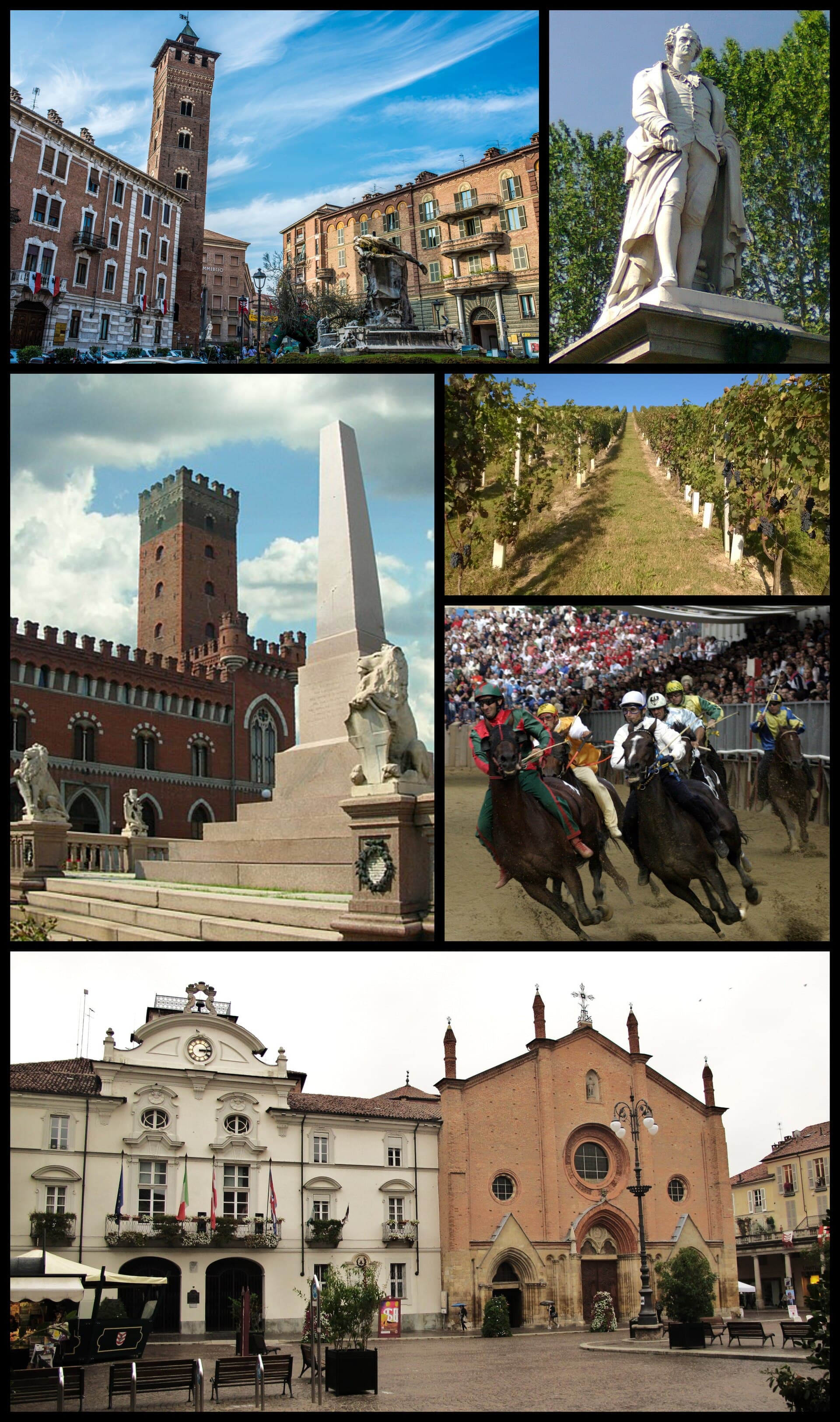
While Siena's Palio is world-renowned, Asti lays claim to an even older, fiercely contested bareback horse race.
Asti's skyline once displayed an astonishing number of medieval towers, far more than its current impressive collection.
Discover every secret of Asti
Every address, every reveal in full — in your ear, right where it happened.
You pick your stops. You walk. The voice reveals what the others miss.
No tours available yet. Check back soon — we're preparing them.
Asti, a city in Italy's Piedmont region, offers a captivating blend of medieval history and renowned winemaking. Situated on the plain of the Tanaro River, approximately 55 kilometers east of Turin, Asti is the capital of its namesake province and considered the modern capital of Montferrat. The city's appeal lies in its historic center, where ancient Roman and medieval walls still stand, alongside numerous palaces, mansions, and churches.
Often overshadowed by larger Italian destinations, Asti provides a more tranquil yet equally enriching experience. It is a city where you can wander through arcaded streets, discover impressive Gothic architecture, and delve into a substantial past that saw it flourish as a powerful independent commune and a hub for trade and banking. Beyond its historical allure, Asti is world-famous for its sparkling wine, Asti Spumante, and its significant role in Italy's food culture, particularly during truffle season.
Asti's origins trace back to Roman times, when it was established as a fortified camp named Hasta in 124 BC. It quickly gained importance due to its strategic position on the Tanaro River and the Via Fulvia, a vital road connecting other major cities like Turin. The city evolved into a Roman colony by 89 BC and a municipium by 49 BC, playing a crucial role during the early barbarian invasions. In 402 AD, the young Roman emperor Honorius even found refuge in Asti when the Visigoths attacked northern Italy.
Following the fall of the Roman Empire, Asti became part of the Duchy of the Lombards in the 6th century and later a county under the Franks. By 1095, Asti emerged as one of Italy's first free communes, gaining the right to mint its own coins by 1140, a significant asset for trade. This period marked Asti's rise as a major center for trade and banking, with its merchants becoming some of the wealthiest in Italy by the 13th century. The city's wealth and influence were visibly demonstrated by the proliferation of towers, earning it the moniker 'city of 100 towers.'
However, Asti's expansionist ambitions led to conflicts with other cities and local feudatories. In 1155, Emperor Frederick Barbarossa besieged and burned the city. Despite this setback, Asti joined the Lombard League against the German emperor in 1169, and after further defeats, it gained more privileges following the Peace of Constance in 1183. The 13th century was Asti's golden age, characterized by significant economic growth and political power, as it fought wars to control trade routes from the Ligurian ports to the north. The city's independent spirit eventually waned, and after periods under various overlords, including the Visconti, Montferrat, and Sforza families, it ultimately came under the House of Savoy in 1575.
Asti's historic core is best explored on foot, revealing layers of medieval and Roman influences. The Cathedral of Santa Maria Assunta, also known as the Duomo, is a monumental example of Piedmontese Gothic architecture, one of the largest churches in the region. Its exterior features brick and stone, three rose windows, and a flamboyant Gothic side portal, while the interior displays three naves, pointed arches, and frescoed vaults.
Ascend the 199 wooden steps of the Torre Troyana, a 13th-century clock tower and the tallest of Asti's surviving medieval towers, for expansive views of the city and surrounding area. The San Pietro Baptistery, dating from 1100 to 1130, is a Romanesque complex with a Rotunda of the Holy Sepulchre and a 15th-century Valperga Chapel adorned with terracotta friezes.
Other notable sites include the Collegiata di San Secondo, a 13th-century collegiate church with a Romanesque campanile on a Roman base, which houses the Palio Astigiano banner and the tomb of St. Secondo. The Palazzo Mazzetti is a beautiful historic palace now home to a museum. Do not miss the Crypt and Museum of Sant'Anastasio, offering a journey into Asti's underground past with Romanesque art from the 11th century.
The best times to visit Asti are during spring (mid-April to mid-June) and early autumn (September and October). During these periods, temperatures are mild, ranging from 19°C to 30°C, making it pleasant for exploring.
September is particularly lively, hosting three signature events: the Palio di Asti, the Douja d'Or Wine Fair, and the nearby Alba White-Truffle Fair. While summer (June to August) can be hot and humid, with temperatures reaching 36-37°C, it can still offer acceptable days, especially in June. Winter (December to February) is cold and often overcast, with average daily highs around 0°C.
Asti is easily accessible and makes for a great base in the Piedmont region. You can reach Asti by train from Turin in less than an hour, with tickets available via Trenitalia. If driving, which is recommended for exploring the wider Piedmont region, signs to the city center are clear, and parking is generally manageable.
The Asti Tourist Office is conveniently located in Piazza Alfieri, near the train station, and is open Monday to Saturday from 9 AM to 1 PM and 2 PM to 6 PM, and on Sundays and public holidays from 9 AM to 1 PM and 1:30 PM to 5:30 PM. For exploring the surrounding vineyards, consider hiring a compact car, as many single-track lanes are not suited for larger vehicles. Tasting fees at wineries typically range from €15–25 and often include a tour. Most cellars operate from 10 AM to 12:30 PM and 2:30 PM to 6:30 PM; booking ahead is advisable, especially during harvest weekends.