Philae Temple
Imagine a grand temple, not merely restored, but entirely uprooted and rebuilt. Why such an enormous undertaking?
Full story unlocks in the tour
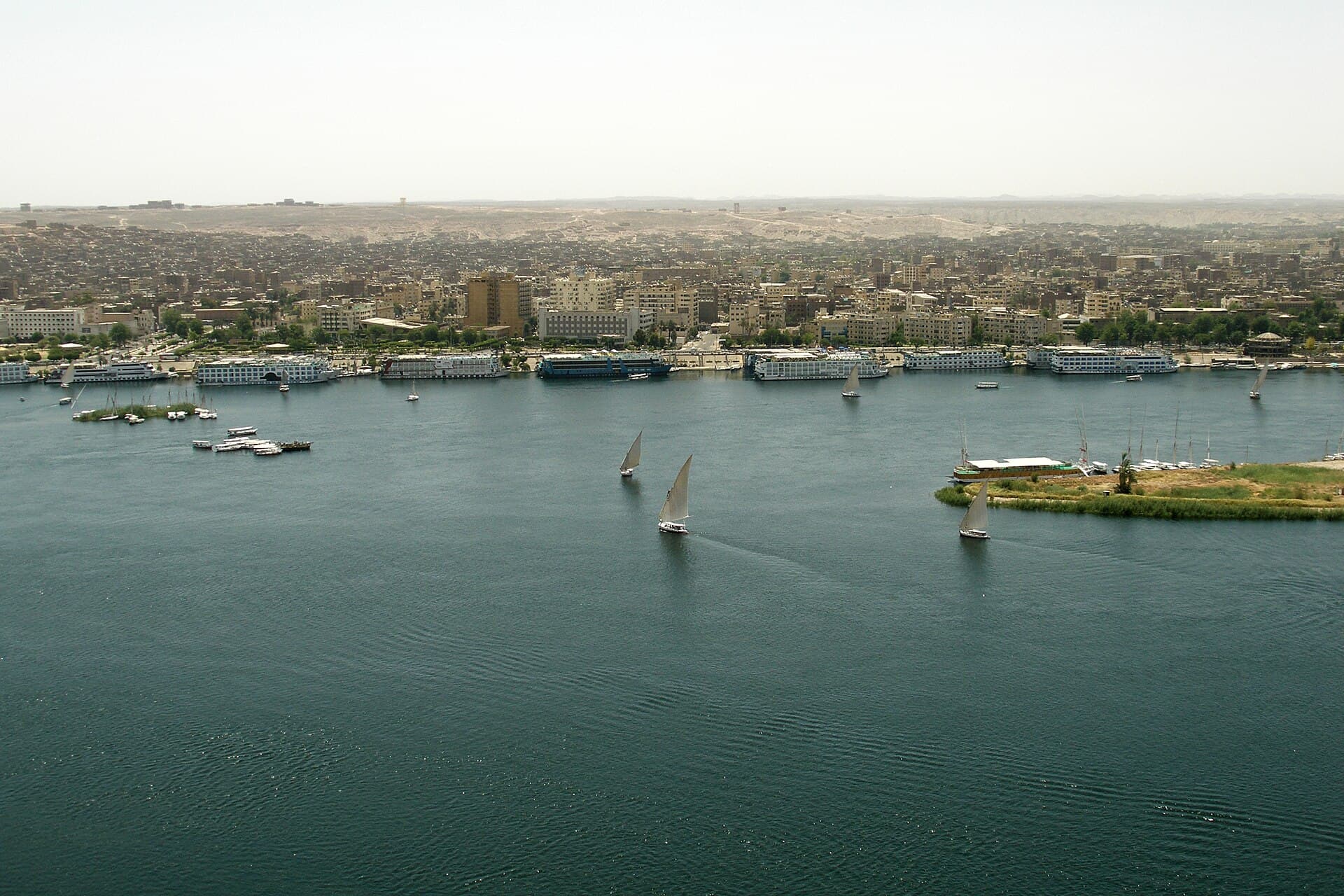 Vyacheslav Argenberg / CC BY 4.0, via Wikimedia Commons
“Where the Nile's ancient pulse beats against a desert heart.”
Not the postcards. The stories even locals don't know — whispered in your ear, right where they happened.
Imagine a grand temple, not merely restored, but entirely uprooted and rebuilt. Why such an enormous undertaking?
A colossal obelisk lies abandoned in a quarry, still tethered to the bedrock. What halted its journey to greatness?
This massive modern marvel, built with Soviet assistance, transformed the face of Egypt. But what surprising impact did it have beyond electricity and irrigation?
Discover every secret of Assouan
Every address, every reveal in full — in your ear, right where it happened.
You pick your stops. You walk. The voice reveals what the others miss.
No tours available yet. Check back soon — we're preparing them.
Aswan, a city in Upper Egypt, is a place where the rhythm of the Nile dictates life. Situated just north of the Aswan Dam at the first cataract, it served as the southern frontier of Ancient Egypt. Known in antiquity as Swenett, or Syene, its name is thought to derive from an Egyptian goddess or the word for "trade" or "market," reflecting its historical role as a vital trading post between Egypt, Nubia, and sub-Saharan Africa.
The city is celebrated for its serene Nile Valley scenery, characterized by granite outcrops, emerald islands, and the gentle flow of the river. Aswan's quarries famously supplied the pink and black granite for many of ancient Egypt's most iconic monuments, including the Great Pyramids of Giza, obelisks, and temples. Today, Aswan remains a bustling market and tourist center, offering a more relaxed atmosphere compared to the busier cities of Cairo or Luxor, and is considered a global tourist winter destination.
## Ancient Origins and Strategic Importance Aswan's recorded history spans over 2,600 years, making it one of the oldest continuously inhabited cities. In ancient times, it was known as Swenett, later Syene, and was the southernmost town in ancient Egypt, marking the frontier with Nubia. Its strategic location at the First Cataract of the Nile, a natural barrier of rocky rapids, made it a crucial gateway for trade with African civilizations to the south. Goods such as gold, ivory, ebony, and exotic animals passed through Aswan, solidifying its importance as a commercial hub. The city's local quarries were a significant source of granite, a durable stone used extensively in ancient Egyptian construction for obelisks, statues, and temples, including those as far north as the Giza pyramids.
## Roman and Medieval Periods Following the Pharaonic and Ptolemaic eras, Aswan continued to hold strategic value. It served as a frontier garrison post for the Romans, Turks, and later the British. During the Roman era, Philae, near Aswan, was the site of the last known inscription in Egyptian hieroglyphs, written in 394 AD, and the last known Demotic inscription, written in 452 AD.
## Modern Developments and the High Dam The 20th century brought monumental changes to Aswan with the construction of the Aswan Low Dam (completed in 1902) and, more significantly, the Aswan High Dam (built between 1960 and 1970). The High Dam, a massive rock-fill structure, was a pivotal project for Egypt, designed to control the annual Nile floods, provide water for irrigation, and generate hydroelectric power. This engineering marvel, constructed with assistance from the Soviet Union, created Lake Nasser, one of the world's largest artificial lakes. While offering immense benefits to Egypt's economy, the dam's construction also led to the displacement of Nubian communities and the threat of submersion for numerous ancient monuments, prompting international rescue efforts, most notably for the Philae and Abu Simbel temples.
Aswan offers a blend of ancient wonders and natural beauty. A visit to Philae Temple, dedicated to the goddess Isis, is essential. This Ptolemaic-era complex, painstakingly relocated to Agilkia Island, stands as a testament to ancient devotion and modern preservation.
Explore Elephantine Island, one of the Nile's islands, accessible by local ferry. Here, you can wander through colorful Nubian villages, visit the Aswan Museum, and see a Nilometer, an ancient device used to measure the Nile's water levels.
Journey to the Unfinished Obelisk in the ancient granite quarries. This colossal, incomplete monument provides a unique window into the techniques of ancient Egyptian stone carving.
Consider a day trip to the awe-inspiring Abu Simbel temples, built by Ramesses II, which were also relocated to save them from the rising waters of Lake Nasser. Closer to Aswan, the Aswan High Dam is a modern engineering marvel worth seeing for its sheer scale and historical significance. For a glimpse into Nubian culture, visit the Nubian Museum, which houses artifacts and exhibits on the history and traditions of the Nubian people. A felucca (traditional sailboat) ride on the Nile at sunset offers a peaceful way to experience Aswan's scenic riverine landscape.
The ideal time to visit Aswan is during the winter months, from October to April, when temperatures are mild and pleasant for sightseeing. Specifically, November to February offers comfortable daytime temperatures, typically ranging from 20-30°C (68-86°F), with cooler evenings. This period is considered peak tourist season, so expect more crowds and higher prices for accommodations and tours. Spring (March-April) and autumn (October-November) are also good, offering warmer temperatures but fewer tourists. Summers (May-September) are extremely hot, often exceeding 40°C (104°F), making outdoor activities challenging.
Aswan is generally considered a safe city for tourists, with a visible police presence in major areas. However, be mindful of pickpockets in crowded areas like the souq and aggressive vendors. Always agree on taxi fares before starting your journey, as meters are not typically used. For women, modest attire is appreciated, especially when visiting religious or historical sites. Loose, lightweight clothing that covers shoulders and knees is recommended.
It is crucial to drink only bottled or filtered water and avoid tap water or ice to prevent dehydration and illness. While the Nile's water is generally cleaner in Aswan than in Cairo, swimming is not recommended. Internet access is available in hotels, though speeds can be slow. It's advisable to spread your money and credit cards across different locations and inform your bank of your travel plans.