St. Mark's Church
In 2000, a Coptic church in Assiut became the site of an extraordinary phenomenon that drew thousands.
Full story unlocks in the tour
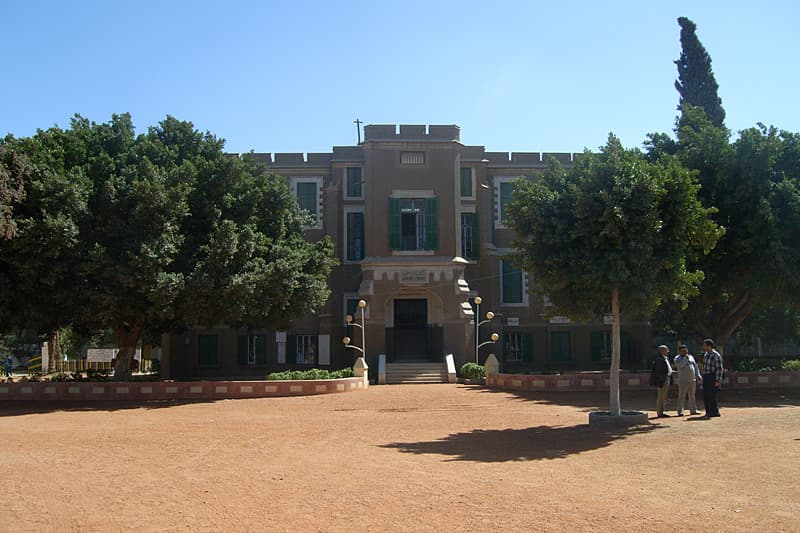 Roland Unger / CC BY-SA 3.0, via Wikimedia Commons
“Where ancient traditions and spiritual journeys converge along the Nile's enduring flow.”
Not the postcards. The stories even locals don't know — whispered in your ear, right where they happened.
In 2000, a Coptic church in Assiut became the site of an extraordinary phenomenon that drew thousands.
Beyond its ancient tombs, this mountain holds a secret from a more recent, yet equally intriguing, past.
Deep in the desert, near ancient tombs, lies a natural spectacle that unfolds at sunset.
Discover every secret of Assiout
Every address, every reveal in full — in your ear, right where it happened.
You pick your stops. You walk. The voice reveals what the others miss.
No tours available yet. Check back soon — we're preparing them.
Assiut, one of Upper Egypt's largest cities, rests on the Nile's west bank, roughly halfway between Cairo and Aswan. Known as Syut in ancient times and later Lycopolis, or "Wolf City," by the Greeks, it has been a significant settlement for millennia. Today, Assiut is a blend of traditional Egyptian life and the energy of a major university town, serving as a vital hub for culture and commerce.
The city's location provides fertile agricultural surroundings, contrasting with the arid desert cliffs that frame the Nile Valley. Assiut is a significant center for Coptic Christianity, home to a large Coptic Christian community and several important religious sites. It also retains ancient craft traditions, with local markets offering handmade textiles, pottery, and rugs.
## Ancient Origins and Religious Significance Assiut's history stretches back over five millennia, with initial settlements appearing around 3100 BC, then known as Zawty, meaning "The Guardian." Its strategic position on the Nile's western bank quickly established it as an administrative and religious center. During the Early Dynastic Period, it served as the capital of the 13th Nome of Upper Egypt.
The city was a major center for the worship of the jackal-headed god Wepwawet, known as the "Opener of the Ways," who guided pharaohs and the deceased through the afterlife. This association led the Greeks to rename the city Lycopolis, or "City of the Wolf." The necropolis west of the modern city contains thousands of rock-cut tombs dating from the Old Kingdom to the Roman Era, providing valuable insights into ancient Egyptian funerary culture and the lives of provincial governors.
## Trade Routes and Coptic Heritage Assiut's geographical location made it a crucial point for trade, controlling river routes and serving as a departure point for caravan routes across the deserts, including the historic "Forty Days Road" (Darb el-Arba'in) connecting Egypt with Sudan. This route, active for over 700 years, facilitated the trade of goods like slaves, ivory, and dyestuffs.
In the Christian era, Assiut became a significant Coptic center, with numerous monasteries and churches established in the region. The city is home to one of the largest Coptic Christian communities in Egypt, and it was the birthplace of the Neoplatonist philosopher Plotinus. The Monastery of the Holy Virgin Mary at Al-Muharraq and Deir Dronka are particularly important pilgrimage sites, believed to have hosted the Holy Family during their flight into Egypt.
Assiut offers a range of sites that reflect its layered history and cultural significance. The Monastery of the Virgin Mary (Deir Dronka), located on a cliffside southwest of the city, is a major pilgrimage site, especially during the Feast of the Virgin in August. It is believed to have been a refuge for the Holy Family.
The Monastery of the Holy Virgin Mary at Al-Muharraq, also known as the Muharraq Monastery, is another revered Christian site, considered by some to be the "Second Jerusalem" due to the Holy Family's extended stay there. For those interested in ancient history, the Tombs of Meir are carved into cliffs and contain detailed reliefs depicting daily life from the Old and Middle Kingdoms.
In the city center, Asma' Allah al-Husna Square provides a glimpse into local life and commerce. The Assiut Barrage, an early 20th-century engineering marvel across the Nile, offers scenic views of the river. The Al-Mujahideen Mosque, dating back to the Ottoman era, is one of the oldest mosques in Assiut, known for its "hanging" architectural style.
For a broader historical perspective, the Archaeology Museum at Al-Salam School houses artifacts from various eras, including pre-dynastic, Pharaonic, Coptic, and Islamic periods.
The optimal time to visit Assiut is during the cooler months, from October to April. During this period, daytime temperatures are mild, typically ranging from 15°C to 25°C (59°F to 77°F), making it comfortable for exploring outdoor sites. Summers, from June to August, are intensely hot, with temperatures frequently exceeding 38°C (100°F). Precipitation is rare year-round, ensuring clear skies.
Assiut is accessible by road and rail from Cairo and other major Egyptian cities. Assiut Airport (ATZ) is located approximately 23 km from the city center, offering direct air access. Within the city, local transportation options include taxis, microbuses, and tuk-tuks. It's common practice to negotiate taxi fares before starting your journey, as meters are not always used. Cash is the primary method of payment for local transport.
When visiting, modest dress is advisable, especially at religious sites. Handshakes are a common greeting among the same gender, and using your right hand for exchanges is customary. While some English may be spoken in tourist areas, learning basic Arabic phrases can enhance communication. The local currency is the Egyptian Pound (EGP), and carrying cash is recommended as credit cards may not be accepted everywhere.